
Last updated September 23, 2026
Free visual inspection and a written scope of work before any mitigation begins - photos, moisture readings, and drying logs go in your claim file
The scope we write is the scope we bill. Anything new gets shown to you, in writing, before we touch it.
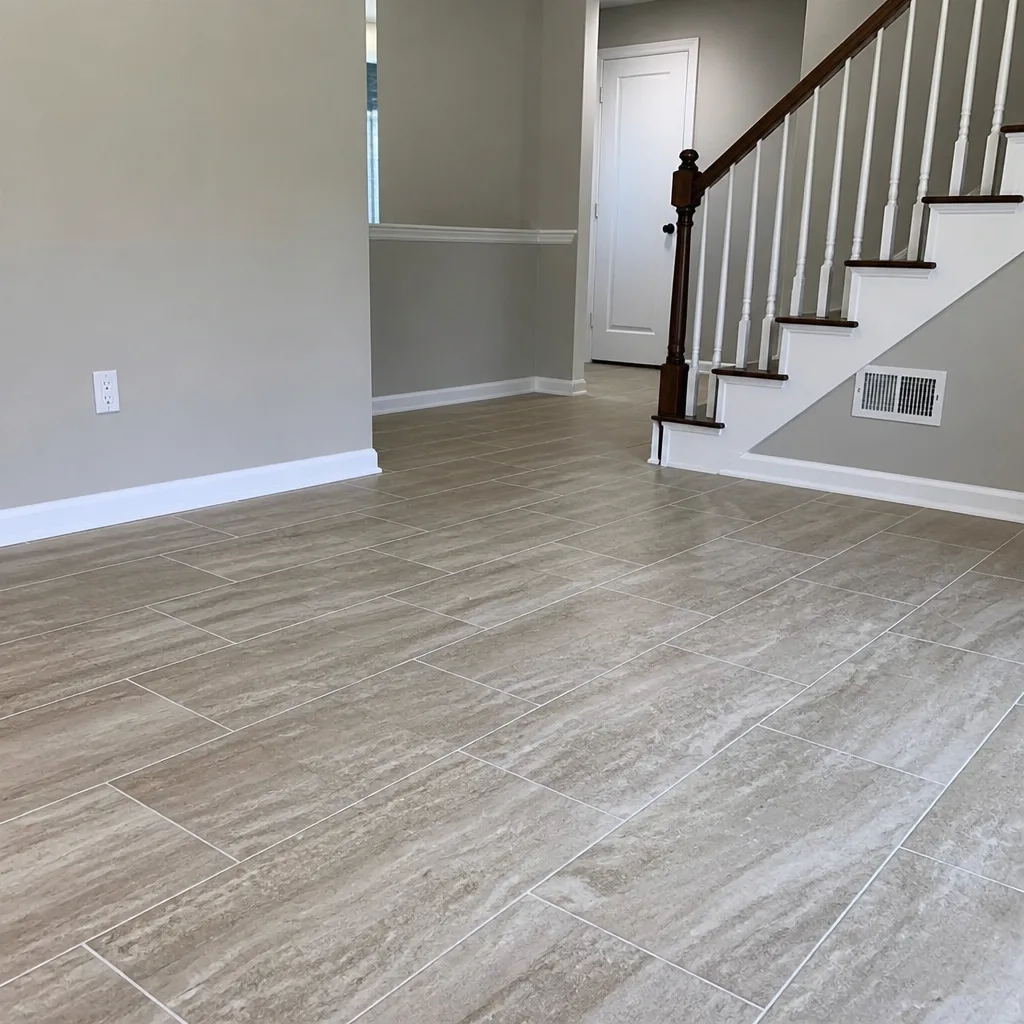

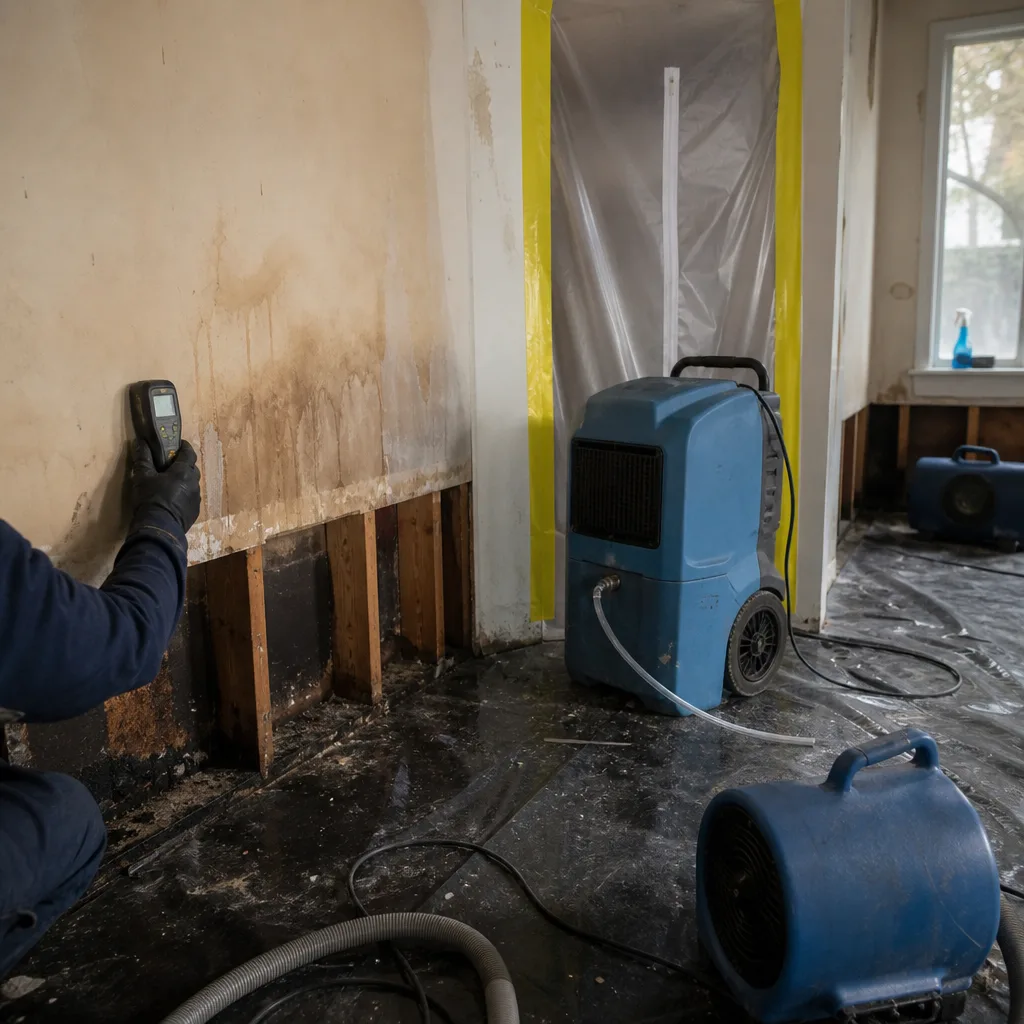 Before
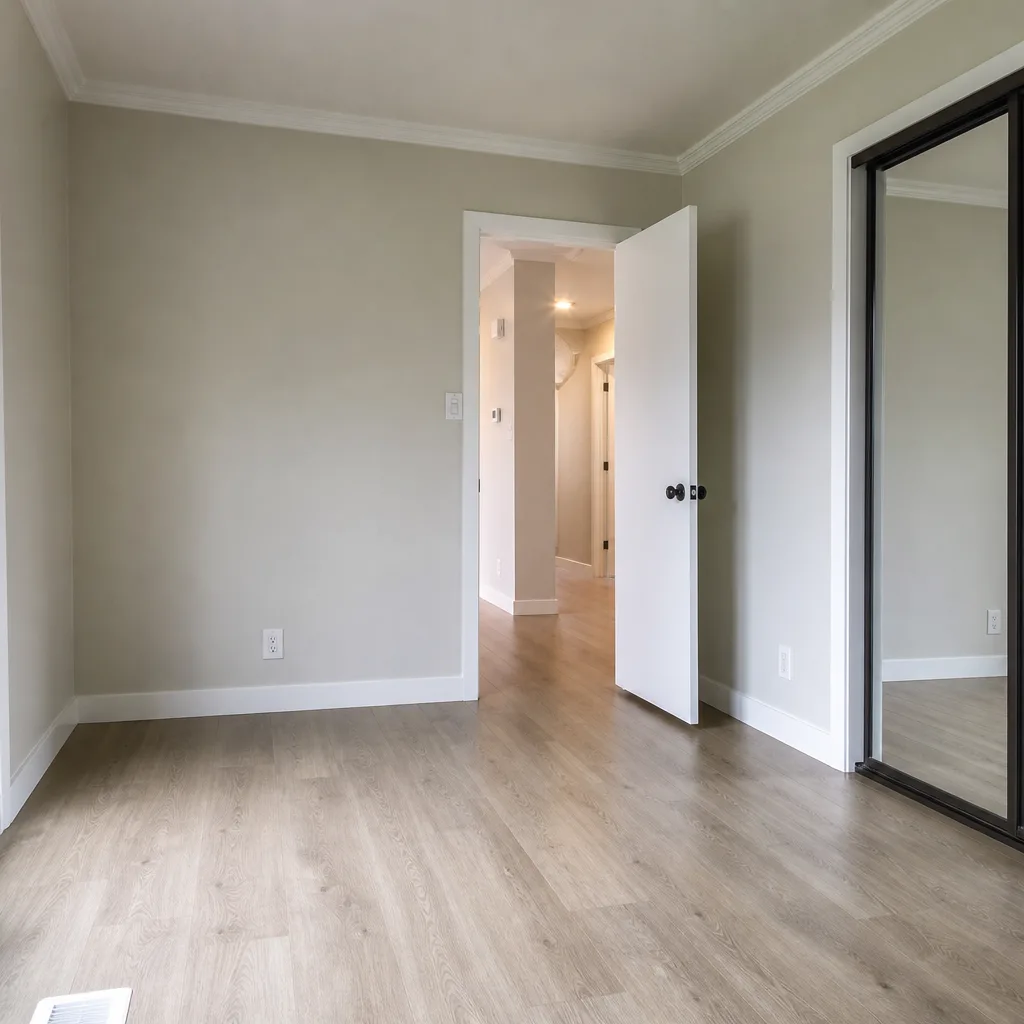 After
After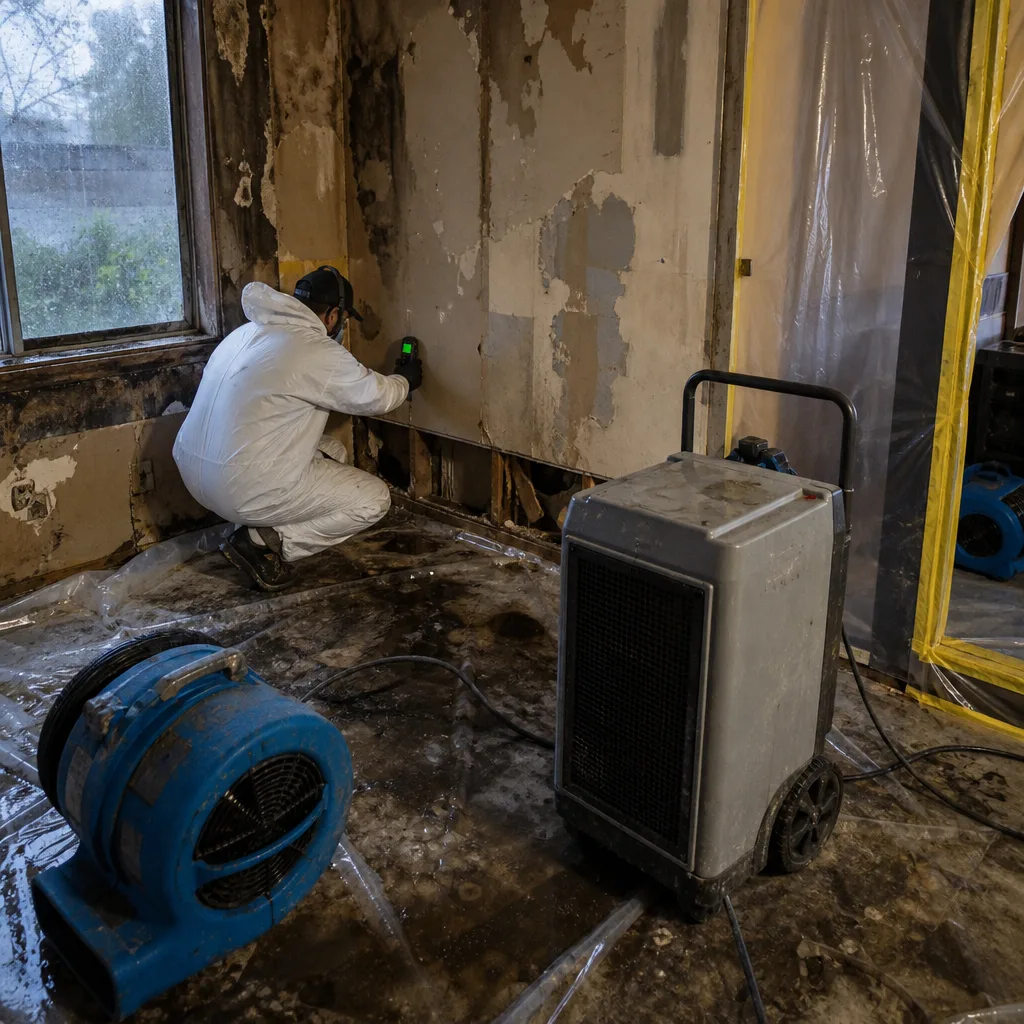 Before
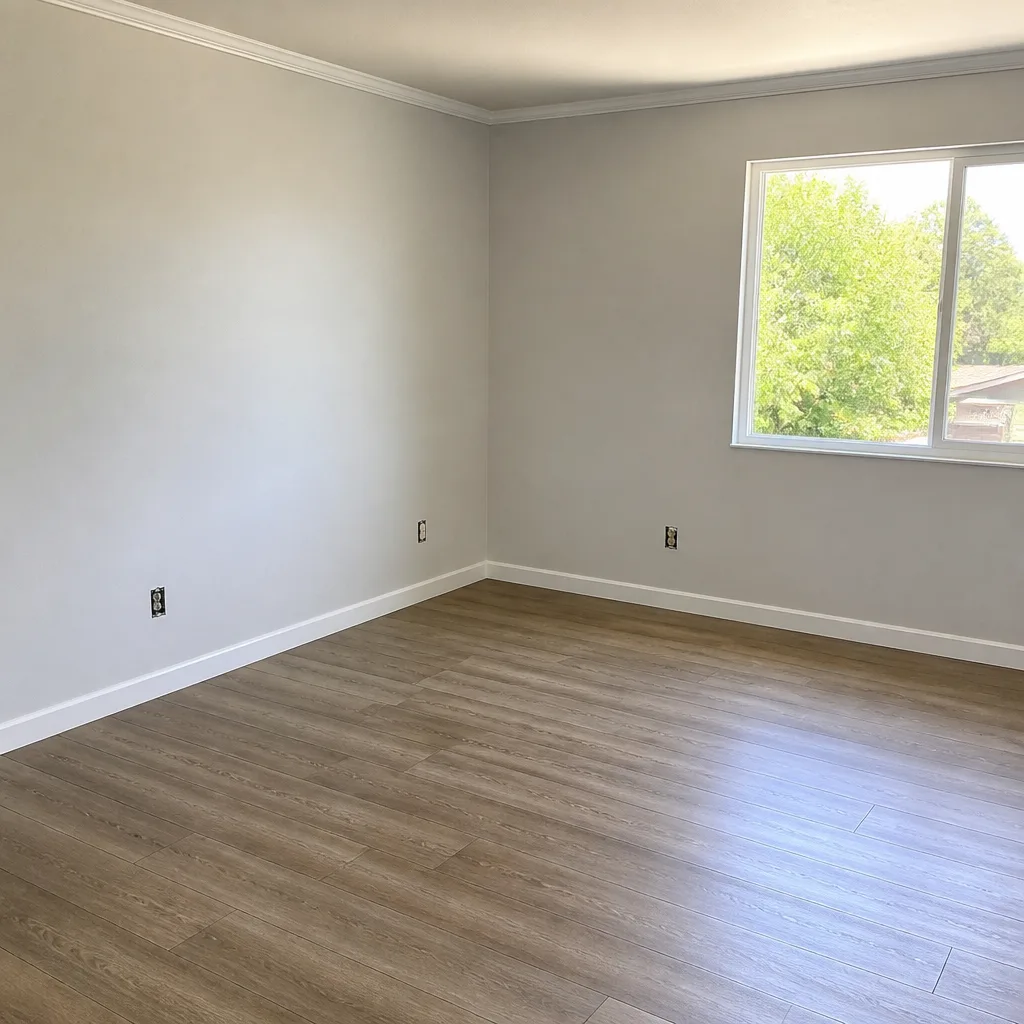 After
After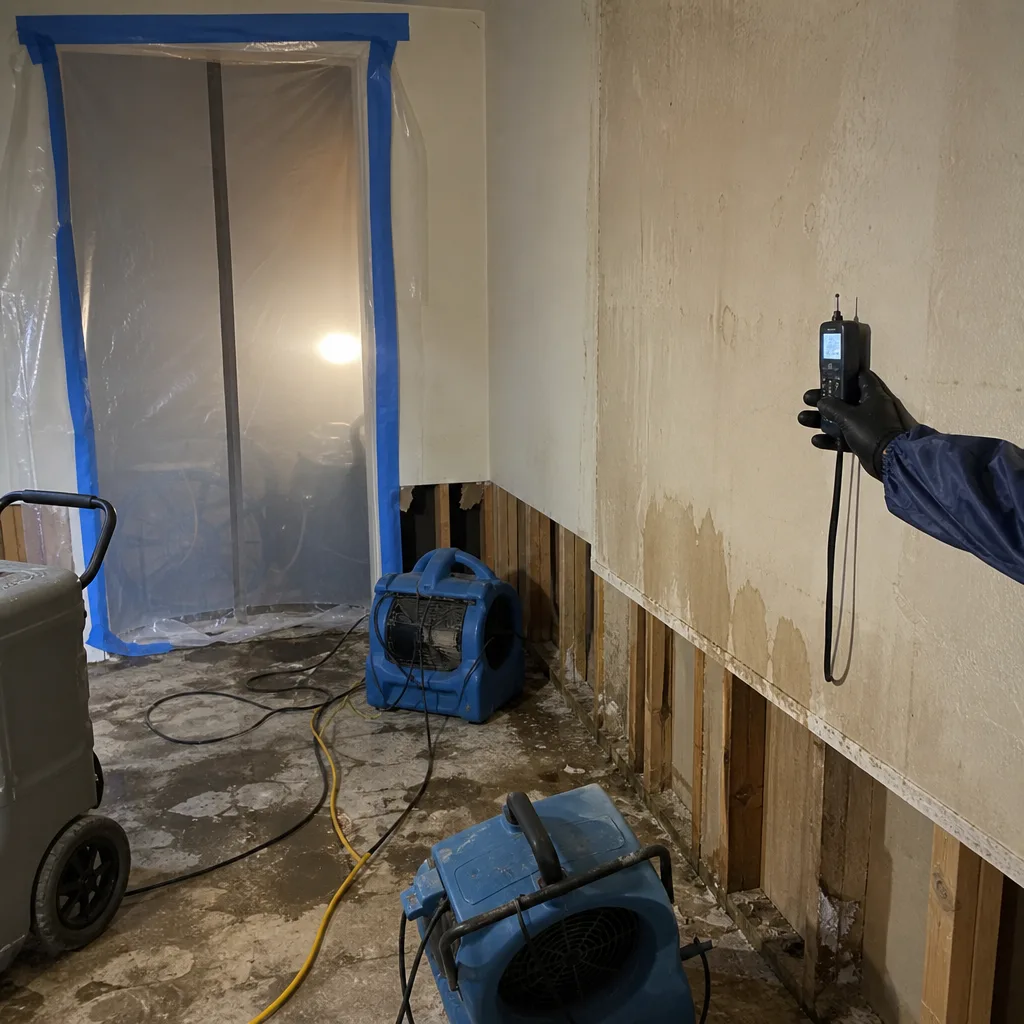 Before
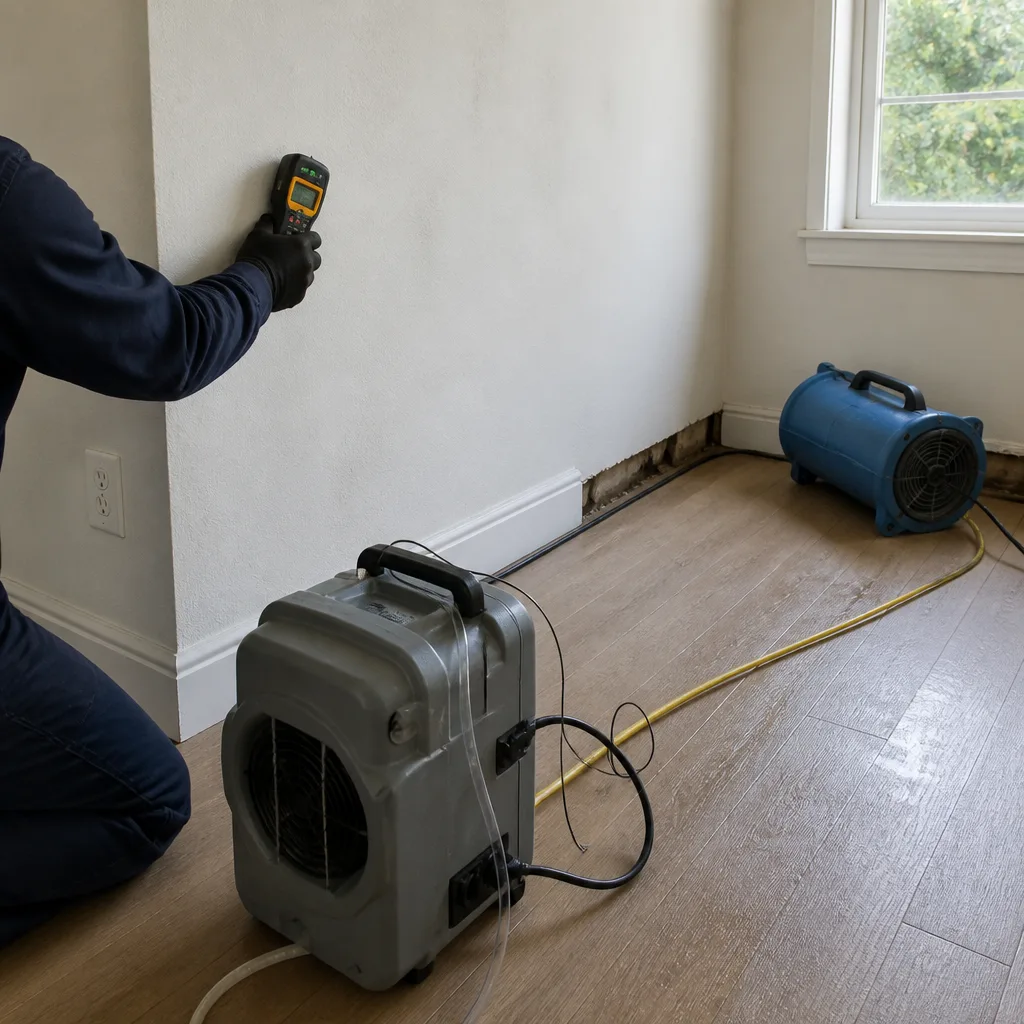 After
AfterDamage Restoration Warning Signs: A Lakewood Homeowner’s Reference Guide
The warning sign most Lakewood homeowners miss isn’t visible at all - it’s a moisture reading above 16% in a wall cavity adjacent to a slab penetration, in a house built before 1975. We’ve been called to homes in the Lakewood Country Club area where the drywall looked pristine, yet the OSB sheathing behind it had climbed to 22% moisture content, well past the 16% threshold where mold colonization becomes likely under IICRC S500 guidelines. This guide - along with our more guides & resources - replaces vague advice like “musty smell” or “look for stains” with the specific readings, dimensions, and material conditions that tell you precisely when a professional assessment is warranted. You’ll learn the exact moisture meter thresholds by material type, how Lakewood’s pre-1980 housing stock shows damage differently than newer construction, and the structural patterns that reveal a previous restoration job was done incorrectly.
Quick Answer
Damage restoration warning signs that demand immediate professional assessment in Lakewood include: moisture content above 16% in wood framing, 1% or higher on concrete slabs via calcium chloride testing, or relative humidity sustained above 60% in rooms with no plumbing fixtures; efflorescence on concrete block walls (not paint bubbling on drywall); and any structural deformation following a previous water event. These thresholds come from IICRC S500 and our documentation of 12,000+ homes restored since 2011.
Table of Contents
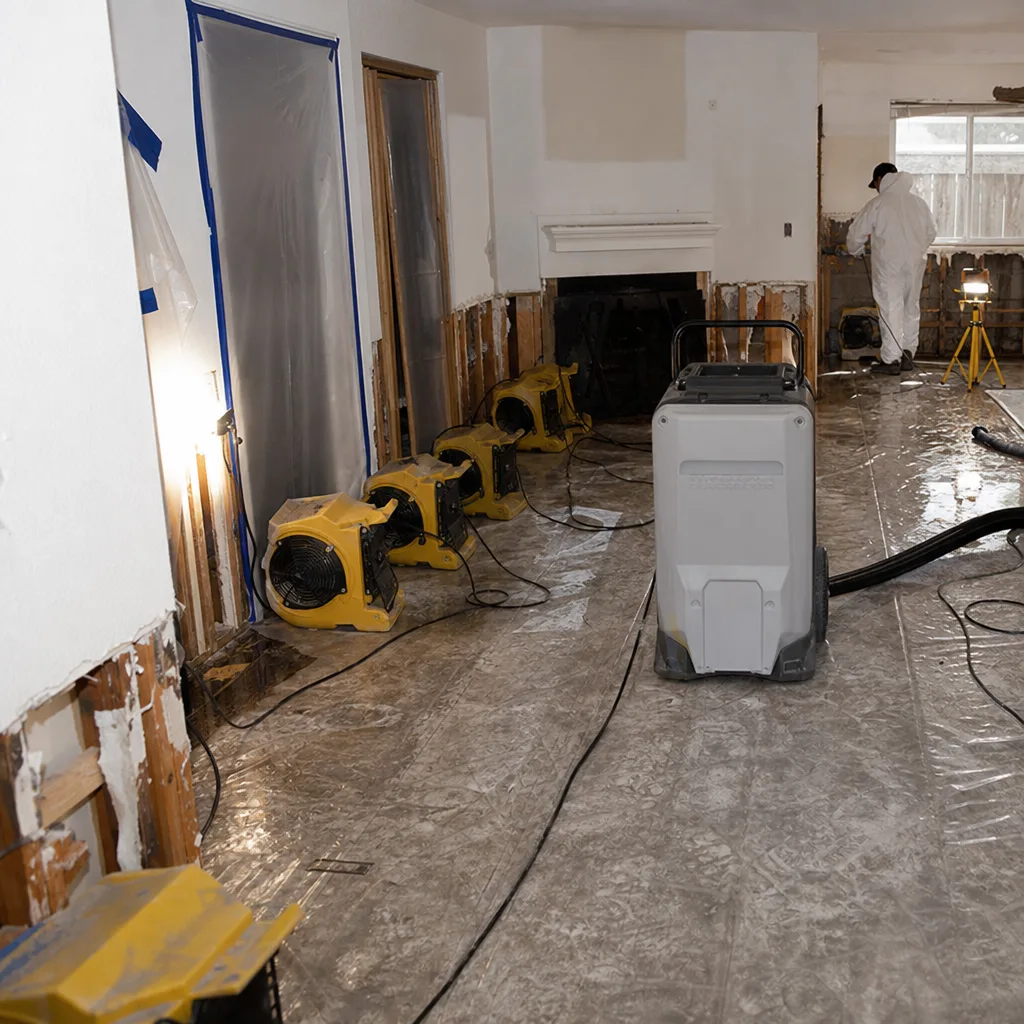
- Moisture Thresholds by Material: When ‘Monitor’ Becomes ‘Remediate’
- Lakewood’s Pre-1980 Housing Stock: Different Visual Indicators
- Distinguishing Normal Humidity from Active Intrusion
- Signs a Previous Restoration Job Was Done Incorrectly
- Room-by-Room Warning Sign Reference
- Common Mistakes to Avoid
- When to Call a Professional
- Frequently Asked Questions
 Before
 After
AfterMoisture Thresholds by Material: When ‘Monitor’ Becomes ‘Remediate’
Every material in your Lakewood home has a specific moisture content where damage transitions from reversible to requiring professional intervention. These aren’t opinions; they’re documented in IICRC S500, the standard we follow on every job, and confirmed by the psychrometric data we collect with Dri-Eaz and Phoenix dehumidification systems.
Wood framing and structural lumber: The critical threshold is 16% moisture content (MC), measured with a pin-type meter corrected for wood species. Below 16%, wood is considered stable for interior use. Between 16% and 20%, fungal growth becomes possible if temperature and time align. Above 20%, we document active decay risk. In Lakewood’s older neighborhoods near Lakewood Boulevard, we regularly find original Douglas fir framing that reads 18-24% near slab penetrations where the original tar seal has degraded. The grain pattern of old-growth fir can also trap moisture differently than modern fast-grown lumber, so we take readings at multiple depths.
Drywall and gypsum board: Drywall is manufactured at approximately 5-8% MC. Readings above 1% on a non-invasive meter, or any softening or core discoloration on pin testing, indicate the paper facing and gypsum core have absorbed enough moisture to compromise structural integrity and create a mold substrate. We replace rather than dry drywall that has exceeded 72 hours of saturation, per S500 Category 3 guidelines.
Concrete slab (on-grade or slab-on-fill): This is where Lakewood homeowners are most often misled. A concrete slab can “feel dry” to the touch while transmitting significant moisture vapor. We use calcium chloride testing per ASTM F1869: readings of 3 pounds or less per 1,000 square feet in 24 hours are acceptable for most flooring. Readings of 3-5 pounds indicate elevated vapor pressure requiring mitigation before flooring installation. Above 5 pounds, we document active moisture vapor transmission requiring a vapor barrier system. In the Mayfair Park area, we’ve tested slabs from the 1950s reading 8-12 pounds because the original polyethylene vapor barrier has degraded or was never installed.
OSB and engineered wood products: These materials are far less forgiving than solid lumber. OSB begins to swell and lose structural capacity at 18% MC, and the swelling is often irreversible. We’ve removed OSB subfloors in Lakewood condos where the material had swollen to 150% of original thickness, creating trip hazards and voiding flooring warranties.
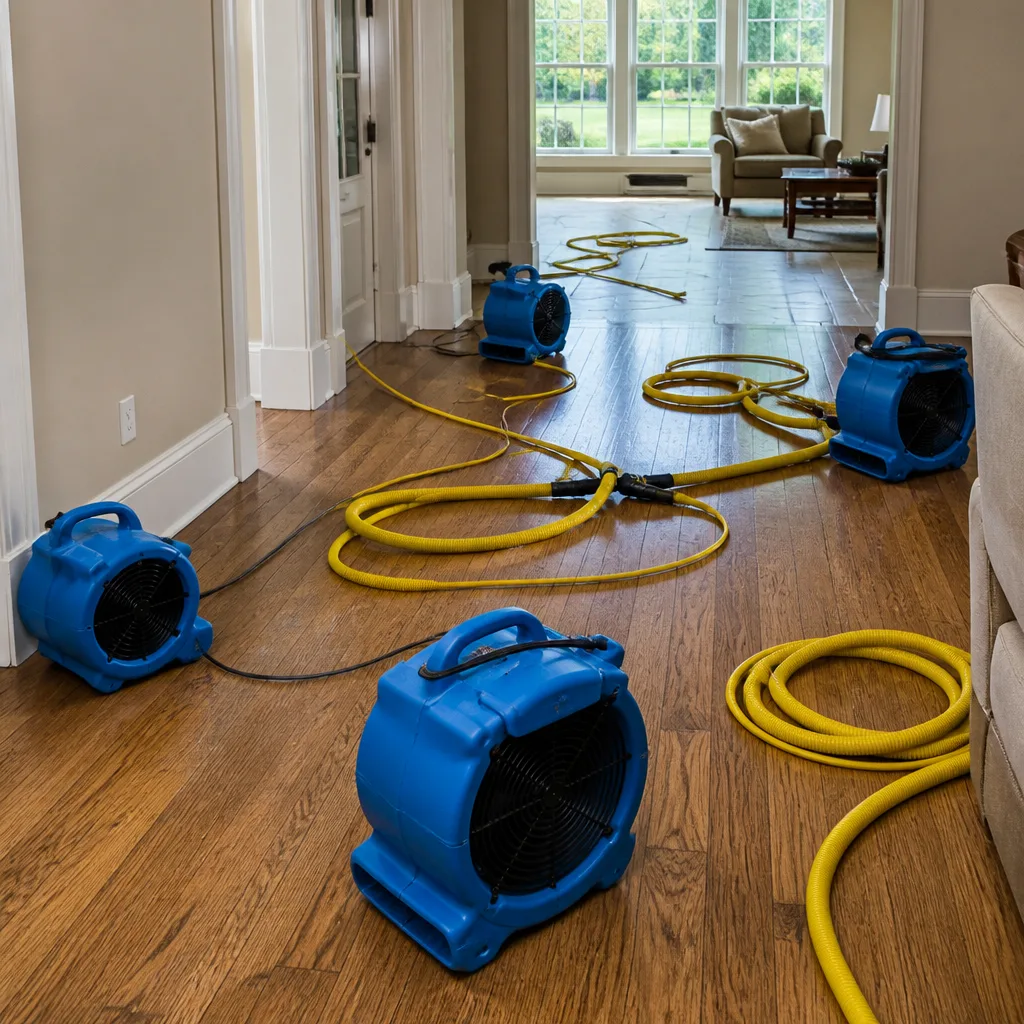
Relative humidity as a screening tool: A room with no plumbing fixtures, no recent spills, and no open windows should maintain 30-50% relative humidity (RH) in Lakewood’s climate. Sustained readings above 60% RH indicate either an undetected moisture source or inadequate ventilation. We use B-Air and XPOWER air movers to establish proper air exchange during assessments.
| Material | Normal Range | Monitor Zone | Remediate Threshold |
|---|---|---|---|
| Wood framing (pin meter) | 6-12% | 12-16% | Above 16% |
| Drywall (non-invasive) | 5-8% | 8-12% | Above 1% or softening |
| Concrete slab (calcium chloride) | Below 3 lb/1000 sq ft/24hr | 3-5 lb | Above 5 lb |
| OSB subfloor (pin meter) | 6-10% | 10-16% | Above 18% |
| Relative humidity (no plumbing) | 30-50% | 50-60% | Sustained above 60% |
Lakewood’s Pre-1980 Housing Stock: Different Visual Indicators
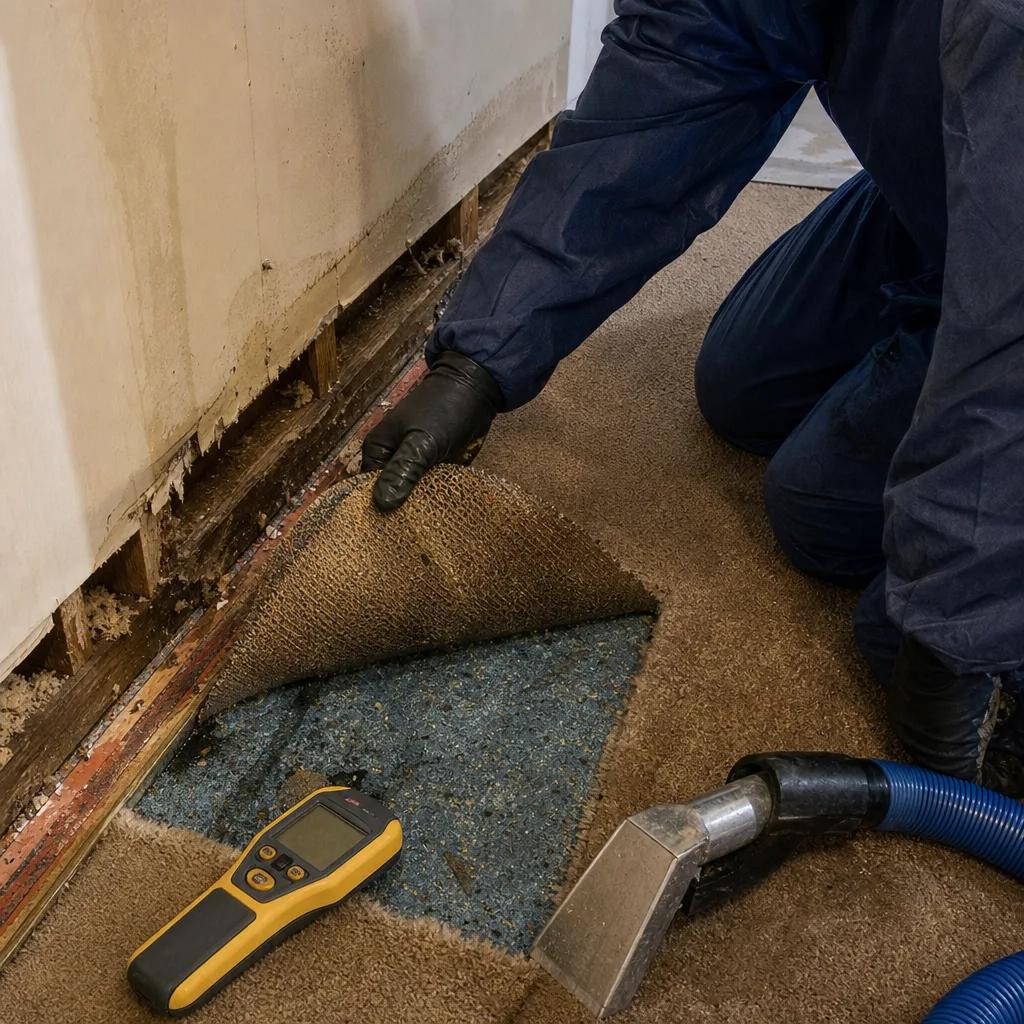
Lakewood’s original 1950s-1970s construction - the postwar tracts between Del Amo Boulevard and Carson Street, the custom homes near Lakewood Country Club - behaves differently than modern construction when moisture intrudes. Understanding these differences prevents misdiagnosis and unnecessary damage.
Concrete block walls versus frame construction: Many Lakewood homes, particularly in the original Lakewood Village area, have below-grade portions or planter walls built with concrete masonry units (CMU). On these walls, efflorescence - a white, crystalline deposit of mineral salts - indicates moisture is moving through the block, dissolving minerals, and evaporating at the surface. This is not mold, but it signals a moisture path that can support mold growth behind the surface. We document efflorescence with photo records and test the block core with a pin meter driven into a mortar joint.
By contrast, paint bubbling on drywall in a frame-built wall typically indicates the paper facing has separated from the gypsum core due to moisture absorption. The distinction matters: efflorescence suggests a chronic moisture source (grade drainage, failed waterproofing) while paint bubbling suggests an acute event (plumbing leak, roof penetration). We’ve seen Lakewood homeowners scrub efflorescence with bleach, thinking it’s mold, while the actual moisture source continues unaddressed.
Plaster and lath versus drywall: Pre-1960 Lakewood homes may have original plaster walls. Plaster is more moisture-resistant than drywall and can sustain higher moisture content without visible damage. However, once plaster begins to separate from the lath (called “key failure”), the repair is more extensive than drywall replacement. We test plaster with a non-invasive meter held against multiple points; readings above 15% with any hollow sound when tapped indicate key failure requiring removal.
Slab-on-grade with original plumbing: Lakewood’s older homes often have copper or galvanized steel water lines run through or below the slab. A “slab leak” in these homes rarely shows water at the surface; instead, we look for: tile lifting in a straight line (following the pipe route), warm spots on tile (hot water line leak), or unexplained moisture meter elevation in a room with no other source. In the Parkview Village area, we’ve documented slab leaks that ran for months, with the homeowner’s only clue being a $400 spike in the water bill.
Original windows and flashing: Single-pane aluminum windows common in 1960s-1970s Lakewood construction develop failed glazing and corroded weep channels. The warning sign isn’t window leakage during rain; it’s staining or swelling at the sill plate below the window, visible only when baseboard is removed. We recommend annual inspection of these areas with a moisture meter during the November-March rainy season.
Distinguishing Normal Humidity from Active Intrusion
Lakewood’s climate produces legitimate seasonal humidity variation. A home near the San Gabriel River corridor will run higher RH than one on the bluff above Lakewood Boulevard. The question is whether your readings indicate weather or a problem.
We use a two-week comparative reading log to separate the two. Here’s the protocol we teach homeowners:
- Establish baseline locations: Place a digital hygrometer in three locations - the room of concern, a similar room with no suspected issue, and outdoors in a covered location. We recommend SensorPush or similar loggers that record hourly.
- Record for 14 days minimum: Active moisture intrusion produces a consistent elevation above baseline, while weather-driven humidity moves in parallel with outdoor readings. A room with a hidden leak will show 15-25% higher RH than the control room, regardless of outdoor conditions.
- Check for diurnal pattern disruption: Normal indoor RH follows outdoor temperature with a lag of 2-4 hours. A room with active moisture intrusion often shows reversed or flattened patterns, with highest RH in early morning when the slab is coolest and vapor pressure differential drives moisture upward.
- Correlate with HVAC cycling: If RH in the suspect room rises when the air conditioner cycles off, and doesn’t fall proportionally when it cycles on, the HVAC may be oversized (short-cycling without adequate dehumidification) or there may be a moisture source overwhelming the system’s capacity.
- Document and compare: After 14 days, compare the suspect room’s average RH to the control room. A sustained difference above 10 percentage points warrants professional assessment with a moisture meter and thermal imaging.
In Lakewood’s spring months, we see many homeowners confuse Santa Ana wind patterns with moisture problems. The hot, dry Santa Anas can drop indoor RH to 20% or below, causing wood shrinkage and joint cracking. When the pattern shifts back to onshore flow, RH rebounds to 60%+ in poorly ventilated homes. This normal variation doesn’t require restoration; it requires humidification control. The two-week log distinguishes this pattern from a true leak.
Signs a Previous Restoration Job Was Done Incorrectly
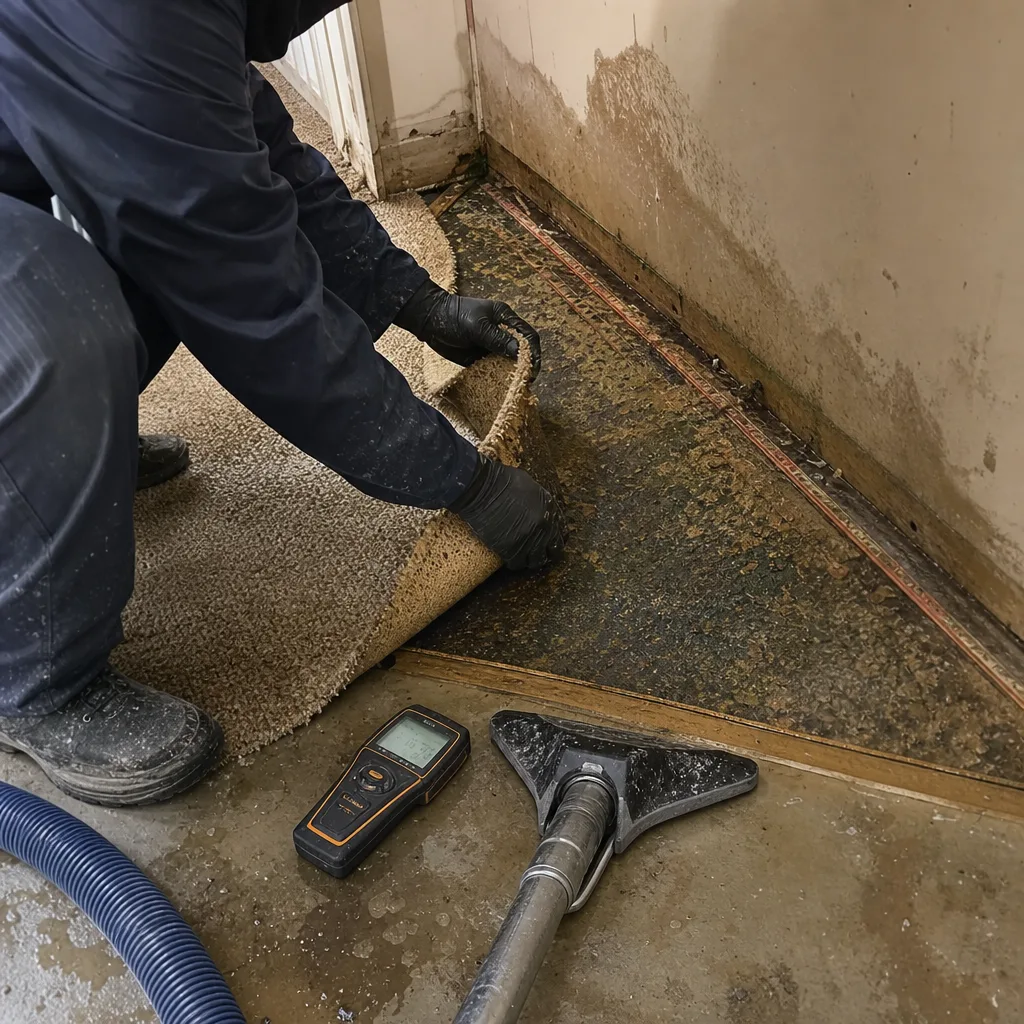
We are called to 40-60 Lakewood homes annually where another company performed water damage restoration, and the homeowner now faces secondary damage. These cases follow identifiable patterns that a homeowner can learn to recognize.
Crown molding and baseboard separation: When drywall is dried too rapidly with high-velocity air movers aimed directly at the surface, the paper facing and joint compound shrink faster than the core. The result is a “picture frame” effect where trim no longer sits flush. We see this frequently in Lakewood condo conversions where restoration companies prioritized speed over proper drying protocol. The correct approach, per IICRC standards, is to direct airflow across, not directly at, wet surfaces, with daily moisture readings to track progress through the material thickness.
Floor cupping that progresses to crowning after “drying”: Solid wood floors that were cupped (edges high, center low) when wet should flatten as they dry. If a floor instead progresses to crowning (center high, edges low) after a restoration company’s work, the drying was incomplete or uneven. The moisture gradient between the top and bottom of the boards was not properly managed. We document this with pin meters driven to half-depth and full-depth, comparing readings. Tertiary drying - the final phase where bound water is removed from cell walls - requires controlled humidity and temperature over days, not hours.
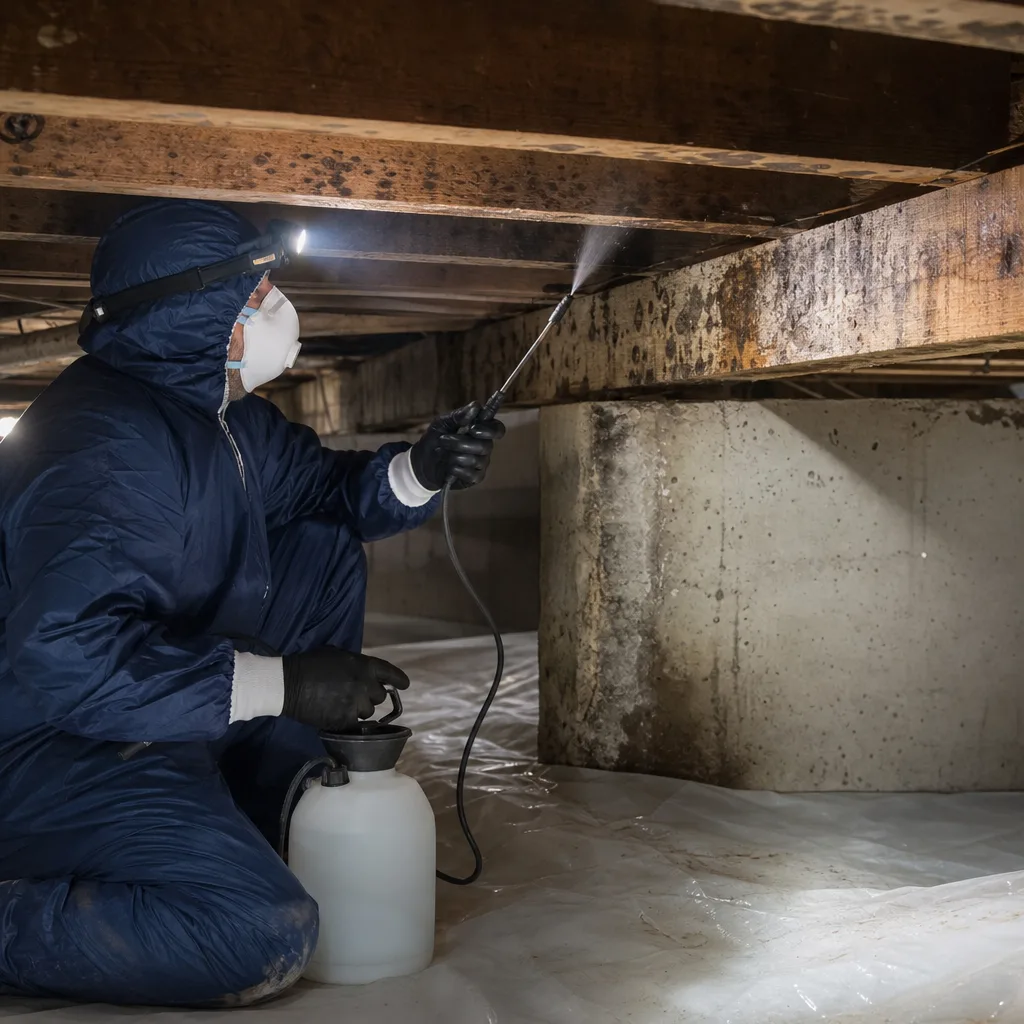
Mold growth in “dry” areas: The most serious indicator. If mold appears 2-8 weeks after a restoration job in areas that were supposedly dry, the original moisture was not fully removed or the containment failed during demolition. We use Injectidry systems to create negative pressure within wall cavities during drying, preventing spore dispersal. Post-restoration mold in Lakewood’s older homes often traces to failed drying of insulation - fiberglass batts that were left in place, or cellulose that was surface-dried while the interior remained wet.
Corrosion on metal fasteners and electrical boxes: Accelerated corrosion of drywall screws, outlet boxes, or HVAC registers in a previously wet area indicates that the drying stopped while relative humidity in the cavity remained elevated. We remove outlet covers and inspect for rust on the mounting ears; any orange staining in a “dry” room is evidence of incomplete drying.
Odor that returns after temporary suppression: Some restoration companies address odor with ozone or hydroxyl generators without resolving the source. These treatments oxidize odor molecules temporarily, but if the moisture source remains, microbial activity resumes and odor returns within days. We don’t run odor equipment until moisture readings confirm the source is eliminated, documented in our daily drying logs.
Room-by-Room Warning Sign Reference
Damage presents differently by location. This reference uses the early-moderate-advanced staging we document in every Water Damage Restoration in Lakewood assessment.
Kitchen
Early: Grout darkening at the sink base cabinet toe-kick; dishwasher drain hose connection shows mineral buildup; refrigerator icemaker line has a micro-droplet at the compression fitting. These are found with a flashlight and a paper towel test - wipe the connection, wait 60 seconds, check for new moisture.
Moderate: Cabinet base panel swelling or delamination; vinyl flooring lifting at seams near appliances; musty odor when the dishwasher door opens. At this stage, we remove the kick plate and test the subfloor with a pin meter.
Advanced: Tile cracking in a pattern following cabinet layout (indicates subfloor swelling); mold visible on cabinet interior surfaces; electrical GFCI trips repeatedly. The GFCI trips because moisture has reached the outlet box - this is an active safety hazard requiring immediate electrical and restoration assessment.
Bathroom
Early: Caulk separation at tub-shower corners; toilet base rocking slightly (wax ring compromise); exhaust fan housing shows dust clumping (indicates condensation on housing surface). We test the fan’s CFM output - many original Lakewood bathrooms have 50 CFM fans in rooms that require 80 CFM per code.
Moderate: Tile grout erosion or powdering; baseboard swelling at the tub end wall; paint bubbling on the ceiling below an upstairs bathroom. The ceiling bubbling indicates the leak has penetrated the subfloor and is following the ceiling joist cavity.
Advanced: Structural tile failure - tiles sounding hollow when tapped; subfloor deflection visible from below; mold on the underside of the toilet flange visible through the access panel. At this stage, we typically find the original 1950s-60s cast iron drain line has cracked at the hub.
Laundry Room
Early: Washing machine supply hose bulging or surface cracking; dryer vent lint accumulation at the exterior termination; floor drain has standing water that doesn’t fully recede. The drain issue may indicate a partially blocked sewer line - in Lakewood’s older areas with clay pipe, tree root intrusion is common.
Moderate: Washer pan has sediment or water stains; wall behind washer shows efflorescence (indicates supply line leak inside the wall); floor slope toward the drain has reversed (subfloor swelling). We test with a 4-foot level - any deviation from level indicates structural subfloor damage.
Advanced: Mold on the back of the washer control panel; electrical cord insulation stiffening or cracking from chronic humidity; floor joist sag visible from the crawl space or room below. The washer control panel mold is a specific indicator we document - it means the room’s RH has been sustained above 70% for extended periods.
Garage and Exterior Walls
Early: Garage door bottom seal no longer contacts the floor evenly; daylight visible around the frame; interior garage wall shows slight discoloration at the sole plate. In Lakewood’s flat terrain, garage floors are often at or below exterior grade, making them vulnerable to surface water intrusion.
Moderate: Stored cardboard boxes show softening at the bottom; metal tools show surface rust; drywall tape cracking at the garage-to-house wall. This wall is a fire separation; any moisture compromise affects both the structural integrity and the fire rating.
Advanced: Garage door opener rail sagging (header moisture damage); significant efflorescence on the slab; mold on stored items. We frequently find that the original garage slab lacked a vapor barrier, and decades of vehicle moisture (rain, coolant, condensation) has driven vapor upward.
Attic and Roof Structure
Early: Nail shanks visible through roof sheathing in the attic (indicates condensation on cold metal); slight darkening of insulation near the eaves; bathroom exhaust fans terminate in the attic rather than through the roof. The latter is a code violation in every jurisdiction and a guaranteed moisture source.
Moderate: Insulation compression in patterns matching roof framing; water stains on the chimney chase or vent stacks; plywood sheathing delamination at edges. We test sheathing with a pin meter at multiple points - readings above 20% indicate active leakage or chronic condensation.
Advanced: Structural sag in the roof plane visible from the exterior; mold on the underside of sheathing in a pattern following the rafter bays; rafter heel rot at the top plate. In Lakewood’s original tract homes, the 2×4 rafter heels are particularly vulnerable - minimal overhang and often no baffle to prevent insulation contact.
Common Mistakes to Avoid
- Using a “moisture meter” from a hardware store without understanding its limitations. Most consumer meters are non-invasive and calibrated for drywall depth. They cannot read through tile, cannot distinguish between materials, and give false lows on materials with metallic content. We use pin meters with species correction and hammer probes for accurate sub-surface readings.
- Assuming visible mold is the extent of the problem. Mold on a surface indicates conditions suitable for growth; it does not define the moisture source or the full extent of colonization. We’ve opened walls in Lakewood homes where the visible mold patch was 6 inches wide and the cavity contamination extended 14 feet in both directions along the top plate.
- Drying only what you can see. Water follows the path of least resistance: along the bottom plate, through insulation channels, down the exterior of drain pipes. Surface drying of carpet and pad while the subfloor remains wet is the most common error we correct after other companies.
- Ignoring Lakewood’s soil conditions. The expansive clay soils in parts of Lakewood create hydrostatic pressure against foundation walls during wet winters. Homeowners interpret the resulting moisture as “groundwater” and install sump pumps without addressing the exterior drainage. Proper grading and downspout extension often eliminates the problem at lower cost.
- Accepting “it feels dry” as documentation. Insurance adjusters, and our own DryMark Restoration Lakewood home protocols, require numerical data: moisture readings, relative humidity logs, temperature differentials. “Feels dry” has no standing in a claim dispute.
- Delaying assessment because the water “dried on its own.” Rapid surface drying while the interior remains elevated is precisely the condition that produces secondary damage. Wood can reach 30% MC at the core while reading 12% at the surface - the conditions for decay are present even when the surface seems normal.
- Using bleach on mold without addressing moisture. Bleach is primarily water; it feeds the moisture problem while providing cosmetic improvement. On porous materials, it can also drive spores deeper. Our Mold Remediation in Lakewood protocol uses mechanical removal and controlled drying, not chemical masking.
When to Call a Professional
Call for immediate assessment when: moisture readings exceed the remediate thresholds in this guide; you discover mold growth of any size in an HVAC system or return air pathway; a previous restoration job was performed and any secondary sign appears within 8 weeks; or you have water intrusion and any occupant has respiratory conditions, immune compromise, or is under age 2. For Fire & Smoke Damage Restoration in Lakewood, the threshold is simpler: any fire that required extinguishment with water or chemical suppressant needs professional documentation before insurance appraisal.
DryMark Restoration Lakewood offers free estimates in Lakewood - call (562) 373-6757. Every assessment includes written moisture readings, a photo-documented scope, and a price delivered before any work begins, per Haven Standard, Clause 1. We also provide free second opinions on any competitor’s written estimate.
Frequently Asked Questions
Our initial assessment is free, with no obligation. The assessment includes room-by-room moisture readings with calibrated pin and non-invasive meters, thermal imaging to identify temperature differentials indicating hidden moisture, and a written scope with pricing before any work begins. Call (562) 373-6757 to schedule - estimates are free.
Most homeowner policies cover sudden and accidental water damage, with coverage decreasing for damage that went unreported for an extended period. The key factor is documentation: our photo records, moisture logs, and written scopes establish the timeline and cause of loss in terms adjusters can process. We coordinate directly with adjusters and provide the documentation package that supports your claim. Call (562) 373-6757 and we can review your policy language with you.
A live person answers every call, 24 hours a day, 7 days a week - no voicemail trees. For active water intrusion, we dispatch same day. For assessment of suspected but unconfirmed moisture, we typically schedule within 24 hours. Response time for fire and smoke damage is same-day emergency board-up and stabilization. Call (562) 373-6757 to confirm current availability.
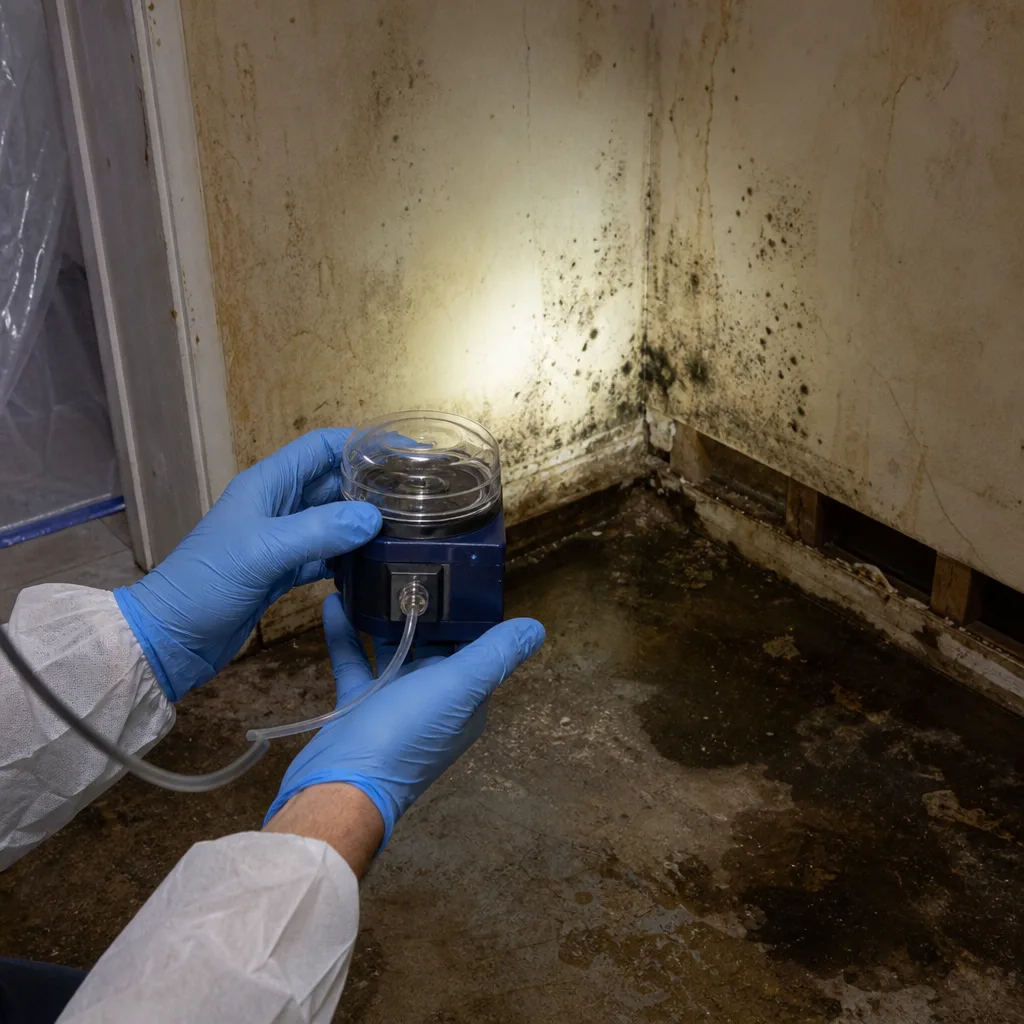
Visible surface cleaning addresses only what you can see. Mold colonization in wall cavities, within HVAC systems, or behind cabinetry requires controlled containment and mechanical removal to prevent spore dispersal. Our assessment determines the full extent using moisture mapping and, when indicated, air sampling and cavity inspection. We don’t recommend remediation beyond what’s documented, and we don’t perform remediation without a written scope agreed in advance. Bring any other company’s estimate for our free second opinion.
Water damage restoration requires specific equipment and protocols: psychrometric monitoring, containment, antimicrobial application, and documentation to IICRC standards. A general contractor may rebuild after restoration but typically lacks the drying equipment, moisture mapping capability, and insurance documentation experience that determines whether your claim is paid. DryMark Restoration Lakewood handles both the emergency mitigation and the reconstruction, with continuity of documentation from first response to final walkthrough.
The signs of incomplete drying usually appear within 2-8 weeks: returning odor, new mold growth, trim separation, or floor deformation. We offer post-restoration verification assessments using the same moisture mapping protocol as our initial response. If we find evidence of incomplete work, we document it with photo records and written findings you can use with the original company or your insurer. Haven Standard, Clause 1 applies to our own work: a written price before any work starts, with no scope-creep additions.
Lakewood’s proximity to the coast and its flat terrain create specific conditions: higher baseline humidity than inland areas, slower natural evaporation, and soil conditions that can drive sub-slab moisture. Our drying protocols account for these factors with adjusted dehumidification capacity and longer monitoring periods. The daily drying logs we produce document psychrometric data specific to your home’s conditions, not generic assumptions.
The Bottom Line
Effective damage restoration starts with recognizing that warning signs are only useful when they’re measurable. “Musty smell” becomes actionable when it’s paired with a relative humidity reading above 60% in a room with no plumbing. “Stain on the ceiling” becomes a scope of work when thermal imaging shows the affected square footage and moisture meters confirm the substrate is above 16%. This guide gives Lakewood homeowners the thresholds we use in professional assessment - the same readings that appear in our written scopes, our daily drying logs, and the documentation packages that turn restoration invoices into paid claims. The 12,000+ homes we’ve restored since 2011 taught us that precision in documentation is what protects the homeowner, the property, and the investment.
Written by Alicia Brennan, Owner at DryMark Restoration Lakewood, serving Lakewood since 2011.