
Last updated September 23, 2026
Free visual inspection and a written scope of work before any mitigation begins - photos, moisture readings, and drying logs go in your claim file
The scope we write is the scope we bill. Anything new gets shown to you, in writing, before we touch it.
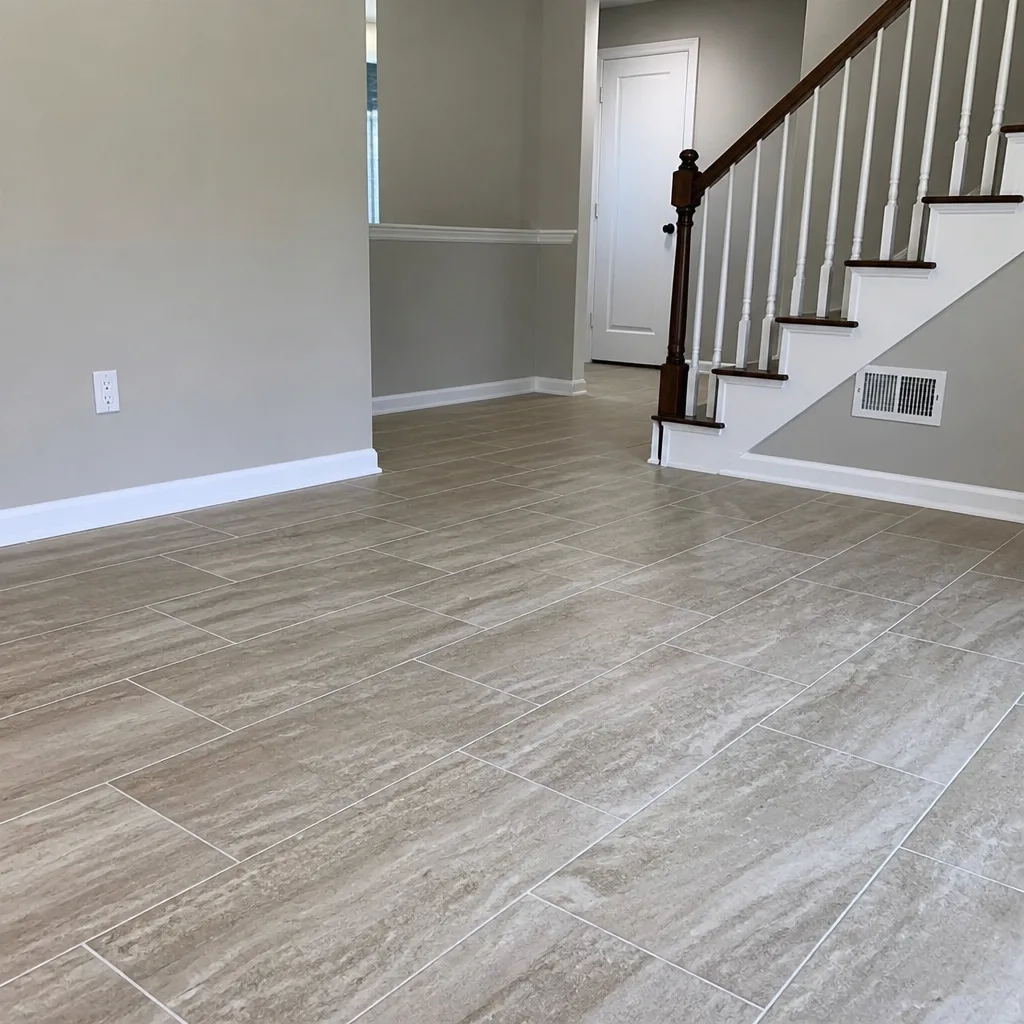

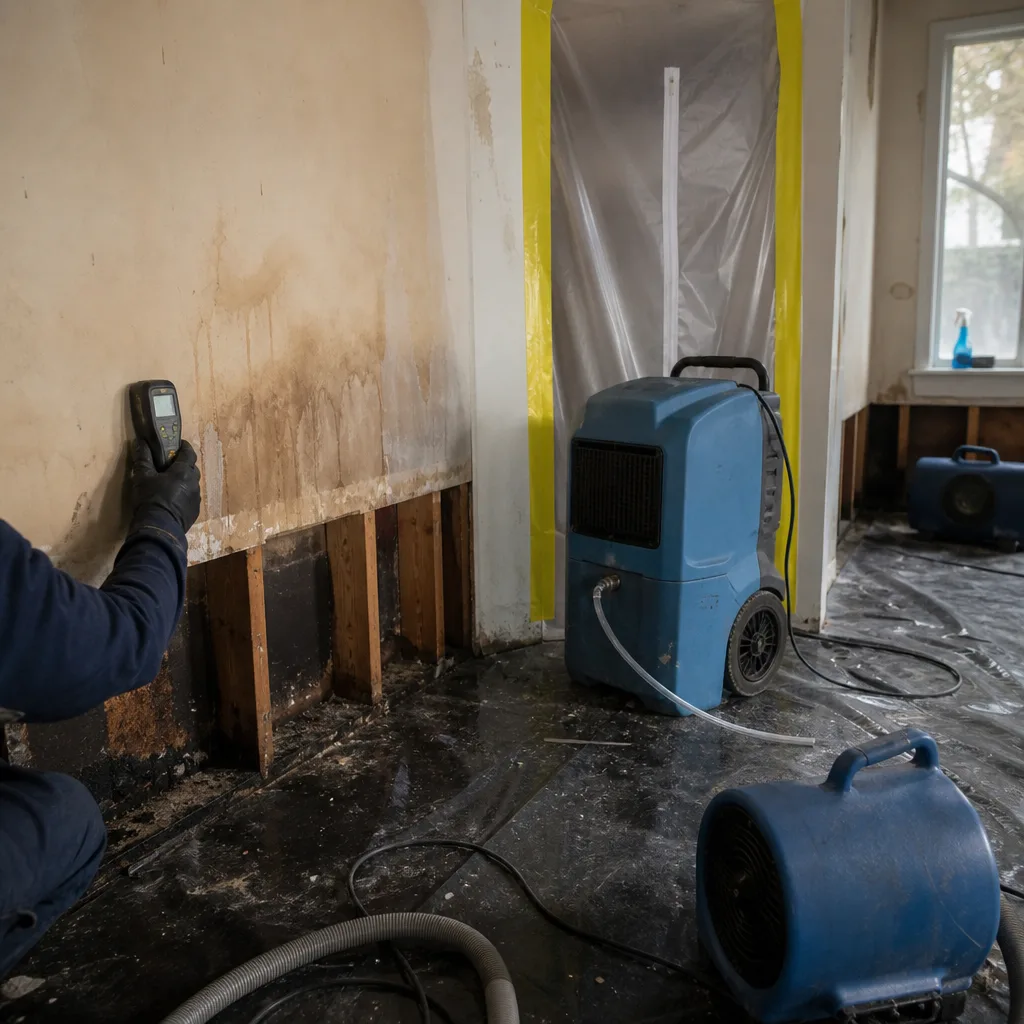 Before
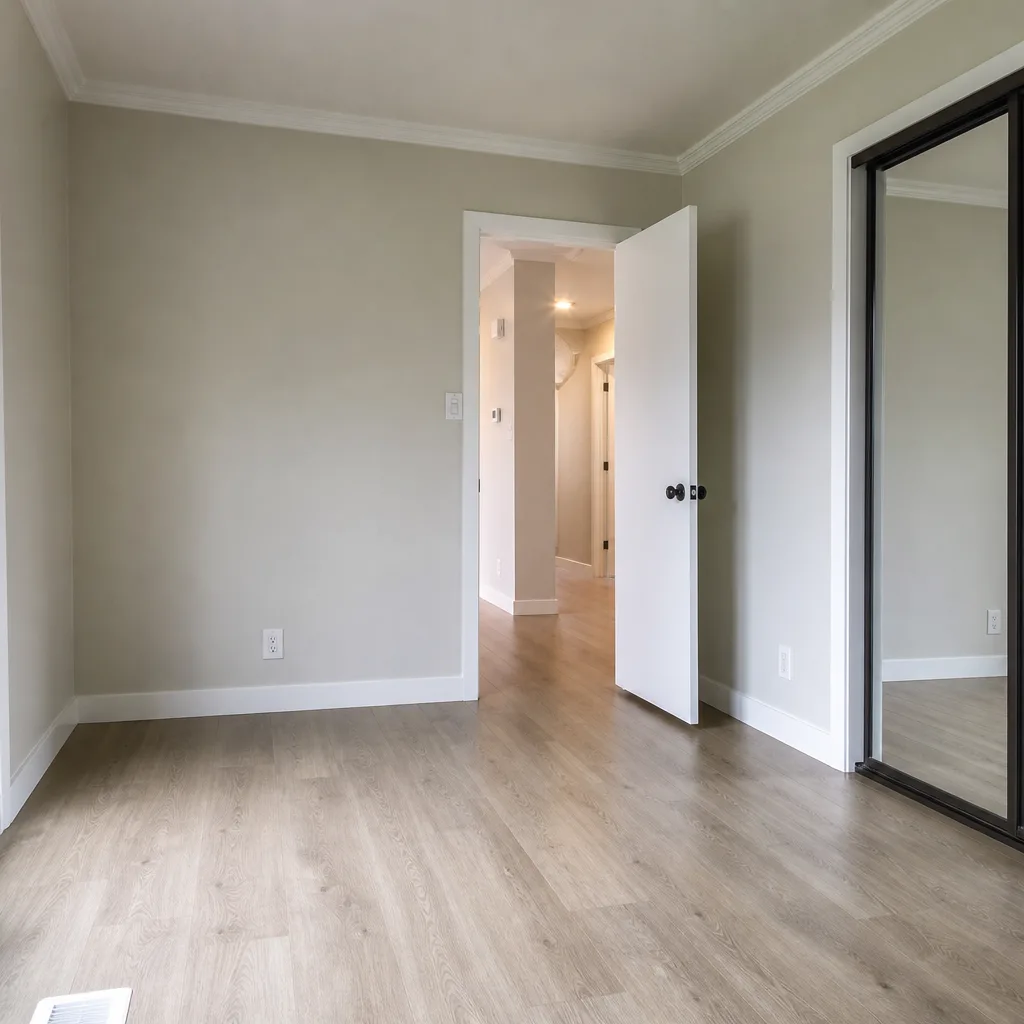 After
After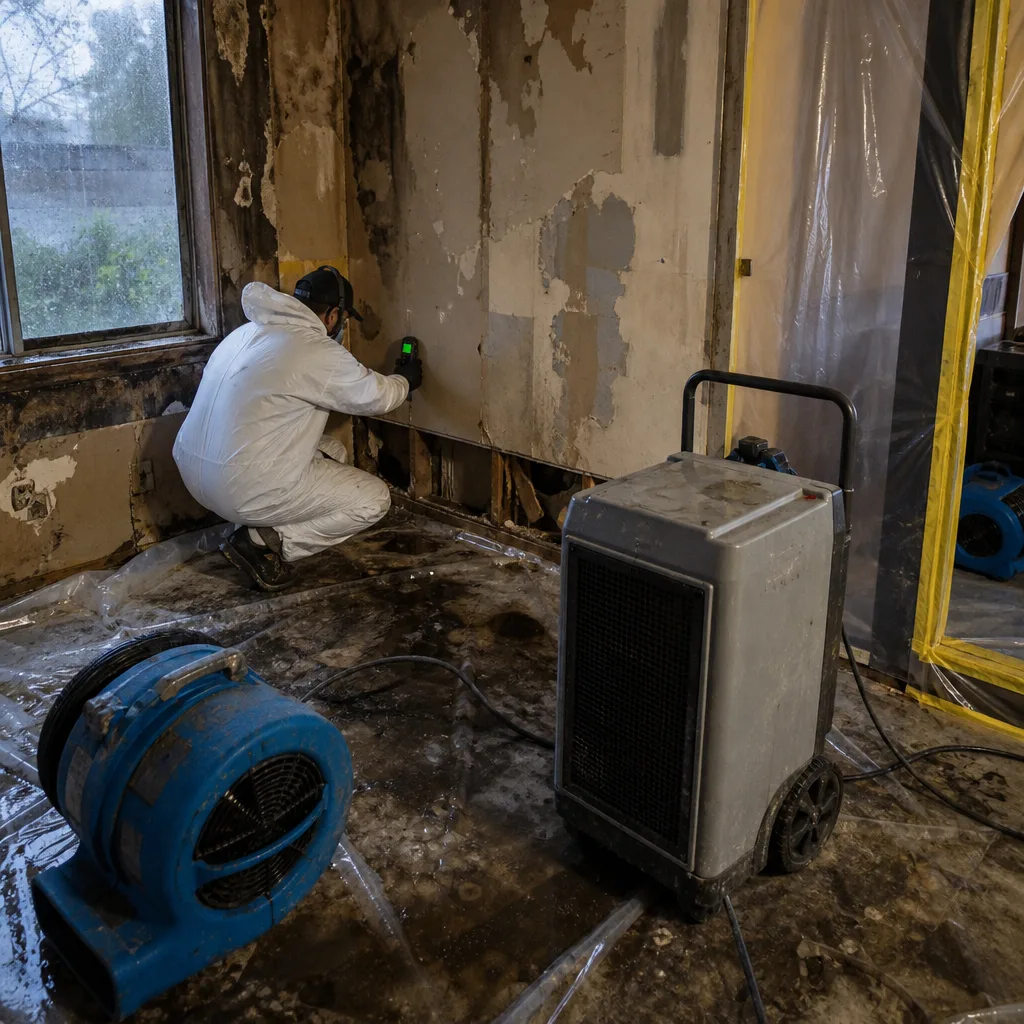 Before
 After
After Before
 After
AfterSeasonal Damage Restoration Care for Lakewood: Year-Round Homeowner’s Guide
Lakewood averages only 13 inches of annual rainfall, but 80% of it falls in a 90-day window - and that compression is why a single storm event can overwhelm drainage systems that performed fine all year. Most seasonal home maintenance guides treat Southern California as a single climate zone, which means they miss the specific risks created by Lakewood’s flat topography, aging concrete slab foundations, and summer marine layer humidity. In this guide - which complements our Complete Guide to Damage Restoration in Lakewood - we’ll map actual Lakewood weather patterns to monthly inspection tasks, document how to build a defensible seasonal photo archive for insurance claims, and explain why the months that look safest on paper often produce the most expensive hidden damage.
Quick Answer
Seasonal damage restoration care in Lakewood requires a compressed rainy-season defense from November through March, marine layer moisture management from June through August, and Santa Ana wind documentation from September through November. The most cost-effective approach is building a seasonal photo archive and performing targeted inspections during the three transition months - April, May, and October - when damage from the previous season reveals itself and the next season’s risks can still be prevented.
Table of Contents
- The Lakewood Risk Calendar: Why National Seasonal Guides Get It Wrong
- November Through March: The Compressed Wet Season
- April and May: The Critical Transition Window
- June Through August: Marine Layer Humidity and Silent Absorption
- September Through November: Santa Ana Winds and Roof Membrane Fatigue
- Building a Seasonal Photo Archive for Insurance Defense
- Pre-Rainy Season Drainage Inspection Protocol
- Your Month-by-Month Maintenance Checklist
 Before
 After
AfterThe Lakewood Risk Calendar: Why National Seasonal Guides Get It Wrong
National seasonal maintenance guides typically divide the year into four equal quarters. That model fails in Lakewood because our damage risks cluster in ways that don’t match the calendar.
Consider the rainfall distribution. NOAA data for the Long Beach Airport station, which serves Lakewood, shows a median annual total near 12.8 inches. October averages 0.6 inches. November jumps to 1.2. December, January, and February each deliver 2.5 to 3.2 inches. March drops to 2.0, April to 0.8, and May through September combined contribute less than 1.5 inches total. This concentration means Lakewood homes experience a genuine flood risk for roughly 90 days, followed by nine months of negligible precipitation.
That pattern creates three distinct problems national guides miss:
- Drainage system atrophy: Nine dry months allow leaves, sediment, and construction debris to accumulate in storm drains along corridors like Del Amo Boulevard and Carson Street. When the first November storm arrives, the system is partially blocked and water ponds on Lakewood’s flat terrain faster than it can sheet-flow to channelized outfalls.
- Foundation moisture cycling: Lakewood’s postwar concrete slab foundations, poured largely between 1950 and 1970, experience expansion and contraction as soil moisture swings from saturated winter conditions to desiccated summer hardness. That cycling cracks slabs and creates pathways for subterranean moisture intrusion during wet months.
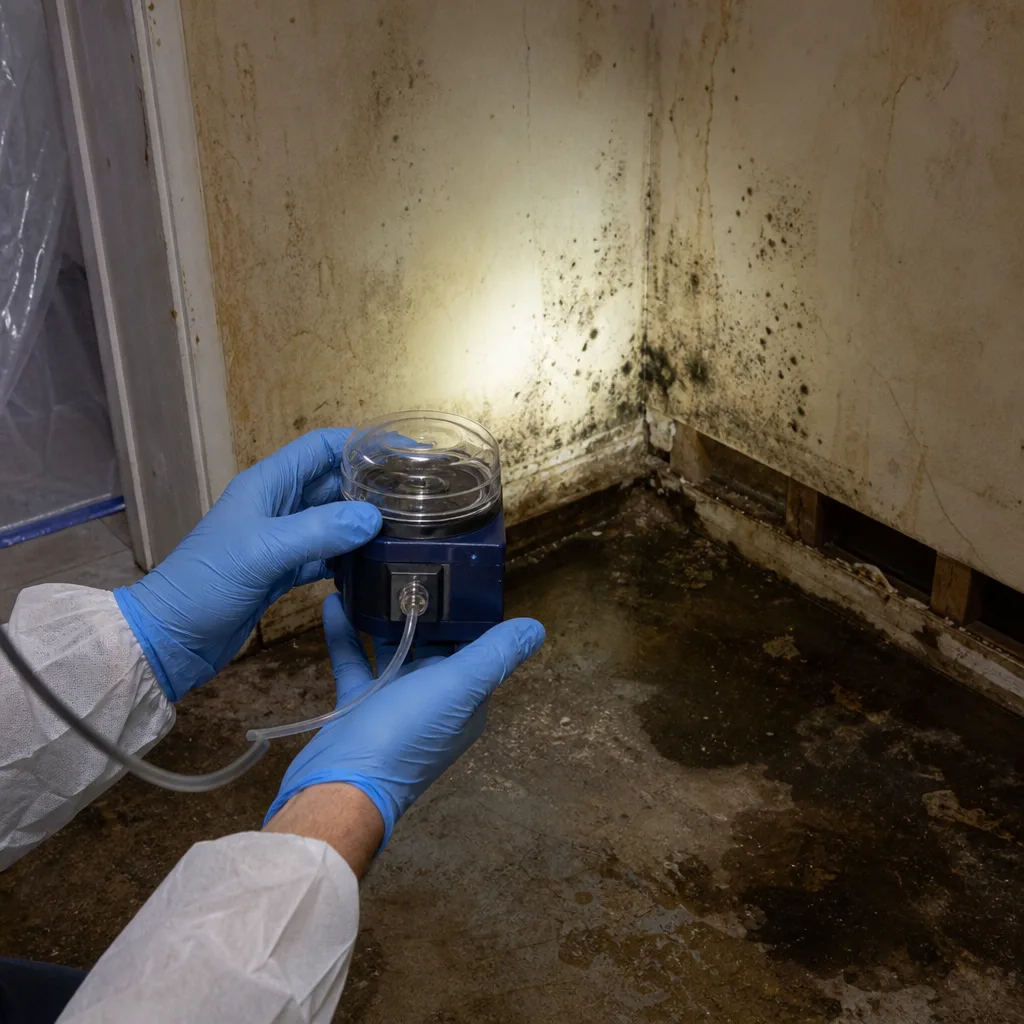
- Humidity blind spots: Summer marine layer conditions push outdoor relative humidity above 80% for extended morning periods, particularly in Lakewood’s western neighborhoods closer to the San Gabriel River channel. Homes with inadequate ventilation or aging vapor barriers absorb this moisture through crawl spaces and slab edges, producing mold-friendly conditions that peak in July and August when homeowners assume they’re safe from water damage.
We’ve documented this pattern repeatedly in our Water Damage Restoration in Lakewood work. In 2019, we responded to a home near Lakewood Boulevard and South Street where the owners had dismissed a musty odor for three summers. Moisture mapping revealed elevated readings at the slab perimeter, not from a leak but from cumulative marine layer absorption through an unsealed foundation edge. The remediation required removal of baseboards, drying of the wall bottom plate, and installation of a sealed vapor barrier - all preventable with proper seasonal inspection.
November Through March: The Compressed Wet Season
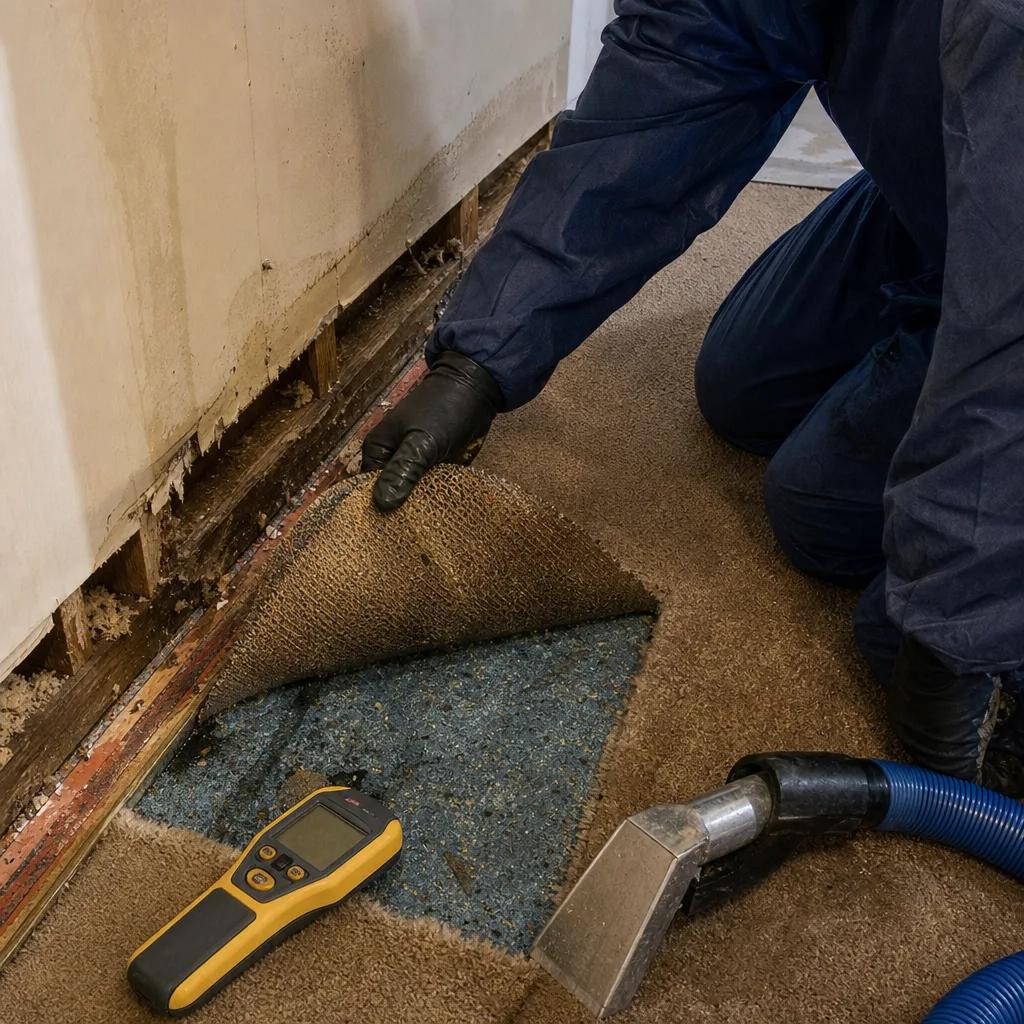
This is when Lakewood homeowners face acute water damage risk. The question isn’t whether to prepare, but how to prepare specifically for compressed, high-intensity rainfall on flat terrain with aging infrastructure - a process detailed in our Water Damage Restoration Maintenance Checklist for Lakewood Homeowners.
Understanding the Drainage Challenge
Lakewood’s elevation ranges from 40 to 60 feet above sea level across most residential areas. That flatness means water doesn’t drain naturally; it moves through engineered channels and storm drain inlets. The city maintains approximately 120 miles of underground storm drain lines, many dating to the 1960s and 1970s, with limited capacity for debris-heavy flows. When NOAA issues a flood watch for the Los Angeles Basin, Lakewood’s risk is elevated not by topography but by infrastructure throughput.
During the January 2023 atmospheric river event, we measured standing water persisting for 72 hours in multiple Lakewood neighborhoods where storm drain inlets were overwhelmed by leaf accumulation from nine months of dry weather. The homes that suffered interior damage were not in flood zones on FEMA maps; they were on streets where sheet flow found the path of least resistance through garage door seals, aging window frames, and cracked concrete patios.
What to Inspect Before November
- Roof and gutter condition: Check for lifted shingles, cracked tile, and separated flashing at valleys and penetrations. Document with dated photos from the ground and, if safely accessible, from a ladder or drone. In Lakewood, tile roofs common in the 1970s and 1980s suffer from deteriorated underlayment that won’t show until water enters the attic space.
- Window and door seal integrity: Test weatherstripping by closing a door on a strip of paper - if it pulls free easily, the seal is inadequate for wind-driven rain. Check sliding door tracks for clogged weep holes, a common failure point we see in Lakewood’s ranch-style homes.
- Grading and hardscape: Ensure soil slopes away from the foundation at minimum 5% grade for the first 6 feet. In Lakewood, many original concrete patios were poured without expansion joints and have settled toward the house, creating collection basins against the slab.
- Garage door seal: Replace if cracked or compressed. Garage floors are typically the lowest slab elevation in Lakewood homes, making them the first entry point for street-level ponding.
During the Wet Season: Monitoring Protocol
After each significant storm, perform a 15-minute interior inspection:
- Check ceiling surfaces in all rooms for discoloration, particularly at drywall joints and near light fixtures where attic leaks manifest.
- Smell-test closets and interior rooms for mustiness, which indicates elevated humidity from hidden moisture.
- Inspect the garage floor and any below-grade storage for dampness or efflorescence on concrete.
- Document anything unusual with dated photos, even if no active leak is visible. This creates your baseline if damage develops weeks later.
We recommend homeowners in Lakewood keep a simple storm log: date, approximate rainfall, any observations, and photo file names. This documentation becomes invaluable if you need to file an insurance claim and the carrier questions whether damage was sudden and accidental or gradual and excluded.
April and May: The Critical Transition Window
April and May are the most underutilized months in Lakewood home maintenance. The rainy season has ended, but damage from that season is still revealing itself. Simultaneously, you have dry conditions to perform repairs before the marine layer humidity arrives.
This is when we find the most “hidden” damage in Lakewood homes. A roof leak that started in January may have saturated insulation and deck sheathing without reaching the ceiling until April, when warming temperatures increase evaporation and the moisture finally migrates to visible surfaces. By then, the homeowner has forgotten the January storm and assumes the damage is new.
Post-Rainy Season Inspection Tasks
- Attic inspection: Enter the attic on a warm April afternoon and look for darkened sheathing, compressed insulation, or fungal growth. Use a moisture meter if available; readings above 16% on wood indicate active drying is still occurring. Document with photos showing the meter reading and location.
- Exterior wall assessment: Walk the perimeter and look for efflorescence on brick or stucco, separated caulking at penetrations, and soil lines indicating previous ponding. In Lakewood’s flat terrain, even minor settlement can reverse drainage patterns.
- Foundation perimeter: Check for new cracks in concrete, separation between soil and slab edge, or evidence of previous water accumulation. Measure and photograph any changes from your November baseline.
- HVAC condensate system: Verify drain lines are clear before summer cooling loads increase humidity removal demands. A clogged condensate line in May becomes an attic flood in July.
Repair and Documentation Priority
Any damage found in April or May should be repaired and documented before June. This serves two purposes: the repair is completed in dry conditions, and your documentation establishes that the damage was addressed promptly - a critical factor if mold develops later and an insurer questions whether the initial event was properly mitigated.
At DryMark Restoration Lakewood, we offer a Free Second Opinion on any written estimate during this window. If a contractor has identified damage from the rainy season, we’ll review their scope and pricing at no charge. Haven Standard, Clause 1 applies: you’ll receive a written price before any work begins, with no exceptions.
June Through August: Marine Layer Humidity and Silent Absorption
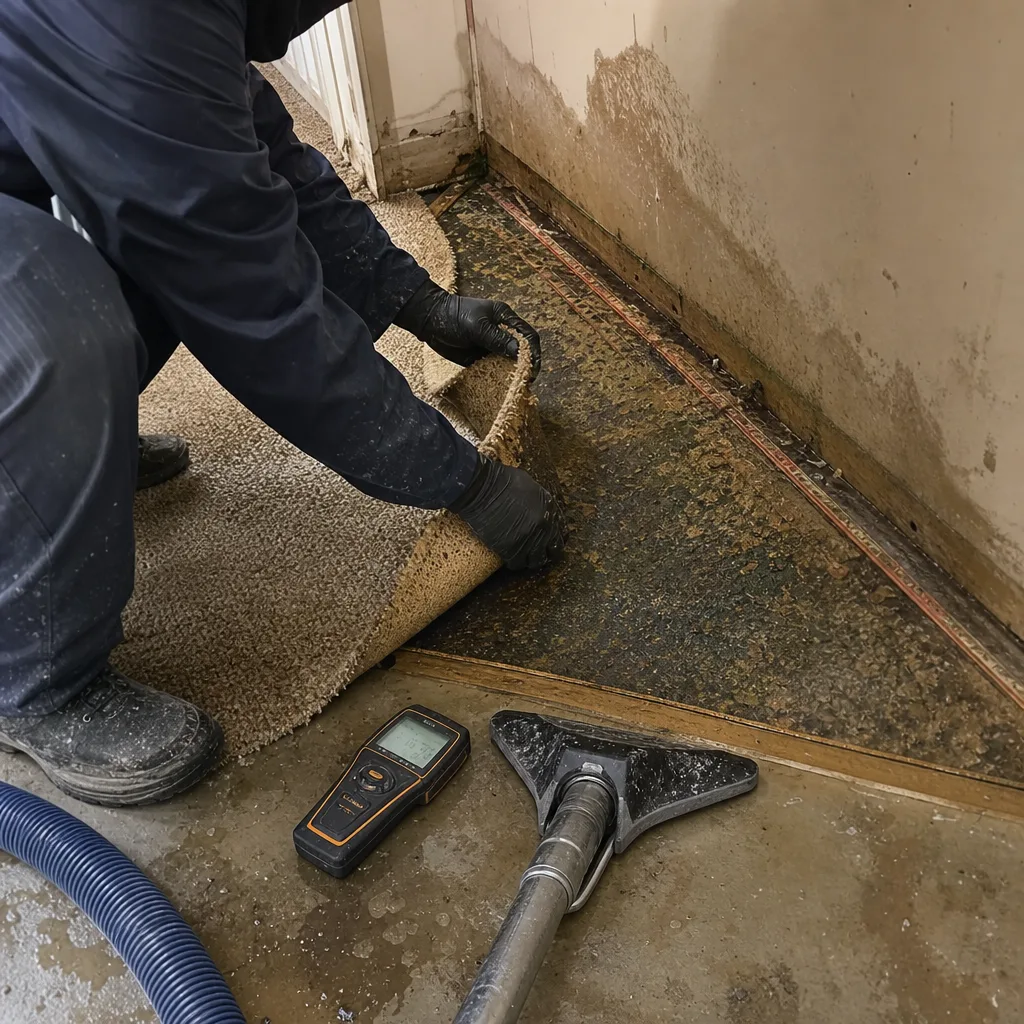
This is the season that surprises Lakewood homeowners. The sky is clear, rain is absent, and water damage seems impossible. Yet we receive consistent calls from July through September for mold concerns, musty odors, and moisture readings that spike without any identifiable leak.
The cause is the marine layer, a cool, moist air mass that moves inland from the Pacific overnight and dissipates by mid-morning. In Lakewood, located roughly 10 miles from the coast with no significant elevation barrier, this layer penetrates reliably. Morning relative humidity routinely exceeds 80% from June through August, particularly in neighborhoods west of Lakewood Boulevard where the San Gabriel River channel allows unobstructed marine air movement.
How Humidity Enters and Accumulates
Lakewood’s housing stock presents specific vulnerabilities:
- Slab-on-grade construction with unsealed perimeters: Concrete is hygroscopic - it absorbs moisture vapor from humid air and soil. Without a proper vapor barrier beneath the slab or sealed edges, moisture wicks into the slab and then into wall bottom plates through capillary action.
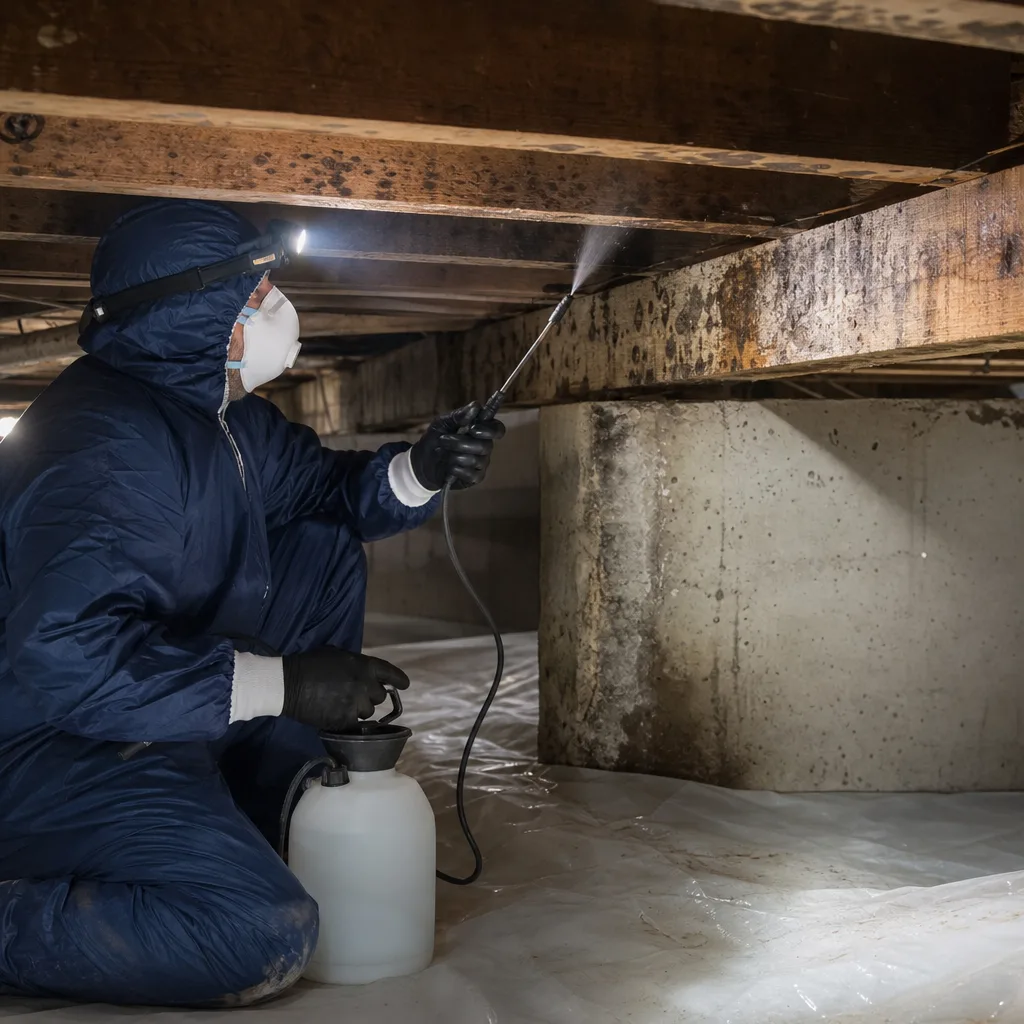
- Original crawl spaces without vapor barriers: Many Lakewood homes built before 1970 have minimal or degraded crawl space protection. Marine layer humidity enters through foundation vents and condenses on cooler subfloor surfaces in the morning.
- Air conditioning oversizing: Oversized AC units cool quickly without running long enough to dehumidify effectively. The home feels comfortable but indoor relative humidity remains elevated, particularly in bedrooms with limited air circulation.
Monitoring and Mitigation
We recommend Lakewood homeowners purchase an inexpensive hygrometer for each floor and log readings weekly. Target indoor relative humidity between 30% and 50%. Sustained readings above 60% indicate a moisture source that needs identification.
Specific actions for summer months:
- Foundation perimeter sealing: Apply a compatible sealant where the slab meets the stem wall. This is a $200-$400 DIY materials cost that can prevent thousands in mold remediation.
- Crawl space vapor barrier: If accessible, install 6-mil polyethylene sheeting over exposed soil, lapped 12 inches at seams and extended to foundation walls. Secure with mechanical fasteners or adhesive.
- AC runtime optimization: If your system cycles on and off frequently, consider a dehumidifier supplement or thermostat with humidity control. The goal is longer runtimes with adequate moisture removal.
- Exhaust ventilation: Ensure bathroom fans exhaust to exterior (not attic) and run for 30 minutes after showers. Verify kitchen range hood ducting is intact.
Our Mold Remediation in Lakewood service regularly addresses summer moisture issues that began as marine layer absorption in June and July. In 2022, we remediated a home near Del Amo Boulevard where the owners had run a portable dehumidifier continuously but never addressed the unsealed slab edge. The dehumidifier managed symptoms; the source required professional drying with Injectidry floor mat systems and subsequent sealing.
September Through November: Santa Ana Winds and Roof Membrane Fatigue
Santa Ana wind season typically begins in September and peaks in October and November. These hot, dry, high-velocity winds from the northeast create a specific damage profile in Lakewood that differs from coastal communities more sheltered by the Palos Verdes Peninsula.
In Lakewood, Santa Ana winds approach across the Los Angeles Basin with minimal topographic interruption. Sustained speeds of 25-35 mph with gusts to 60 mph are common, and the dry air (relative humidity often below 15%) accelerates dehydration of roofing materials already aged by summer UV exposure.
Roof Vulnerability Mechanics
The combination is particularly damaging to:
- Asphalt composition shingles past 15 years: Thermal cycling from summer heat to Santa Ana dryness causes curling and brittleness. High winds lift curled edges and tear shingles at the fastening line.
- Tile roof underlayment: The felt or synthetic underlayment beneath Lakewood’s prevalent concrete tile roofs degrades from UV exposure at broken or displaced tiles. Santa Ana winds drive dust and debris beneath lifted tiles, abrading underlayment further.
- Flat roof membranes: Commercial and some residential flat roofs in Lakewood experience uplift pressure at membrane edges and penetrations. The dry wind accelerates adhesive failure.
Pre-Wind Season Documentation Protocol
This is the most important documentation window of the year. We recommend every Lakewood homeowner perform and archive a roof condition survey in mid-September, before Santa Ana season begins:
- Ground-level photography of all roof elevations, zoomed to show shingle/tile condition, flashing details, and penetration seals.
- Drone photography if available, or professional roof inspection with photo documentation.
- Close-up documentation of any existing damage: cracked tiles, lifted shingle edges, separated flashing, or membrane wrinkles.
- Date-stamped file organization with backup to cloud storage.
After any significant wind event, repeat the photography from the same angles. This before-and-after documentation is the single most effective tool for insurance claim approval. Carriers routinely deny wind damage claims for “pre-existing conditions” or “wear and tear.” Dated photos that establish pre-event condition eliminate that dispute.
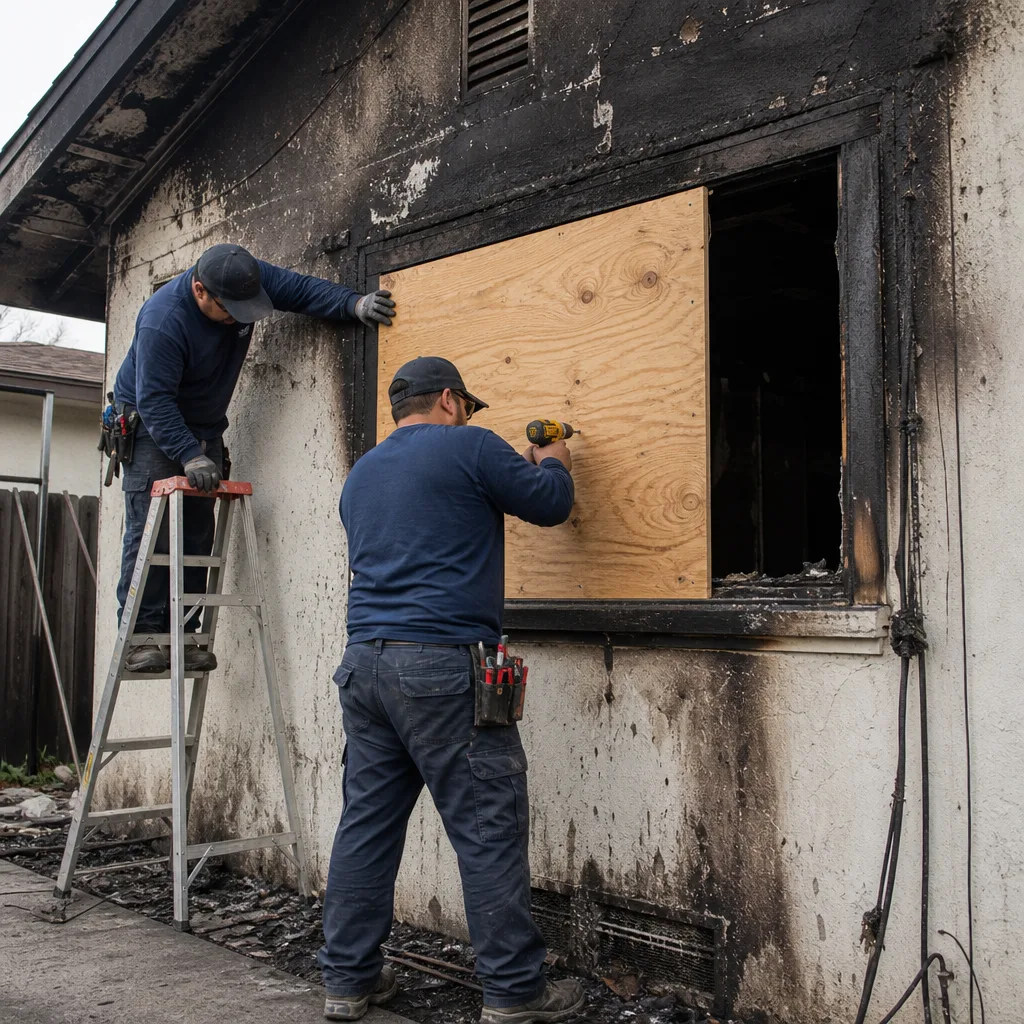
We’ve used this documentation approach in our Fire & Smoke Damage Restoration in Lakewood work as well. Santa Ana winds don’t just damage roofs; they spread wildfire embers. The same photo archive that proves roof condition for wind claims documents defensible space and property condition for fire claims.
Building a Seasonal Photo Archive for Insurance Defense
Insurance claims for water, mold, and fire damage routinely fail on documentation. The homeowner remembers damage occurring suddenly. The adjuster sees evidence of long-term neglect or gradual deterioration. The gap between those narratives is filled by whatever documentation exists - or doesn’t.
At Back to Dry Restoration, our founding principle is that documentation turns restoration invoices into payable claims. Alicia Brennan built the company in 2011 specifically to close the documentation gap she observed as a claims adjuster. The seasonal photo archive extends that principle to homeowner practice.
Archive Structure
Create a simple folder system:
- Property Address / Year / Season (e.g., “1234 Elm Ave / 2024 / Spring”)
- Each season folder contains: exterior photos, interior photos, roof/attic photos, utility/mechanical photos, and a text note with observations and any maintenance performed
Minimum Documentation by Season
| Season | Minimum Photos | Key Focus |
|---|---|---|
| Spring (April-May) | 30-40 | Post-rainy season damage, attic condition, drainage function |
| Summer (June-August) | 20-30 | Foundation perimeter, crawl space, humidity readings |
| Fall (September-November) | 40-50 | Pre-Santa Ana roof condition, pre-rainy season drainage |
| Winter (December-March) | 20-30 per storm | Storm-specific damage, interior moisture indicators |
Store originals in cloud backup with local copies. The 15 minutes per season this requires can determine whether a $15,000+ claim is approved or denied.
Pre-Rainy Season Drainage Inspection Protocol
Lakewood’s flat topography and mature storm drain infrastructure create specific drainage failure modes. This protocol addresses them directly.
Property-Level Inspection
- Roof gutter and downspout function: Verify gutters are clean, properly sloped, and downspouts discharge at least 6 feet from foundation or into functional drainage. In Lakewood, many original homes have downspouts that terminate at the foundation edge, concentrating water against the slab.
- Hardscape drainage: Check that concrete walks, patios, and driveways slope away from structures. Look for settlement cracks that create water collection. The original concrete in Lakewood’s 1950s-1970s housing stock is now 50-70 years old and frequently settled toward foundations.
- Planter and landscape bed drainage: Ensure beds adjacent to walls drain effectively and aren’t over-irrigated. We’ve seen numerous cases where landscape irrigation against the foundation produced slab moisture equivalent to rainfall.
- Foundation vent screening: Verify vents are screened to exclude rodents but not blocked by debris. Unscreened vents allow pest entry; blocked vents trap moisture.
Street and Neighborhood Context
Lakewood homeowners should also observe street-level drainage function during the first fall rain:
- Note where water ponds at street intersections and curb lines, particularly along Del Amo Boulevard, Carson Street, and Lakewood Boulevard where storm drain capacity is most stressed.
- Report persistent ponding to the City of Lakewood Public Works Department; blocked inlets are a known maintenance item.
- If your property is downstream from a drainage basin or park area, recognize that oversaturated ground in those areas can produce subsurface flow toward your foundation even without direct rainfall on your lot.
Your Month-by-Month Maintenance Checklist
January
- Post-storm inspection after each significant rainfall
- Monitor interior humidity and temperature
- Document any new cracks, stains, or odors
- Verify sump pump function if equipped
February
- Repeat January protocol
- Schedule any needed roof repairs during dry windows
- Begin planning spring drainage improvements
March
- Final wet-season documentation
- Inspect and clean gutters after last significant rain
- Test exterior drainage paths with hose simulation
April
- Full post-rainy season inspection (see Section 3)
- Attic entry with moisture meter
- Exterior wall and foundation assessment
- Archive spring photo documentation
May
- Complete repairs identified in April
- Seal foundation perimeter if needed
- Service HVAC before cooling season
- Final spring documentation update
June
- Begin humidity monitoring with hygrometers
- Verify crawl space vapor barrier condition
- Check bathroom and kitchen exhaust function
July
- Log humidity readings weekly
- Inspect for condensation on cool surfaces
- Monitor AC runtime and dehumidification effectiveness
August
- Peak marine layer period - maximum vigilance
- Address any humidity readings sustained above 60%
- Archive summer documentation
September
- Pre-Santa Ana roof condition survey
- Document roof with dated photos from all angles
- Inspect and secure loose items that could become wind-borne
October
- Peak Santa Ana wind season - monitor weather alerts
- Post-wind-event roof inspection after any significant event
- Begin pre-rainy season drainage preparation
November
- Complete drainage inspection protocol
- Final roof and exterior seal verification
- Archive fall documentation
- Prepare for compressed wet season
December
- Execute wet-season monitoring protocol
- Verify emergency supplies and contractor contacts
- Document first storms of season
Common Mistakes to Avoid
- Assuming no rain means no moisture risk. Lakewood’s summer marine layer produces mold-favorable conditions without a single drop of rainfall. We’ve remediated homes where homeowners ignored musty odors for three consecutive summers because “it never rains in summer.”
- Documenting only visible damage. Insurance adjusters distinguish sudden damage from gradual deterioration. A photo of a stained ceiling helps; a photo of the same ceiling from six months earlier, showing no stain, proves the damage event.
- Waiting for “the big one” to prepare. Lakewood’s damage pattern is cumulative small events, not single catastrophic floods. Three inches of rain in January, absorbed by a cracked patio slab, produces more foundation damage than most homeowners recognize until baseboards warp or flooring fails.
- Hiring contractors who won’t put pricing in writing. Haven Standard, Clause 1 exists because vague or verbal pricing leads to scope creep, disputed invoices, and denied insurance claims. Any restoration contractor who won’t deliver a written price before work begins is creating documentation gaps that will cost you.
- Ignoring street-level drainage context. Your property doesn’t exist in isolation. If the storm drain at your corner is blocked, your street becomes the drainage channel. The five minutes to report a blocked inlet can prevent hours of interior water extraction.
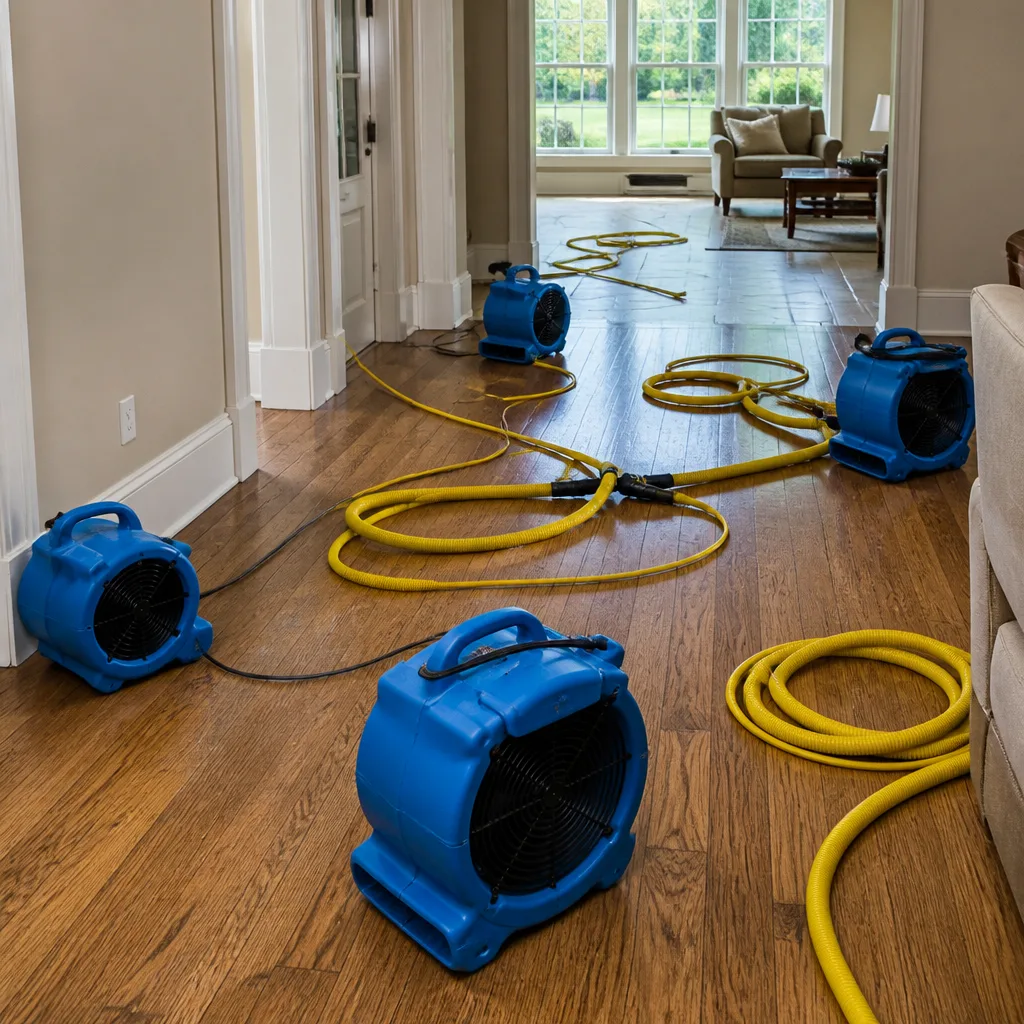
- Using consumer-grade equipment for professional drying. Household fans and dehumidifiers cannot achieve the psychrometric conditions required for structural drying. Vapor pressure differential - the force that drives moisture from wet materials to dry air - requires professional-grade equipment from manufacturers like Dri-Eaz and Phoenix, operated to IICRC standards, with daily moisture logs documenting progress.
When to Call a Professional
Some seasonal maintenance is appropriate for capable homeowners. Some conditions require professional assessment and documentation.
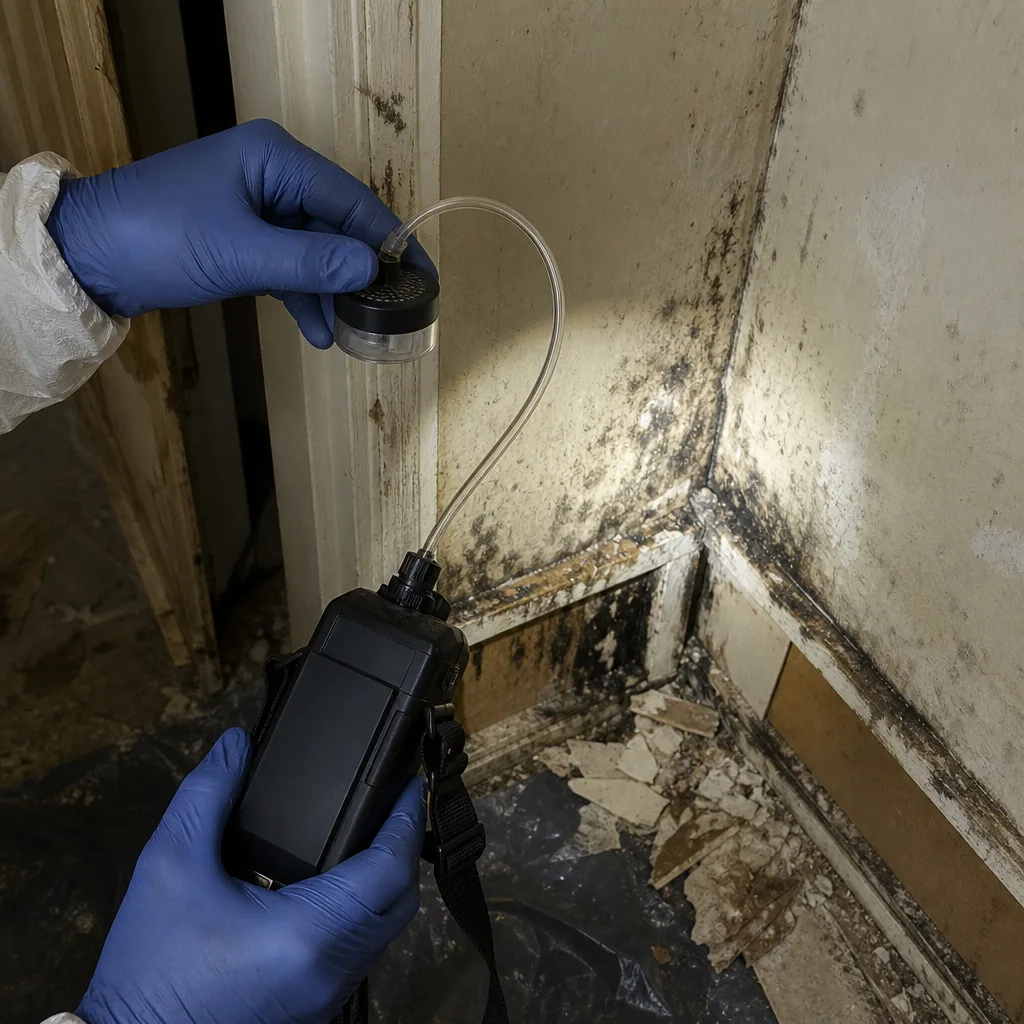
Call DryMark Restoration Lakewood when you observe: moisture meter readings above 16% on wood framing or 4% on concrete (measured with a calibrated pin-type meter); visible mold growth exceeding 10 square feet; water intrusion that has reached wall cavities or insulation; roof damage that exposes underlayment or sheathing; or any water, fire, or mold damage where an insurance claim is likely or anticipated.
We provide free estimates in Lakewood, with a written price delivered before any work begins - Haven Standard, Clause 1, no exceptions. Our technicians are background-checked, uniformed, and licensed, with photo-documented assessments that produce the daily drying logs insurers require for claim payment. Live phone coverage is available 24 hours a day, 7 days a week with no voicemail on emergency lines.
DryMark Restoration Lakewood offers free estimates in Lakewood - call (562) 373-6757.
Frequently Asked Questions
Annual seasonal maintenance for a typical Lakewood home runs $400-$1,200 in materials and minor repairs, or $1,500-$3,500 if professional inspections and sealing are included. For detailed pricing context, see our Damage Restoration Cost Breakdown: The Lakewood Homeowner’s Reference for 2026. This compares to average water damage restoration costs of $3,200-$8,500 for a single incident, and $15,000-$45,000 if mold remediation and reconstruction are required. The highest-return investments are foundation perimeter sealing ($200-$400 materials), crawl space vapor barrier installation ($800-$1,500), and pre-season roof inspection with documentation ($250-$450). Call (562) 373-6757 for a written estimate on any seasonal preparation work - estimates are free.
Standard homeowners policies cover sudden and accidental water damage but exclude damage from maintenance neglect or gradual deterioration. If your roof leak began in January and you discovered it in April, the carrier may deny the claim if you cannot establish when damage occurred and that you responded promptly. This is why the seasonal photo archive matters: dated documentation of pre-event condition and post-event discovery supports claim approval. For complex claims, we provide direct adjuster coordination and photo-documented assessments that align with carrier requirements. Call (562) 373-6757 if you’re navigating a disputed claim.
For active water intrusion or flooding, we dispatch within 60 minutes in Lakewood during the compressed wet season, with live phone coverage 24 hours a day, 7 days a week. For non-emergency seasonal inspections and preventive sealing, we schedule within 3-5 business days. Response speed matters for mitigation - water continues moving through materials until extraction and drying begin, and every hour increases the affected square footage. For reconstruction and non-urgent repairs, we scope, schedule, and price in writing like any professional remodel, with no same-day dispatch promise. Call (562) 373-6757 to discuss your timeline.
Remediation is required when mold growth exceeds 10 square feet, involves HVAC systems, or occurs after Category 2 or 3 water damage (gray or black water). Cleaning alone is appropriate only for minor surface growth on non-porous materials with a confirmed dry source. In Lakewood, we frequently find that summer marine layer moisture has produced hidden mold in wall cavities while visible growth appears minimal. We offer free second opinions on any competitor’s written mold estimate - bring their scope and we’ll review it at no charge, with a written price before any work begins if our assessment differs.
We do, if you engage us for the restoration. Our documentation package - daily moisture logs, photo records from every visit, written scope with line-item pricing, and drying equipment readings - is formatted specifically for adjuster review. Alicia Brennan founded Back to Dry in 2011 as a former claims adjuster who understood what documentation gaps cost homeowners. We coordinate directly with your carrier’s adjuster, provide supplemental documentation on request, and advocate for scope items that meet IICRC standards but may exceed initial carrier estimates. You remain the policyholder and final decision-maker; we handle the documentation burden.
Lakewood’s specific risk profile combines flat topography (lower natural drainage, higher street ponding), postwar concrete slab construction (aging, often unsealed perimeters), and geographic position that receives unobstructed marine layer influence without coastal elevation buffering. Long Beach has more varied topography and newer construction in some areas; Cerritos has different soil composition and drainage infrastructure age. The monthly checklist in this guide is calibrated for Lakewood’s specific conditions, not generically for the 562 area code. For assessment of your specific property and neighborhood, call (562) 373-6757 for a free, written estimate.
The Bottom Line
Lakewood’s seasonal damage risks don’t follow national patterns. The compressed wet season demands concentrated preparation. The marine layer summer creates hidden moisture accumulation. The Santa Ana wind season requires documentation discipline for insurance defense. And the transition months of April, May, and October offer the best return on preventive effort.
The homeowners who fare best are those who treat documentation as maintenance, not aftermath. A seasonal photo archive, humidity logging, and written repair records transform the uncertain claim process into a documented transaction. At DryMark Restoration Lakewood, we’ve built our practice on this principle since 2011: evidence before work begins, evidence during the work, and a written warranty when the work is complete.
For a free estimate on seasonal preparation, damage assessment, or restoration services in Lakewood, call (562) 373-6757. Written price before work begins, every time. Haven Standard, Clause 1.
Written by Alicia Brennan, Owner at DryMark Restoration Lakewood, serving Lakewood since 2011.