
Last updated September 23, 2026
Free visual inspection and a written scope of work before any mitigation begins - photos, moisture readings, and drying logs go in your claim file
The scope we write is the scope we bill. Anything new gets shown to you, in writing, before we touch it.


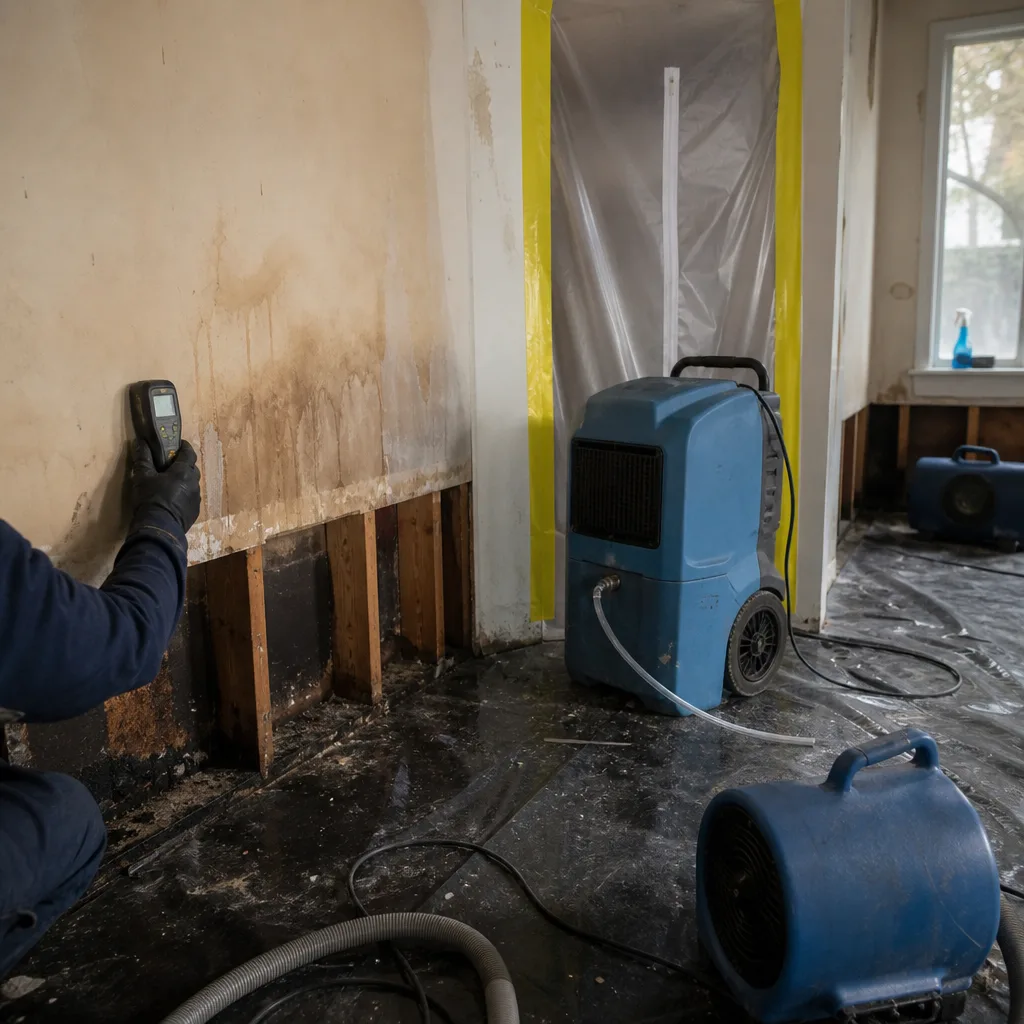 Before
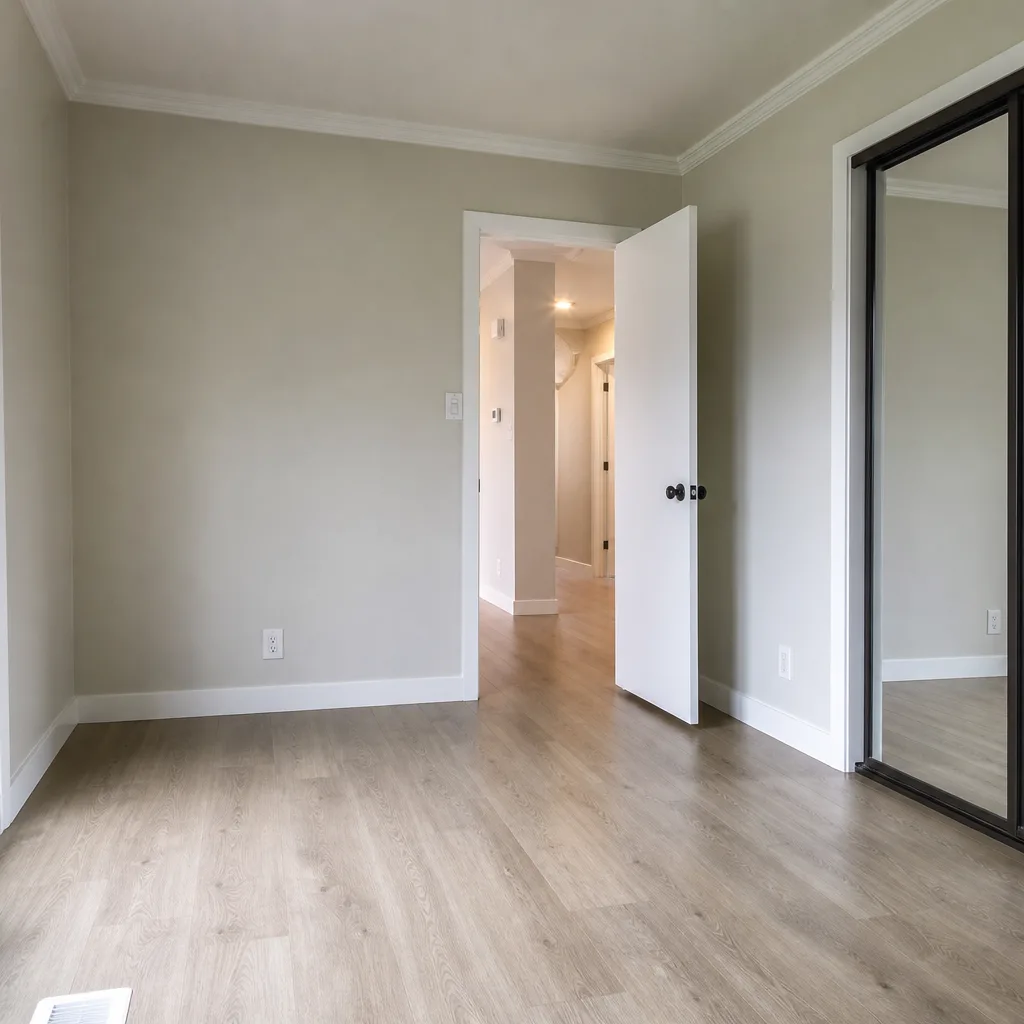 After
After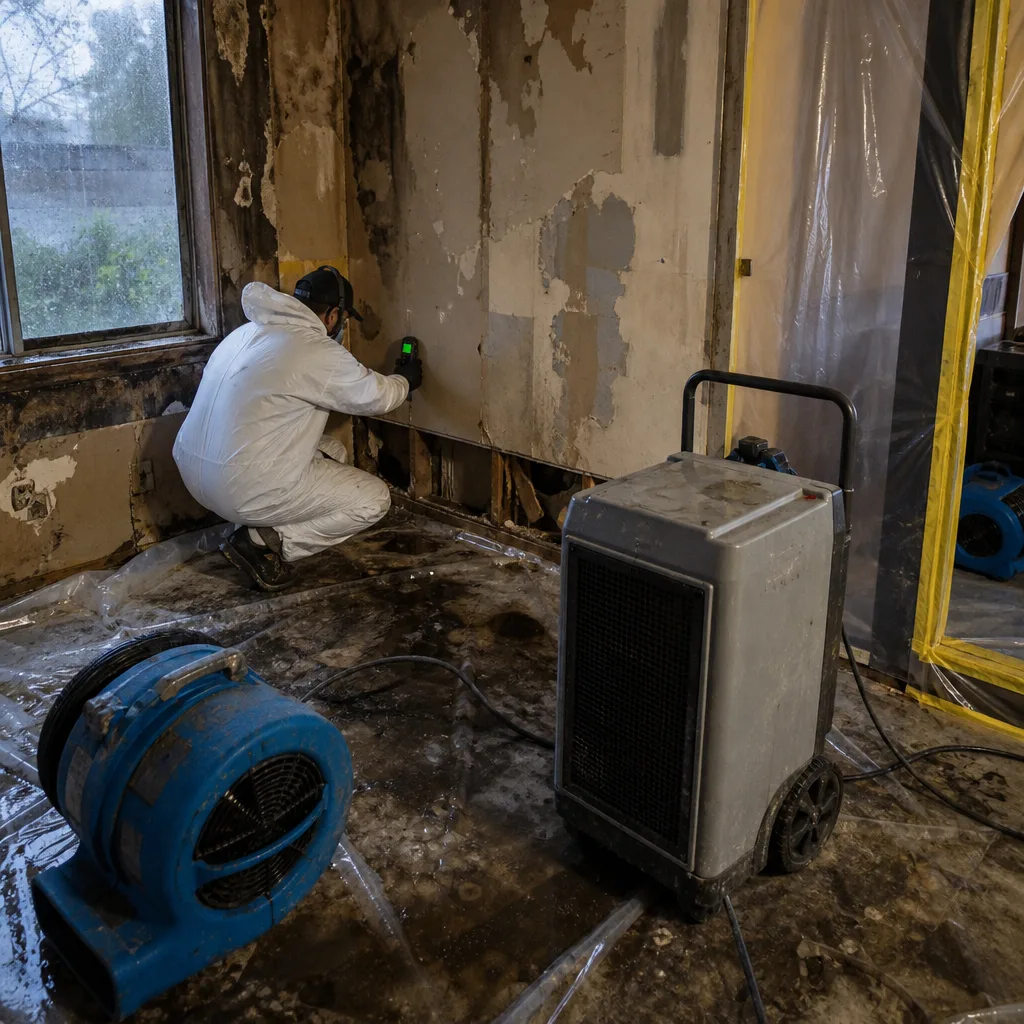 Before
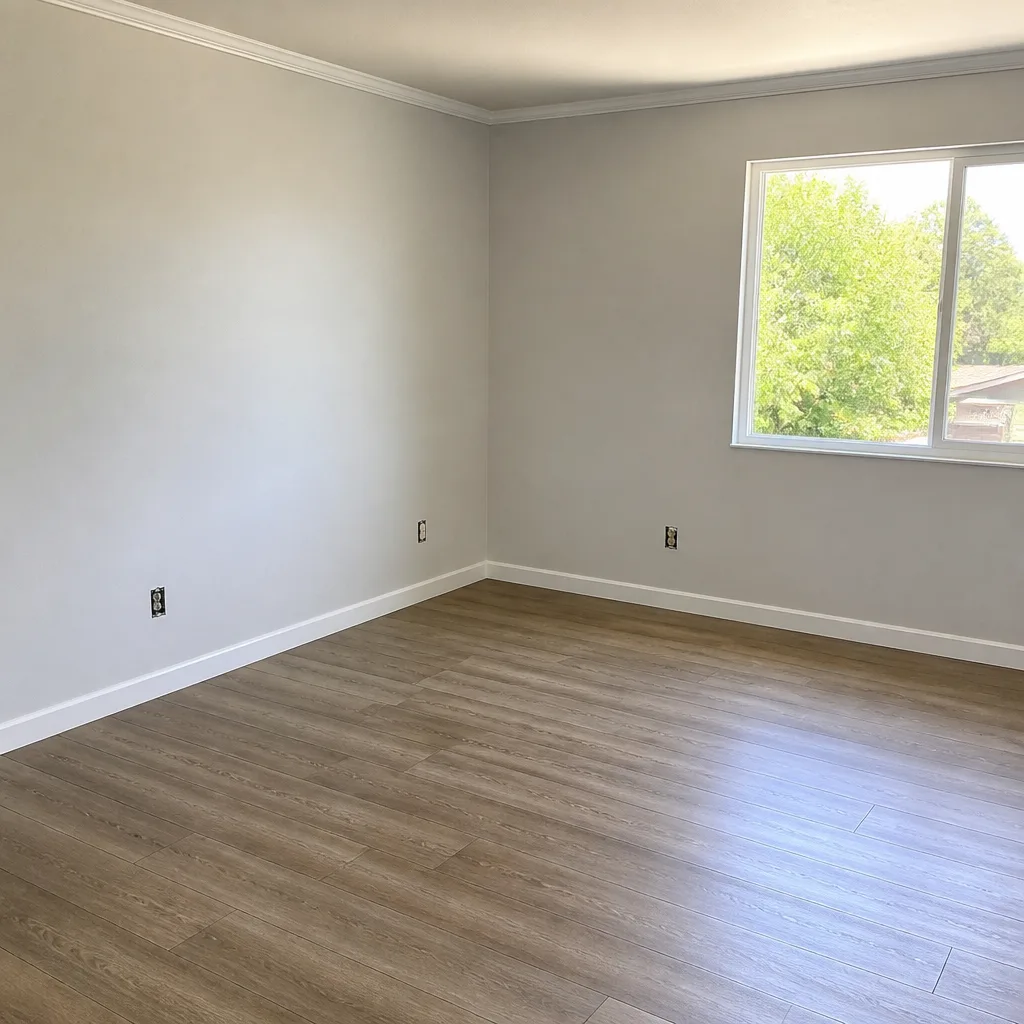 After
After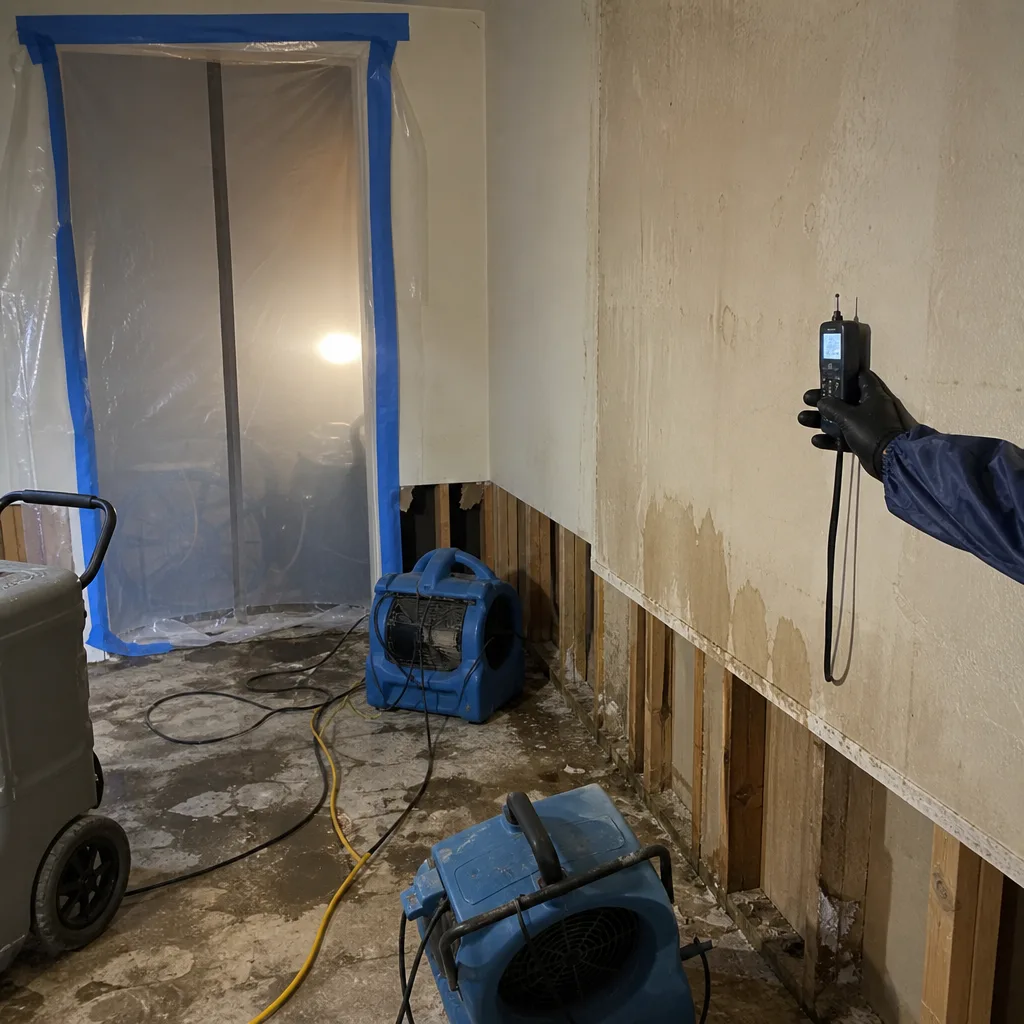 Before
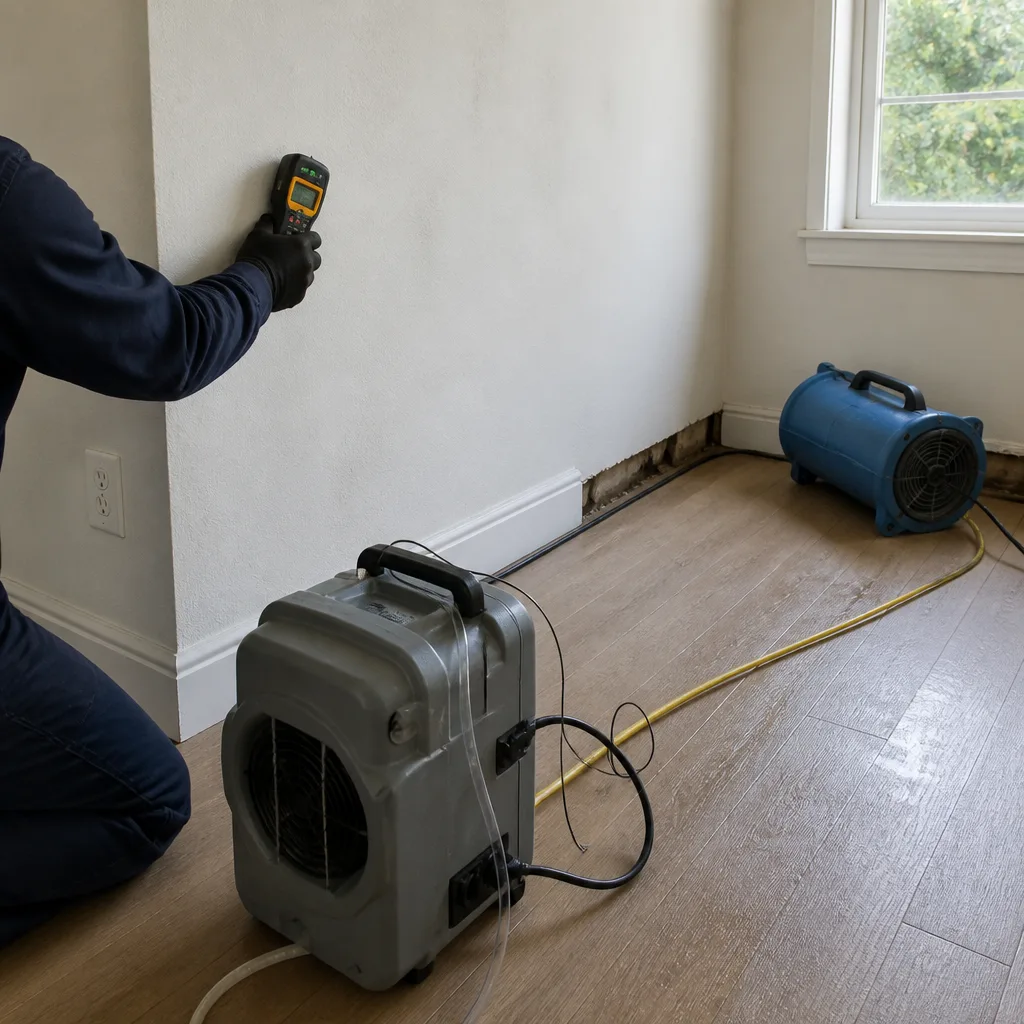 After
AfterWater Damage Restoration Maintenance Checklist for Lakewood Homeowners
The most common reason a Lakewood insurer disputes a water damage claim is “lack of maintenance” - and the homeowner had no records to prove otherwise. In twelve years of drying homes across this market, we’ve seen $8,000 mitigation invoices reduced to $1,200 because the adjuster found a three-year-old supply line with no inspection photos. This guide gives you a maintenance checklist where every item produces a number, a photo, or a written record. For related reading, browse our more guides & resources. Not vague advice. Measurable pass/fail conditions you can hand to any claims examiner.
Quick Answer
A proper water damage prevention checklist for Lakewood homeowners includes annual moisture baseline readings for walls and subfloors (15-20% wood moisture equivalent is acceptable), seasonal drainage inspections timed to El Niño forecasts, and date-stamped photo documentation of plumbing, roofing, and foundation conditions. Each record should be stored with your insurance policy number and updated every March before the rainy season peaks.
Table of Contents
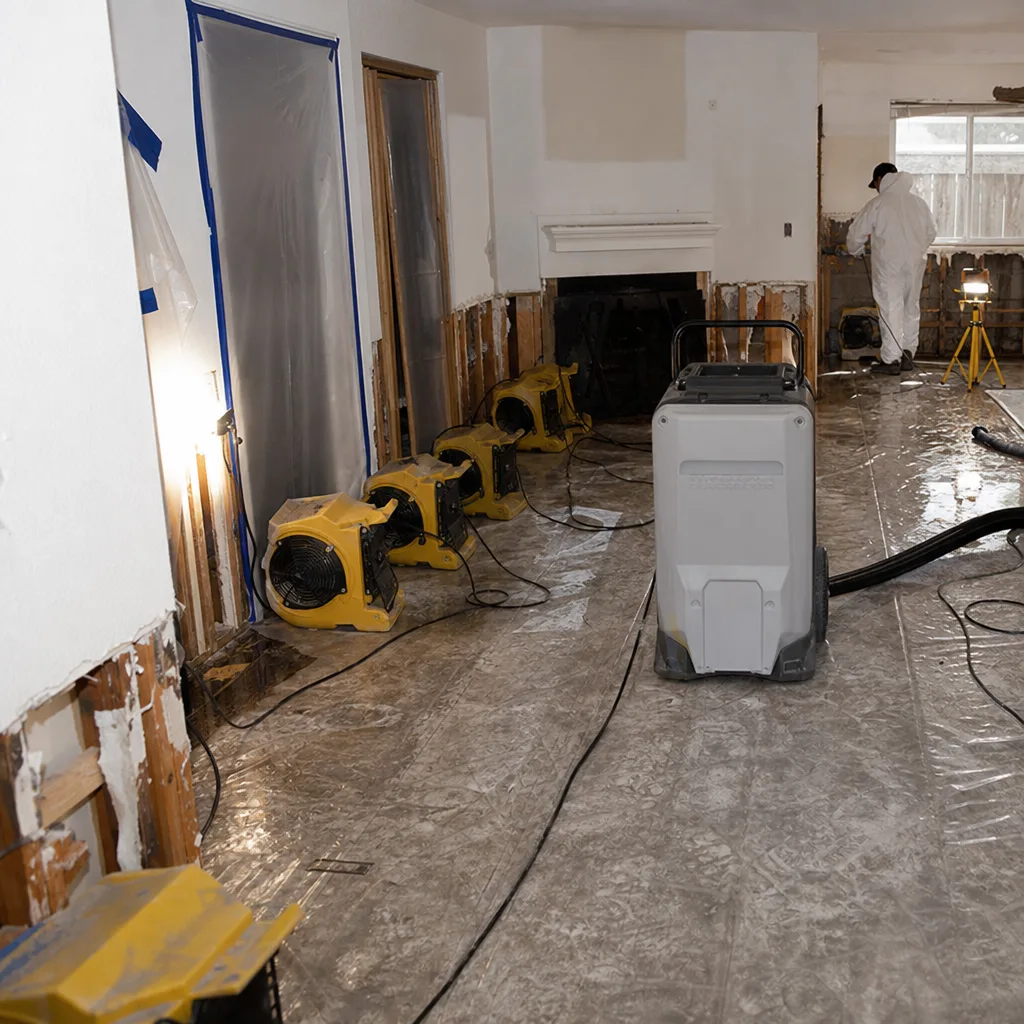
- Why Annual Moisture Baseline Readings Matter in Lakewood
- El Niño Forecast Ratings: When to Schedule Drainage Inspections
- How to Photograph Conditions for Claims Admissibility
- Which Maintenance Failures Void California HO-3 Coverage
- The Lakewood 12-Month Maintenance Calendar
- Room-by-Room Checklist with Pass/Fail Thresholds
- Professional Equipment Standards and What They Mean for Documentation
- Common Mistakes to Avoid
- When to Call a Professional
- Frequently Asked Questions
- The Bottom Line
 Before
 After
AfterWhy Annual Moisture Baseline Readings Matter in Lakewood
Every wall and floor in your Lakewood home has a normal moisture signature. Without recording it when conditions are dry, you cannot prove that a post-loss reading is abnormal. Adjusters know this. We know this because our founder, Alicia Brennan, spent years on the other side of these files.
Here’s what to measure and where:
Bathrooms: Take readings at the base of the vanity cabinet, behind the toilet flange, and at the tub/shower surround seam. Use a pinless moisture meter on the drywall and a pin-type meter on any exposed subfloor through the access panel. Record wood moisture equivalent (WME) percentages. Acceptable: 15-20% WME for drywall; 12-16% for plywood subfloor. Above 20% WME on drywall indicates either an active leak or chronic humidity infiltration that an insurer may classify as long-term damage, not sudden and accidental.
Kitchens: Measure beneath the sink cabinet floor, at the dishwasher supply box, and behind the refrigerator water line connection. The refrigerator line is the most frequent source of slow leaks we document in Lakewood’s 1950s-1970s ranch homes, where original copper lines have fatigued through decades of vibration. Acceptable: same ranges as bathroom. Any reading above 18% WME at the dishwasher supply box warrants a plumber’s inspection and a dated photo.
Utility Rooms: Check the washing machine supply box, water heater pan, and HVAC condensate line termination. Lakewood’s hard water accelerates corrosion at brass valves; we’ve replaced hundreds of washing machine supply boxes where the valve seat failed after 15-20 years. Acceptable: 15-20% WME on surrounding drywall. Condensate lines should read ambient; any elevated reading at the termination point indicates blockage or improper pitch.
How to record: Note the date, ambient temperature, relative humidity, meter make/model, and exact measurement location. Store as a PDF with your insurance declarations page. This is your baseline evidence. When a pipe bursts and the adjuster asks “how do you know this is new damage,” you hand them a spreadsheet.
Professional restoration companies, including Water Damage Restoration in Lakewood providers, document moisture to IICRC S500 standards using meters calibrated annually. Your homeowner records don’t need calibration certificates, but they do need consistency: same meter, same locations, same time of year.
El Niño Forecast Ratings: When to Schedule Drainage Inspections
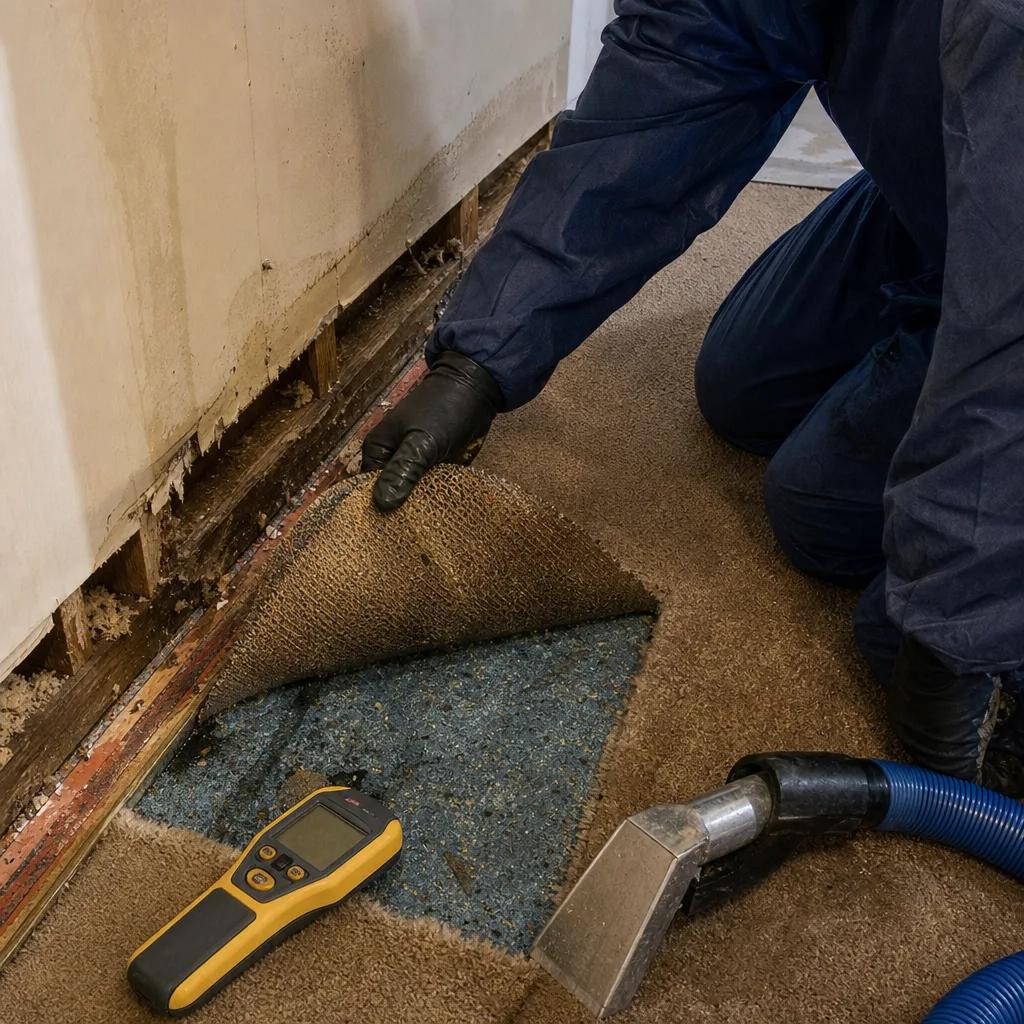
Lakewood sits at 52 feet above sea level with clay-heavy soils that swell when saturated and shrink during drought. This expansion-contraction cycle cracks foundations, separates drainage fittings, and creates the exact conditions where water finds a path inside. The El Niño-Southern Oscillation (ENSO) forecast is your early warning system.
The National Weather Service issues ENSO status updates monthly. Here’s how to read them for maintenance timing:
- El Niño Watch (50-60% probability): Schedule gutter and downspout inspection within 30 days. Check French drain outlets for obstruction. Lakewood’s mature tree canopy drops significant debris in autumn; drains that were clear in October may be clogged by January.
- El Niño Advisory (60-80% probability): Add foundation perimeter inspection. Look for new cracks wider than 1/8 inch, separated expansion joints, or soil pulling away from the stem wall. These are pre-conditions for hydrostatic pressure infiltration during sustained rain.
- El Niño Conditions Confirmed: Inspect roof drainage paths, window well covers, and garage door seals. Consider temporary sump pump installation in homes with prior slab seepage history. Document everything with dated photos before the first major storm.
The 1997-98 and 2015-16 El Niño events produced rainfall 150-200% of normal in Los Angeles County. Homes in Lakewood’s Mayfair Park and Lakewood Village neighborhoods experienced widespread garage flooding where driveway slopes had settled toward the foundation over decades. The homeowners who had pre-storm photos of proper drainage gradient collected full mitigation coverage. Those who didn’t faced “gradual damage” exclusions.
We check ENSO status every October and advise our maintenance clients accordingly. The documentation produced in a confirmed El Niño year carries disproportionate weight with adjusters because the causal link between forecast, preparation, and subsequent damage is explicit.
How to Photograph Conditions for Claims Admissibility
A photo is not evidence until it contains information an adjuster can verify. The snapshot of your water heater taken on your phone is better than nothing. A photo with a dated newspaper, visible serial number, and measurement reference is a document that survives scrutiny.
Step-by-step protocol for plumbing documentation:
- Place a current newspaper or printed date stamp in frame. Phone metadata dates are easily challenged; physical date references are not.
- Photograph the full installation from far enough to show context: the water heater in its alcove, the washing machine with supply lines visible, the dishwasher with kickplate removed.
- Take a close-up of the manufacturer label showing serial number, model, and date of manufacture. This establishes equipment age, a factor in every adjuster’s coverage determination.
- Include a measurement reference: a tape measure showing clearance to combustibles, a moisture meter display reading at the base, or a level showing slope on a drain line.
- Store originals in cloud backup with EXIF data intact. Create a PDF contact sheet with captions for your insurance file.
Roof and foundation documentation follows the same principle. For roof conditions, photograph from the ground with a zoom lens showing full slope, then close-ups of flashing details, vent boots, and any patched areas. Include the neighbor’s roofline for orientation. For foundation, photograph crack widths with a crack monitor or simple ruler, noting compass orientation. A crack that grows from 1/16 inch to 3/16 inch over two years is documented gradual damage, not sudden loss. A crack that appears after a specific storm event, with pre-storm photos showing no crack, is covered.
We’ve used this documentation in hundreds of Lakewood claims. The DryMark Restoration Lakewood home process includes photo documentation on every visit as a standard deliverable, not an upsell. Homeowners who maintain their own parallel records have the strongest position when coverage is questioned.
Which Maintenance Failures Void California HO-3 Coverage
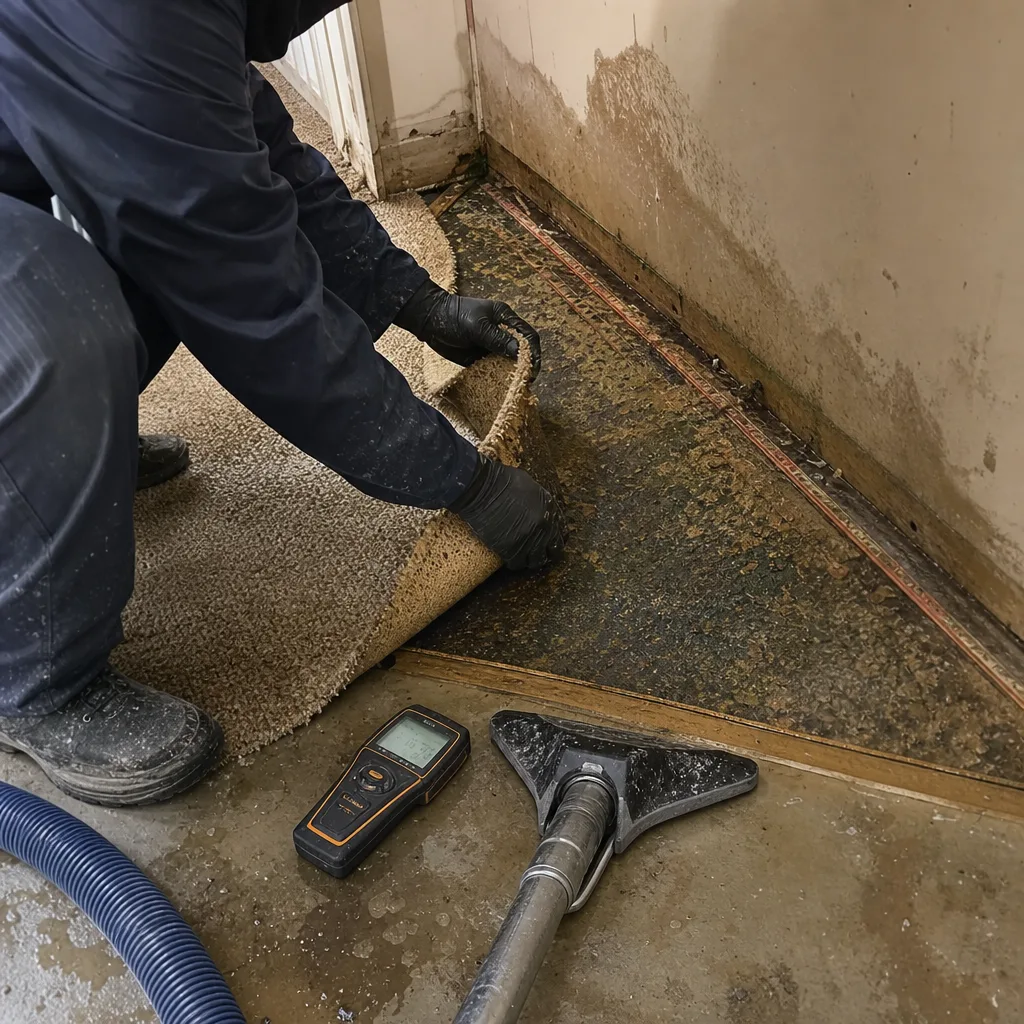
California’s standard HO-3 policy contains specific exclusions that adjusters invoke routinely. Understanding them lets you structure maintenance to preserve coverage.
Exclusion 1: Constant or repeated seepage or leakage. This is the most common denial we see. The policy covers “sudden and accidental” discharge. A supply line that bursts and floods a kitchen in hours: covered. A dishwasher drain hose that seeps for six months, slowly destroying the subfloor: excluded. Your maintenance records must show proactive inspection frequency that would catch seepage before it becomes “constant or repeated.” Quarterly under-sink checks with dated photos meet this standard. Annual checks may not.
Exclusion 2: Wear, tear, marring, deterioration. A water heater that fails after 12 years due to internal corrosion: the resulting water damage may be covered, but the water heater itself is not, and the adjuster may reduce the damage payment by arguing that proper maintenance would have revealed the deterioration. A maintenance log showing annual flushing and anode rod inspection counters this argument.
Exclusion 3: Faulty, inadequate, or defective maintenance. This is the catch-all. It requires the insurer to prove your maintenance was inadequate, but without records, the burden shifts to you to prove it wasn’t. In Lakewood’s competitive insurance market, carriers are increasingly aggressive with this exclusion on homes built before 1980 with original plumbing.
Exclusion 4: Water below the surface of the ground. Hydrostatic pressure and groundwater seepage are excluded under standard HO-3. Sump pump failure is covered only if you have specific Water Backup and Sump Overflow coverage, which is a rider many Lakewood homeowners lack. Your maintenance calendar should include sump pump testing, but understand that this exclusion is difficult to overcome without the specific rider.
The documentation-first approach exists precisely because these exclusions are enforceable. A written maintenance log with moisture readings, photos, and dated inspections is your rebuttal to each one.
The Lakewood 12-Month Maintenance Calendar
Generic national checklists tell you to clean gutters in fall and check sprinklers in spring. Lakewood’s climate pattern is specific: Mediterranean with modified marine influence, average 12.8 inches of rainfall concentrated November through March, with dry Santa Ana wind events October through January that desiccate exterior seals.
| Month | Task | Measurable Output |
|---|---|---|
| January | Post-storm roof and gutter inspection | Photos of gutter flow, downspout discharge points, any displaced flashing |
| February | Foundation perimeter after heavy rain series | Moisture readings at base of walls; crack width measurements; photo of drainage slope |
| March | Annual moisture baseline readings (all rooms) | Spreadsheet with WME percentages, ambient conditions, meter model |
| April | Irrigation system pressurization and leak check | Pressure test reading; photos of valve boxes dry; controller schedule documented |
| May | Exterior seal inspection before Santa Ana season | Photos of window caulking, door sweeps, vent screen condition |
| June | Water heater flush and anode rod check | Flush water clarity photo; anode rod length measurement; replacement date logged |
| July | HVAC condensate line clean and flow test | Flow rate measurement or timed fill-drain test; photo of clean termination |
| August | Washing machine supply line inspection | Photo of braided stainless lines with installation date; moisture reading at supply box |
| September | Dishwasher and refrigerator line inspection | Photo of connections; moisture reading; replacement date of any plastic tubing |
| October | ENSO forecast review; pre-rain drainage prep | Forecast screenshot; scheduled inspection dates; gutter cleaning confirmation |
| November | Pre-storm exterior documentation | Complete photo set of roof, foundation, drainage paths with date references |
| December | Holiday plumbing stress check (guest load) | Drain flow test; water pressure reading at hose bib; water heater temperature verification |
This calendar aligns maintenance intensity with actual risk periods. The March baseline reading is timed after the rainy season ends, when structures are at their most saturated, giving you the highest reasonable “normal” reading. If you measure in July after four dry months, your baseline is artificially low and less useful for comparison after a winter pipe burst.
Room-by-Room Checklist with Pass/Fail Thresholds
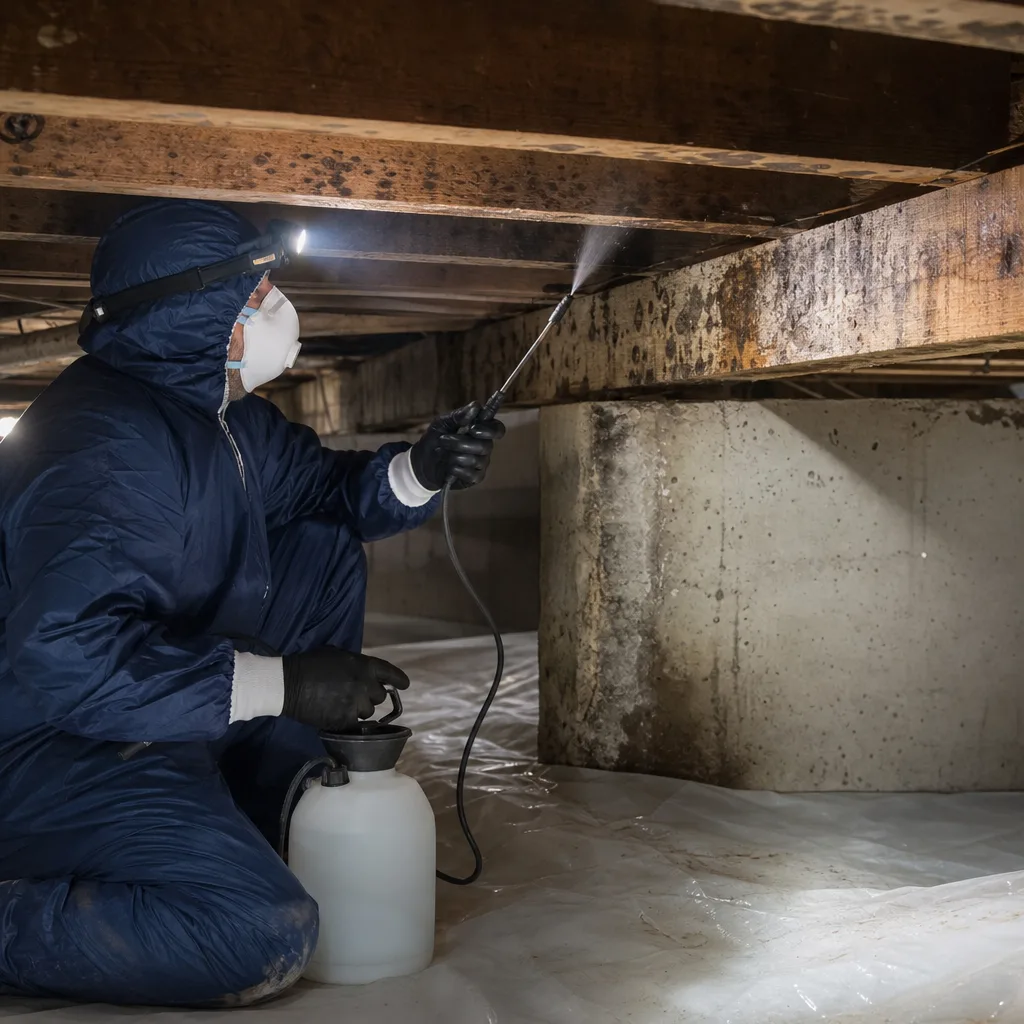
Each item below includes the specific measurement or observation that constitutes pass or fail. No judgment calls.
Bathroom
- Toilet flange: No visible moisture at base; floor is rigid with no flex; caulk seal intact full circumference. Fail: Any staining, softness, or separated caulk.
- Vanity supply and drain: Dry to touch; P-trap nut hand-tight; shutoff valve operates full range without leakage. Fail: Corrosion on valve stem, drip at any joint, moisture reading above 18% WME in cabinet base.
- Tub/shower surround: Grout lines continuous; caulk at tub-wall joint continuous and elastic; no delamination of surround panels. Fail: Missing grout wider than 1/16 inch, cracked or mildewed caulk, hollow sound when tapping tiles.
- Exhaust fan: Operates; duct terminates outside (verify in attic); airflow measured with tissue test. Fail: Duct terminates in attic or soffit; airflow insufficient to hold tissue against grille.
Kitchen
- Dishwasher: Supply line braided stainless with visible installation date within 10 years; no moisture at supply box; drain loop installed at proper height. Fail: Original copper or gray polybutylene supply; moisture reading above 18% WME; drain connected below sink flood rim without air gap.
- Refrigerator: Braided stainless icemaker line with visible date; shutoff accessible and operable; no moisture at connection. Fail: Plastic tubing of any age; inaccessible shutoff; any moisture or mineral deposit at connection.
- Sink and disposal: Disposal mounting ring tight; drain lines with proper slope and support; no leakage at basket strainer. Fail: Movement at disposal; sagging drain lines; water staining in cabinet.
Laundry Room
- Washing machine: Braided stainless supply lines with visible date; lever-handle shutoffs operable; drain standpipe height 30-48 inches. Fail: Rubber hoses (any age); gate valves frozen; standpipe below 30 inches or overflowing during drain cycle.
- Water heater: Temperature-pressure relief valve tested (lift lever, verify discharge); expansion tank pressure matches supply pressure; pan drain unobstructed. Fail: TPR valve stuck or discharging continuously; no expansion tank on closed system; pan containing water with no drain path.
Exterior/Perimeter
- Foundation: Soil slope positive 6 inches per 10 feet for first 10 feet from wall; no soil contact with siding; expansion joints sealed. Fail: Negative slope toward foundation; soil above sill plate; cracks wider than 1/8 inch with no monitoring record.
- Roof drainage: Gutters clean and pitched to downspouts; downspouts discharge 6 feet from foundation or to underground drain; splash blocks in place. Fail: Standing water in gutters; downspout discharging at foundation; missing or displaced splash blocks.
Professional Equipment Standards and What They Mean for Documentation
When water damage occurs, hiring a company that provides professional Water Damage Restoration services with thorough documentation affects your claim as much as your maintenance records. Understanding professional standards helps you evaluate any restoration company you hire and ensures you receive deliverables that support your coverage.
IICRC S500: The standard for water damage restoration. It defines three categories of water (clean, gray, black) and four classes of damage based on evaporation load. A restoration company working to S500 produces psychrometric data: temperature, relative humidity, and specific humidity readings that prove drying progress. This data belongs in your claim file.
Psychrometric data: The measurable conditions that determine how fast materials dry. Includes vapor pressure differential (the force that moves moisture from wet materials to dry air), grains per pound (the actual moisture content of the air), and dew point (the temperature at which condensation occurs). A professional drying log shows these numbers trending toward equilibrium daily. If your restoration company cannot produce this, they are not documenting to standard.
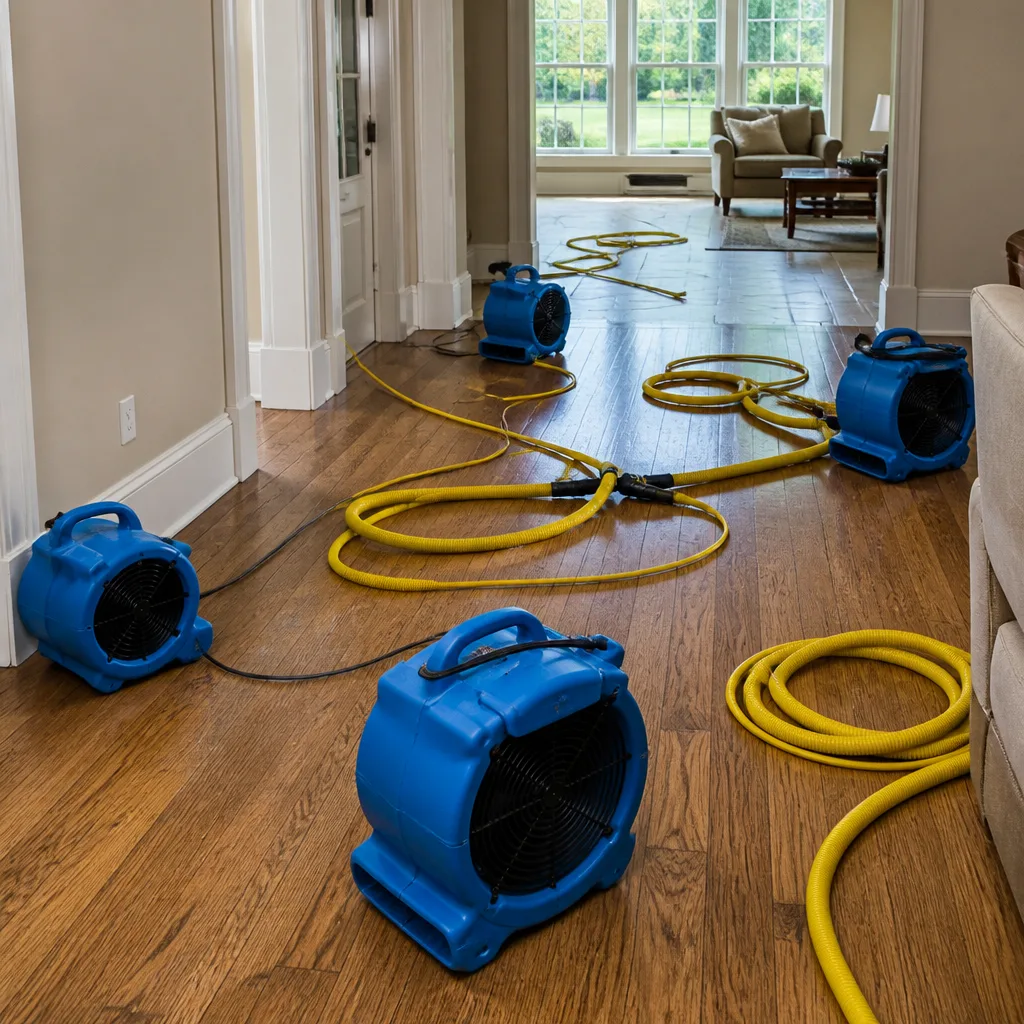
Equipment deployed: Professional drying systems from manufacturers like XPOWER and B-Air produce airflow volumes documented in cubic feet per minute. Injectidry systems allow targeted drying inside wall cavities with measurable negative pressure. The equipment list on your invoice should specify manufacturer, model, and airflow capacity. Generic descriptions like “air mover” or “dehumidifier” are insufficient for claim documentation.
At Water Damage Restoration in Lakewood, we document every job to IICRC, RIA, and IFA standards with daily moisture logs, photo records, and written scopes. Homeowners should expect this level of documentation from any restoration provider and should not accept less. Your insurer certainly won’t.
Common Mistakes to Avoid
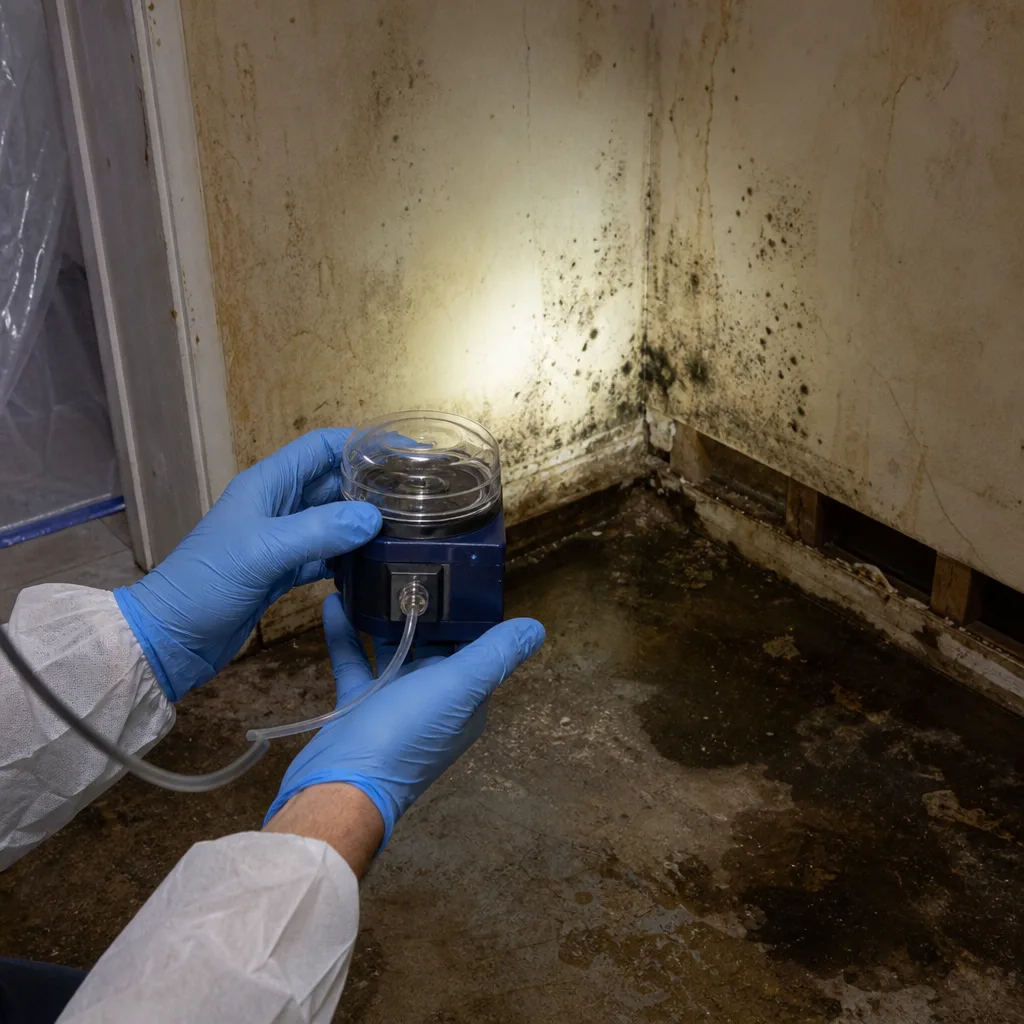
- Measuring moisture only after damage occurs. Without a dry baseline, any reading is meaningless. Lakewood homeowners who skip the March baseline measurement lose their primary rebuttal to “gradual damage” denials.
- Storing photos only on a phone. Phones fail, are lost, or replaced without full transfer. Cloud backup with EXIF data intact is essential; a separate PDF contact sheet with captions is better.
- Using the same plumber for maintenance and repair after a loss. The plumber who maintained your system may become a witness against your interest if they testify they recommended replacement you deferred. Use one plumber for routine maintenance; consider a second opinion for any pre-loss recommendation you delayed.
- Ignoring the expansion tank. Lakewood’s water pressure varies by zone; thermal expansion in a closed system without a functioning expansion tank strains every connection. The resulting “sudden” failure is often preceded by years of unmeasured pressure cycling.
- Documenting only major systems. The $12 icemaker line behind your refrigerator causes more total damage annually than water heater failures in Lakewood’s housing stock. Every supply line deserves the same documentation rigor.
- Failing to match maintenance frequency to actual equipment age. A 25-year-old water heater needs quarterly checks, not annual. A 5-year-old tankless unit with annual manufacturer service can go longer. Generic schedules miss this risk gradient.
- Not reviewing the actual policy exclusions. Most homeowners have never read their HO-3 exclusions section. The 15 minutes spent reviewing it and noting applicable maintenance requirements will shape your checklist more precisely than any generic guide.
When to Call a Professional
Call for professional assessment when moisture readings exceed 20% WME on any structural material, when you discover active dripping you cannot source within 30 minutes, or when any water event involves Category 2 (gray) or Category 3 (black) water. In Lakewood’s older neighborhoods, galvanized steel drain lines and original copper supplies fail without warning; professional leak detection with thermal imaging and acoustic equipment locates sources that visual inspection misses.
Call immediately if water has contacted electrical panels, if the event involves sewage or dishwasher discharge, or if you smell musty odor indicating hidden microbial growth. Mold Remediation in Lakewood requires containment and air filtration that homeowners should not attempt.
DryMark Restoration Lakewood offers free estimates in Lakewood - call (562) 373-6757. Every estimate includes a written scope, a photo-documented assessment, and moisture readings you can add to your maintenance file. Haven Standard, Clause 1: written price before work begins, always, with no exceptions.
Frequently Asked Questions
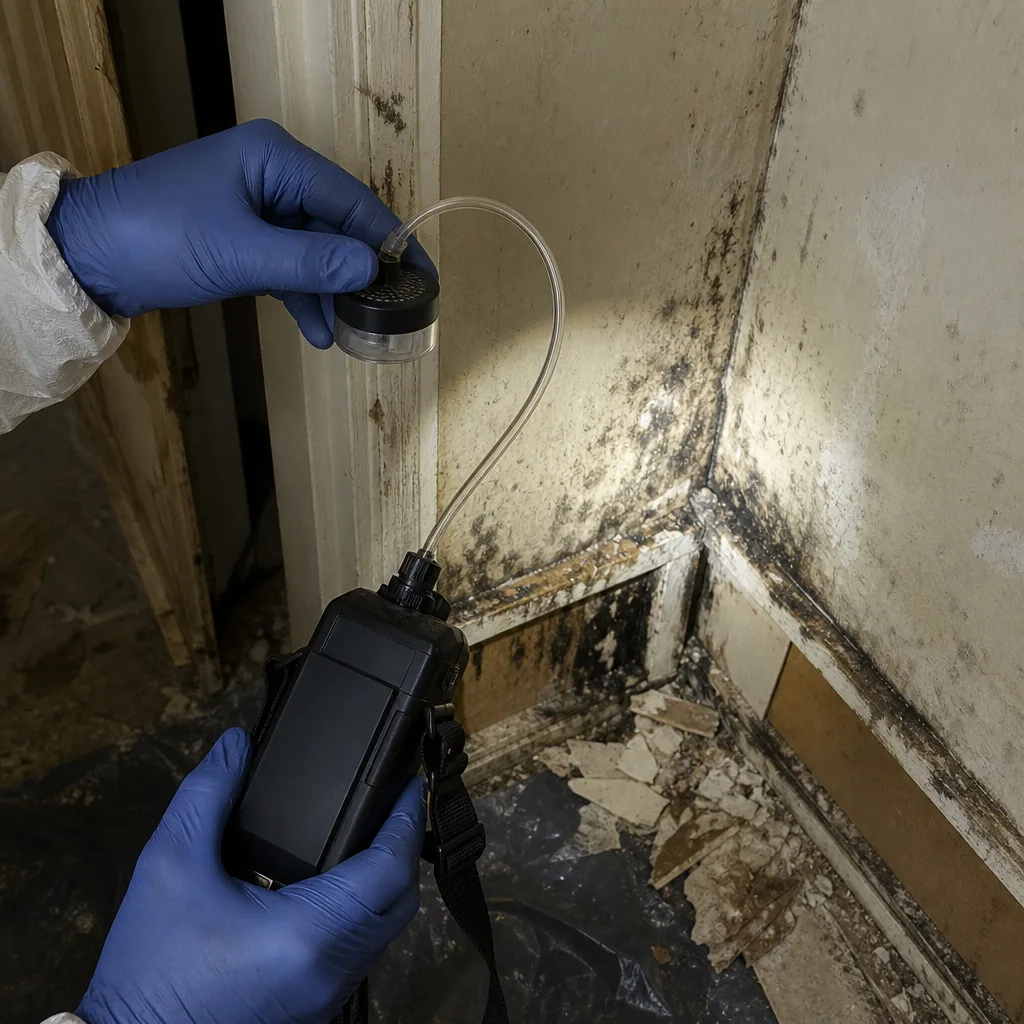
A quality pinless moisture meter for homeowners costs $150-$300; a pin-type meter with probe accessories adds $80-$150. For Lakewood’s typical construction - drywall, plywood subfloor, and occasional plaster in pre-1960 homes - a pinless meter with deep-sensing capability (3/4 inch or greater) is most versatile. Pin-type meters are necessary for accurate readings on hardwood flooring and for verifying subfloor conditions through access panels. Buy from a restoration supply vendor, not a general hardware store, to ensure calibration traceability. Call (562) 373-6757 and we’ll point you toward models we’ve validated against our professional equipment.
They review them when coverage is disputed, which occurs in approximately 30-40% of water damage claims in California’s current market. Without records, the adjuster applies the exclusions we detailed above and shifts burden to you. With records, you rebut their presumption of inadequate maintenance. The time to prepare is before the loss, not while standing in an inch of water. Our documentation-first approach exists because we’ve seen the alternative cost homeowners thousands.
For active water damage, DryMark Restoration Lakewood answers live 24 hours a day, 7 days a week with no voicemail on emergency lines. Dispatch for mitigation typically occurs within 60-90 minutes for Lakewood addresses. Reconstruction and non-emergency work is scheduled and scoped in writing, not dispatched for same-day arrival. Speed language belongs to mitigation only; rebuild work follows a different protocol under Haven Standard, Clause 1.
Category 1 clean water on hard surfaces with immediate response can sometimes be handled by homeowners with adequate airflow and dehumidification. Any water that has contacted drywall, insulation, or subflooring for more than 24 hours, or any Category 2 or 3 water, requires professional drying to prevent secondary damage and preserve coverage. Insurers increasingly deny self-dried claims where mold or structural damage develops later. The photo documentation and drying logs that professionals produce are part of your claim defense.
At DryMark Restoration Lakewood, we coordinate directly with your adjuster, providing the daily moisture logs, photo records, and written scopes that turn restoration invoices into payable claims. This is the documentation gap our founder identified in 2011: restoration companies that don’t document to standard leave homeowners to argue their own coverage. We don’t. Your role is to authorize work and review the written price before it begins; our role is to produce evidence the adjuster can pay.
Lakewood’s flat topography and clay soils create unique drainage challenges during sustained El Niño rainfall. Unlike hillside communities where water sheds, Lakewood’s minimal grade means water accumulates unless actively managed. The 1950s-1970s development pattern placed many homes with slab-on-grade construction at or below street level, making garage and perimeter flooding more likely here than in newer, better-graded neighborhoods. Your maintenance calendar must account for this: more frequent foundation perimeter checks, more aggressive gutter maintenance, and earlier sump pump consideration than a topographically varied city might require.
The Bottom Line
A maintenance checklist without measurable outputs is a wish list. This guide gives Lakewood homeowners specific pass/fail thresholds, a climate-aligned calendar, and documentation protocols that satisfy claim examiners. The 15 minutes spent on a March moisture baseline, the annual photo update of your water heater label, and the ENSO-triggered drainage inspection are the difference between a paid claim and a denied one. We’ve documented 12,000 homes since 2011, and the pattern is consistent: the homeowners who keep records keep their coverage.
Need a free assessment of your current documentation, or facing active water damage? Call DryMark Restoration Lakewood at (562) 373-6757. Written price before work begins. Photo record on every visit. 365-Day Done Right Promise under The Haven Standard.
Written by Alicia Brennan, Owner at DryMark Restoration Lakewood, serving Lakewood since 2011.