
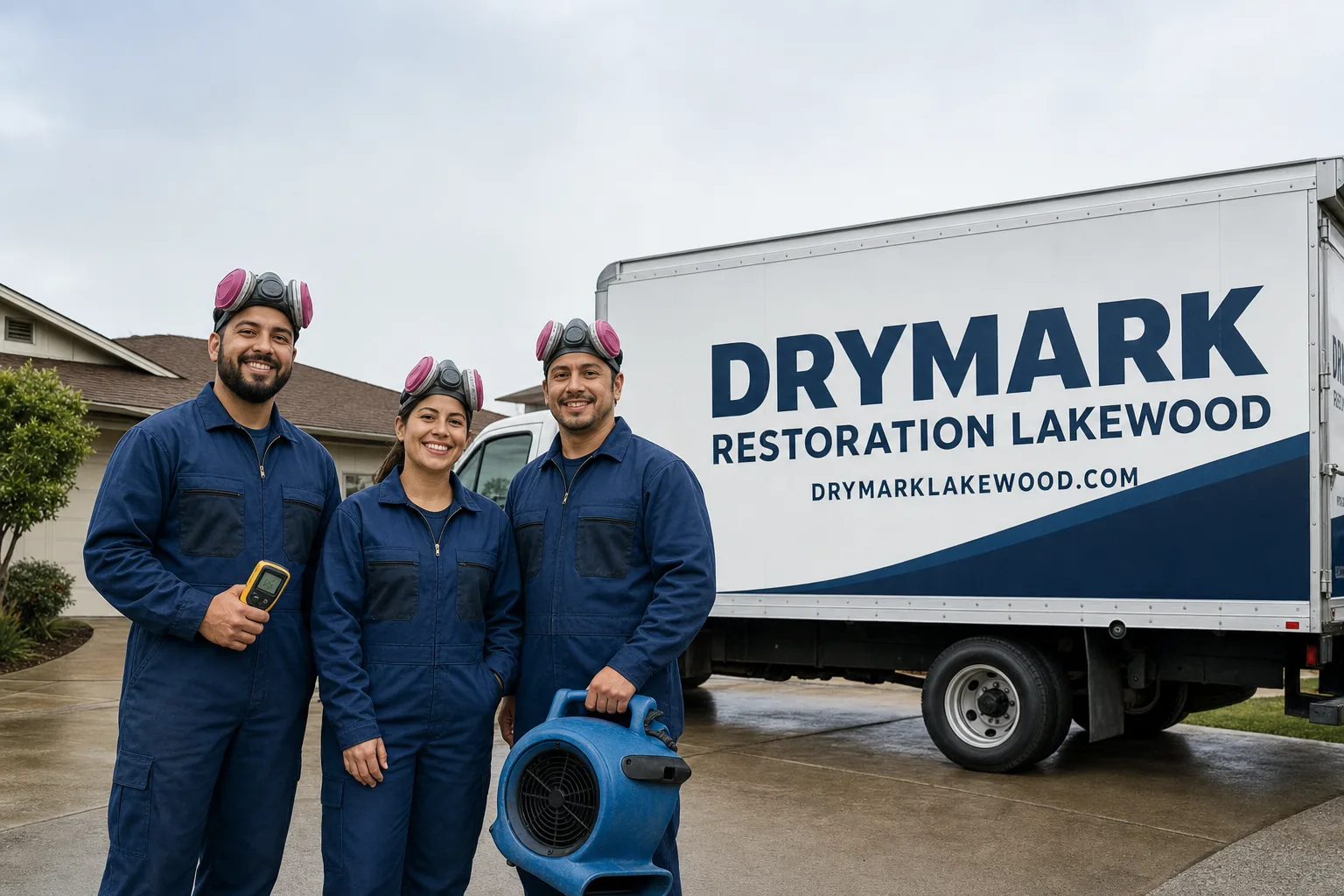
Free visual inspection and a written scope of work before any mitigation begins - photos, moisture readings, and drying logs go in your claim file
The scope we write is the scope we bill. Anything new gets shown to you, in writing, before we touch it.
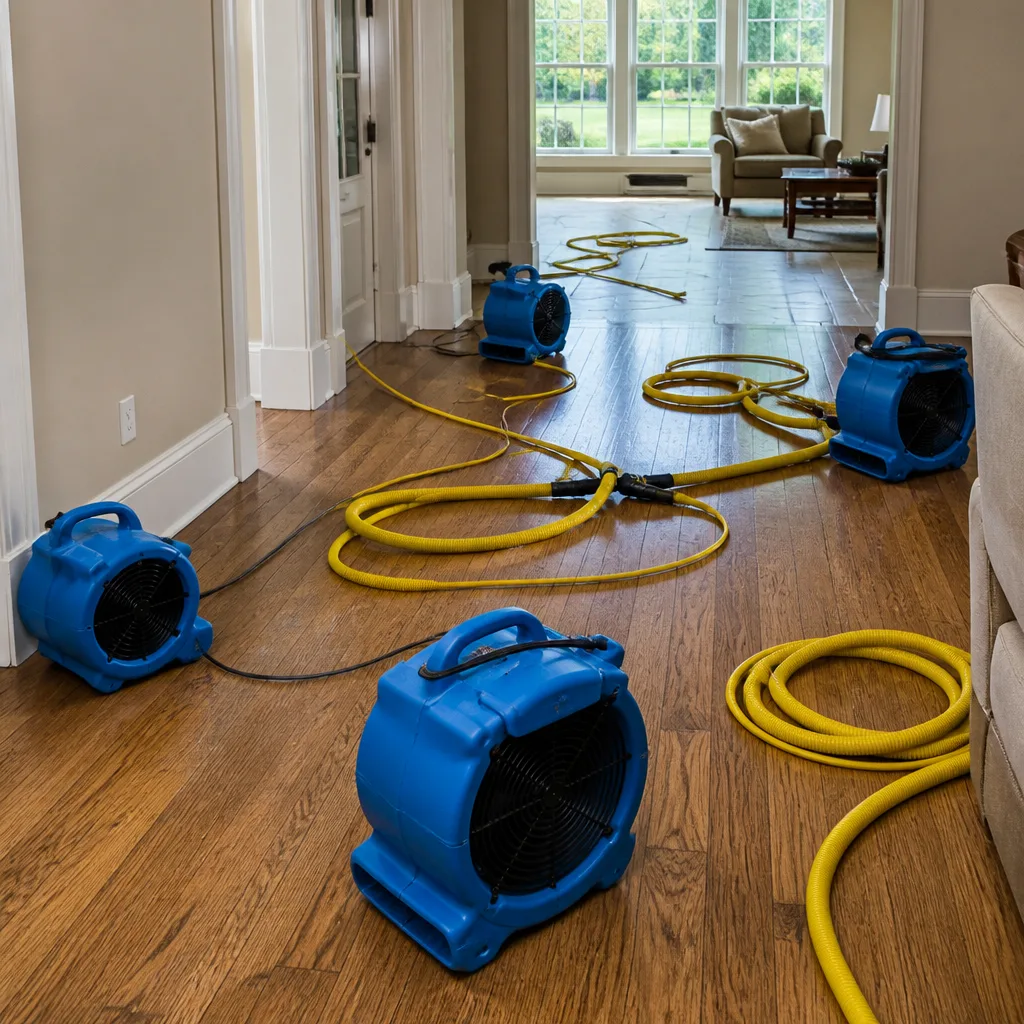
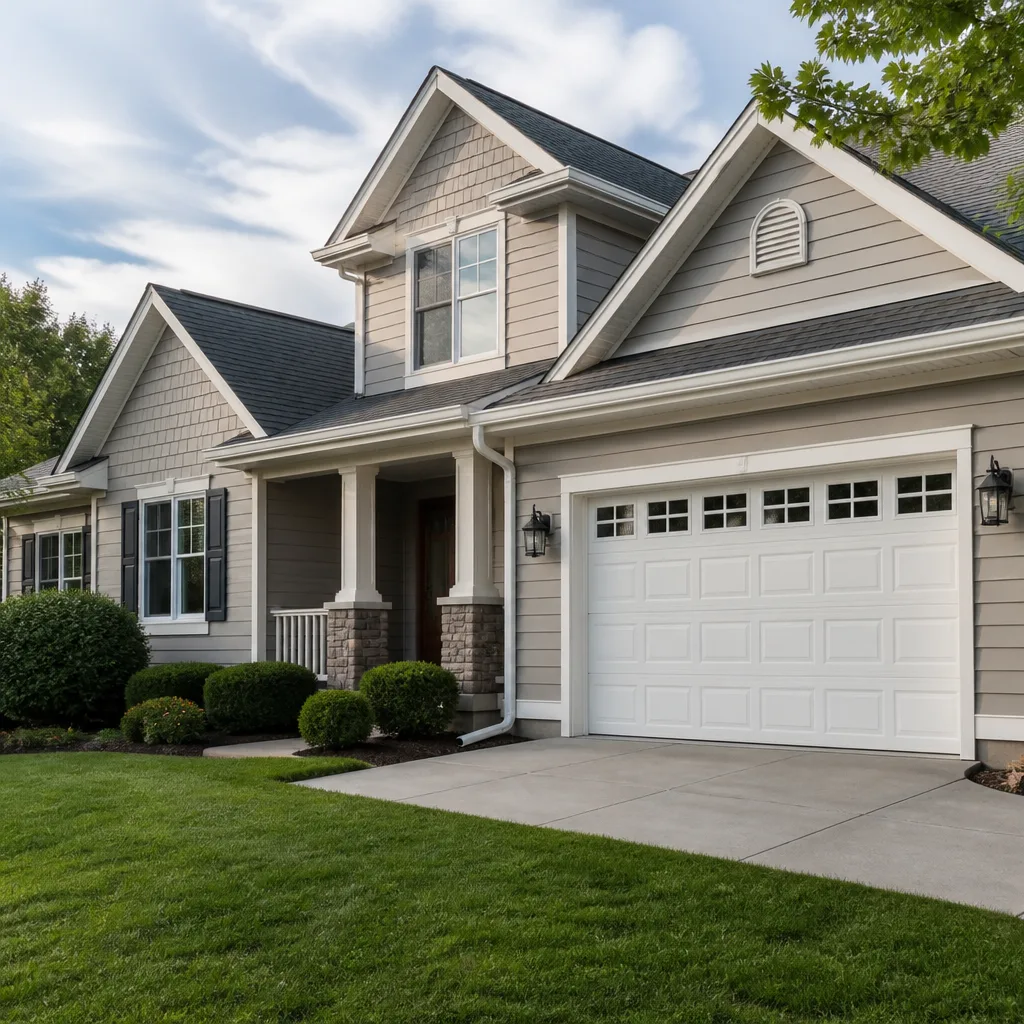
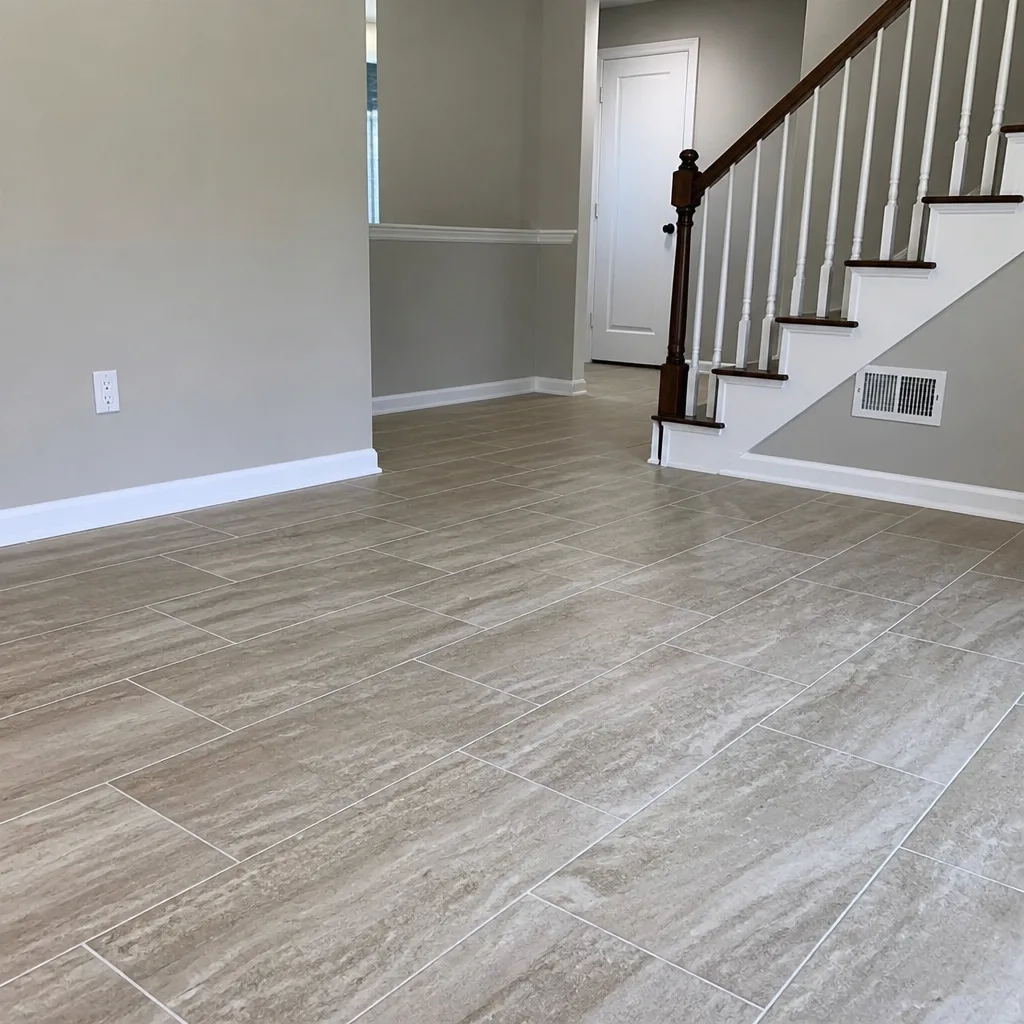
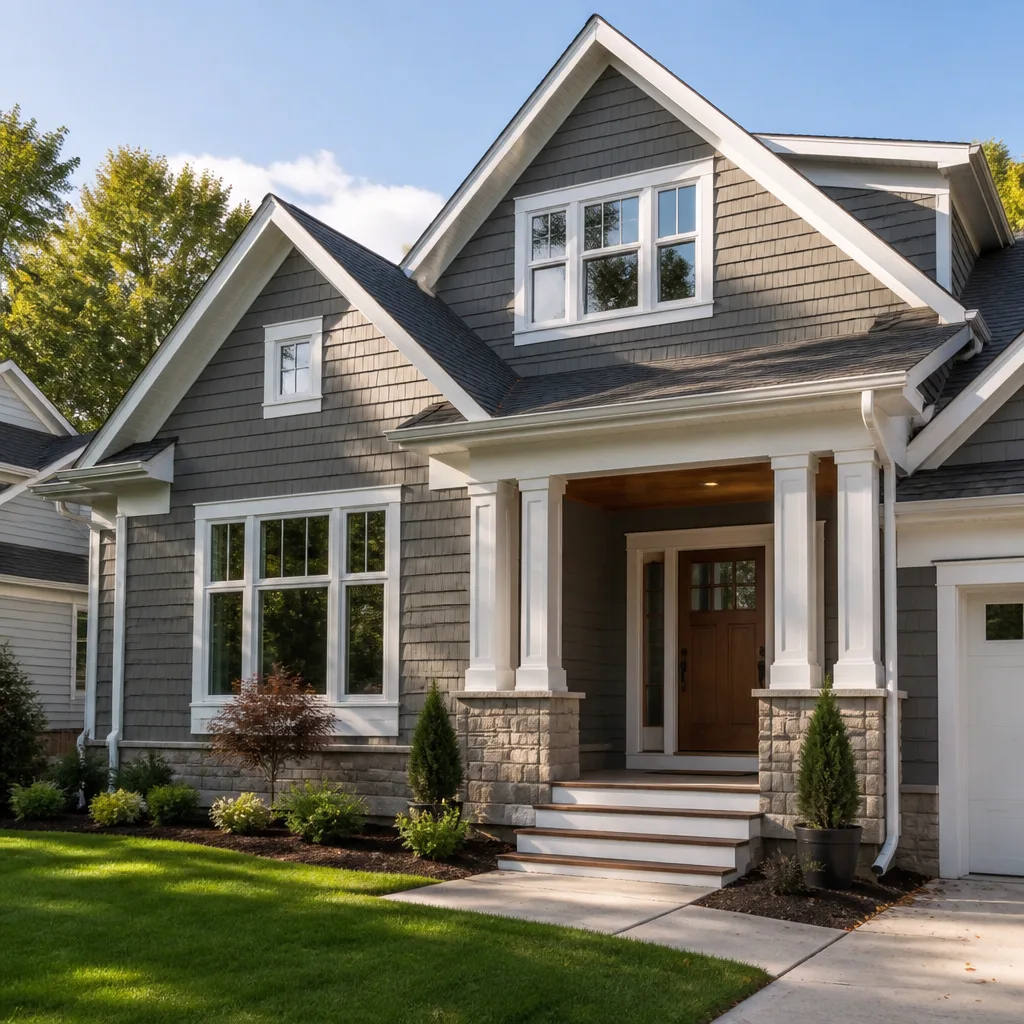
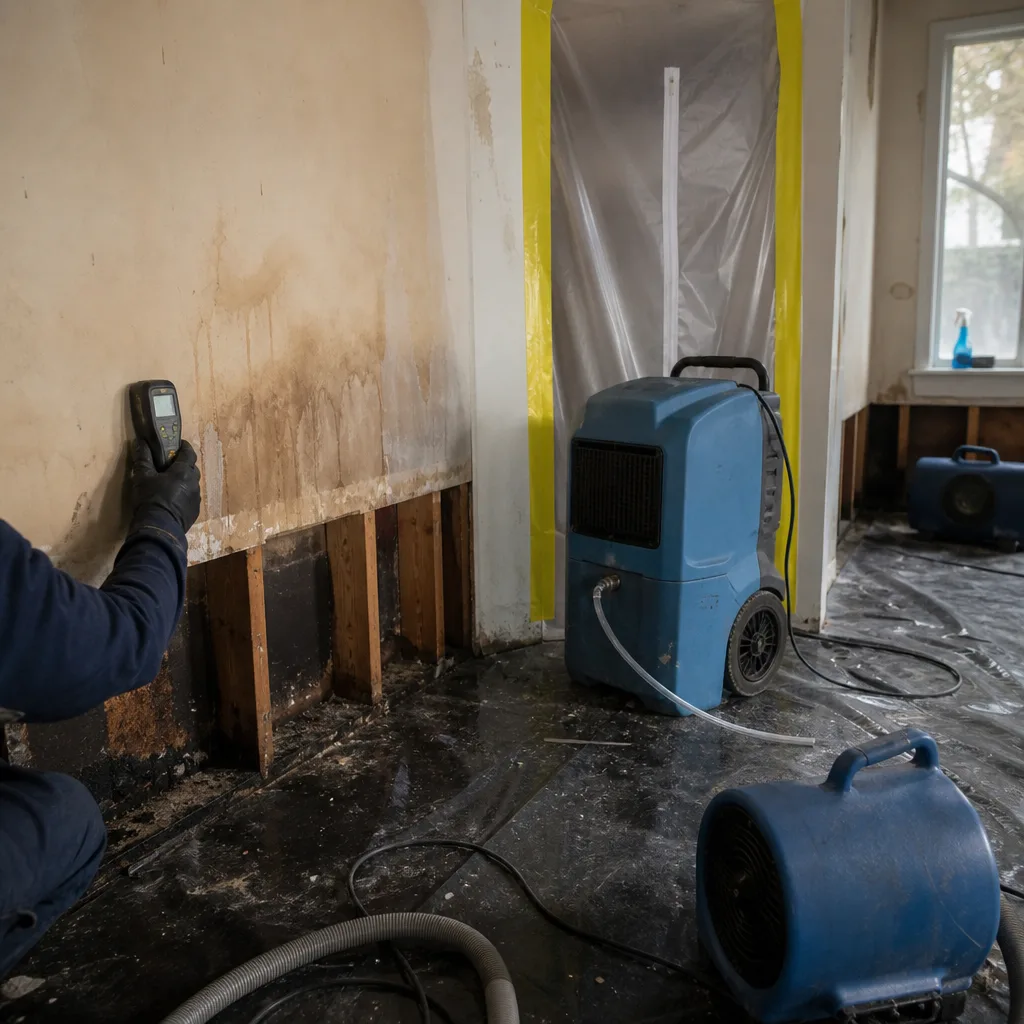 Before
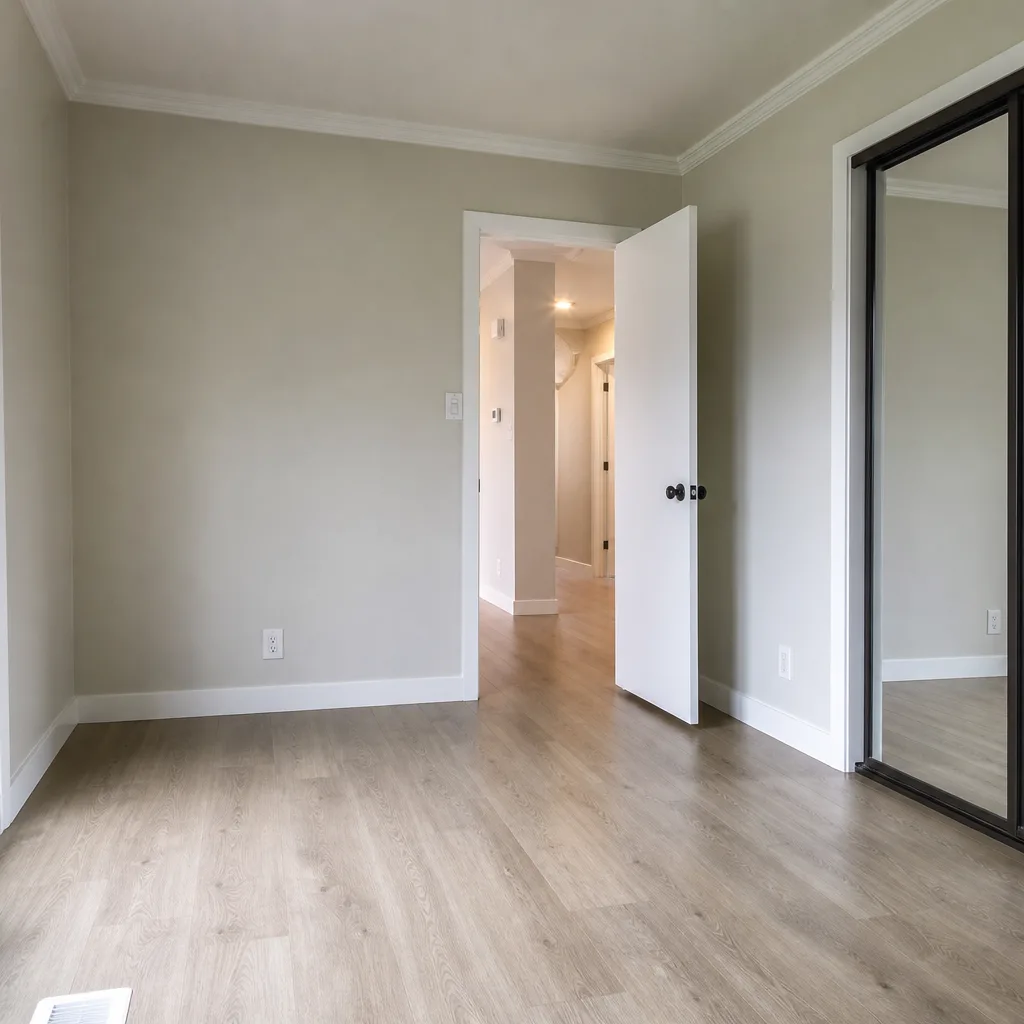 After
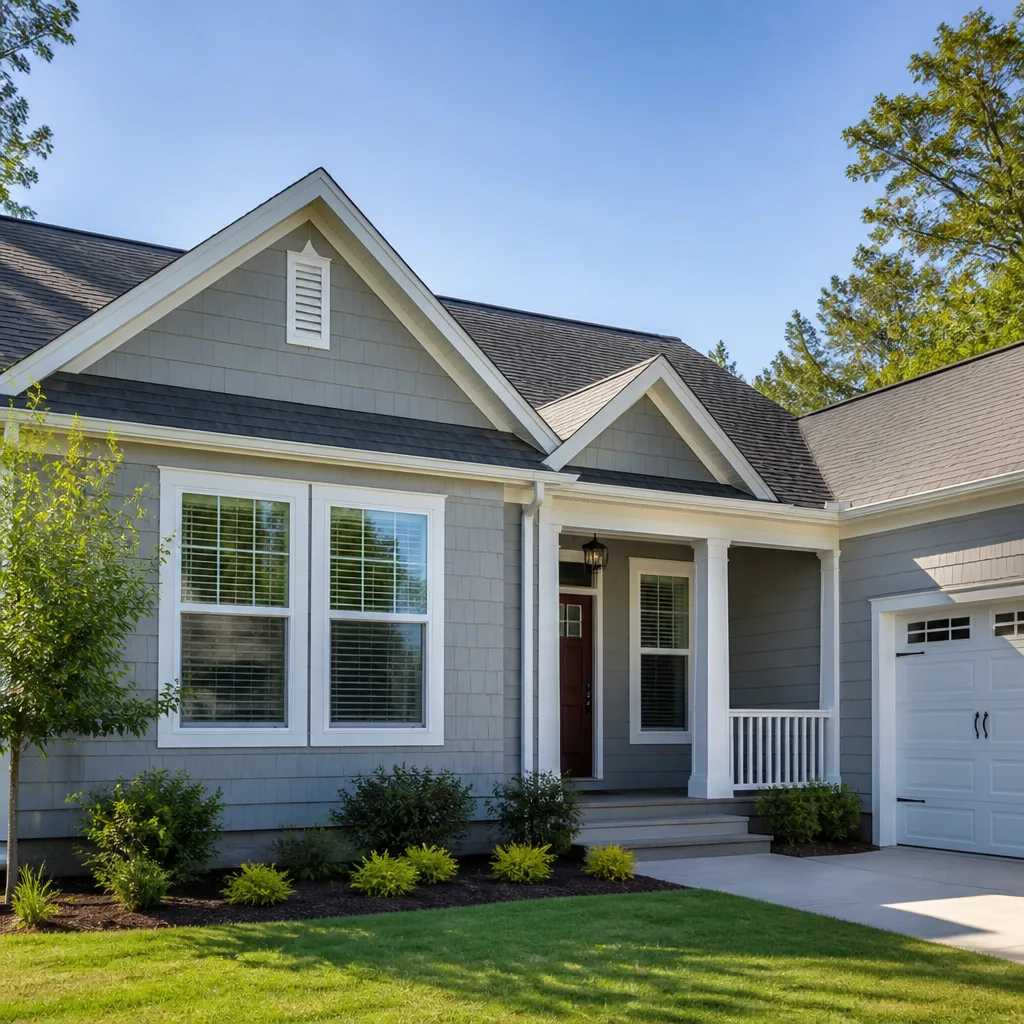
After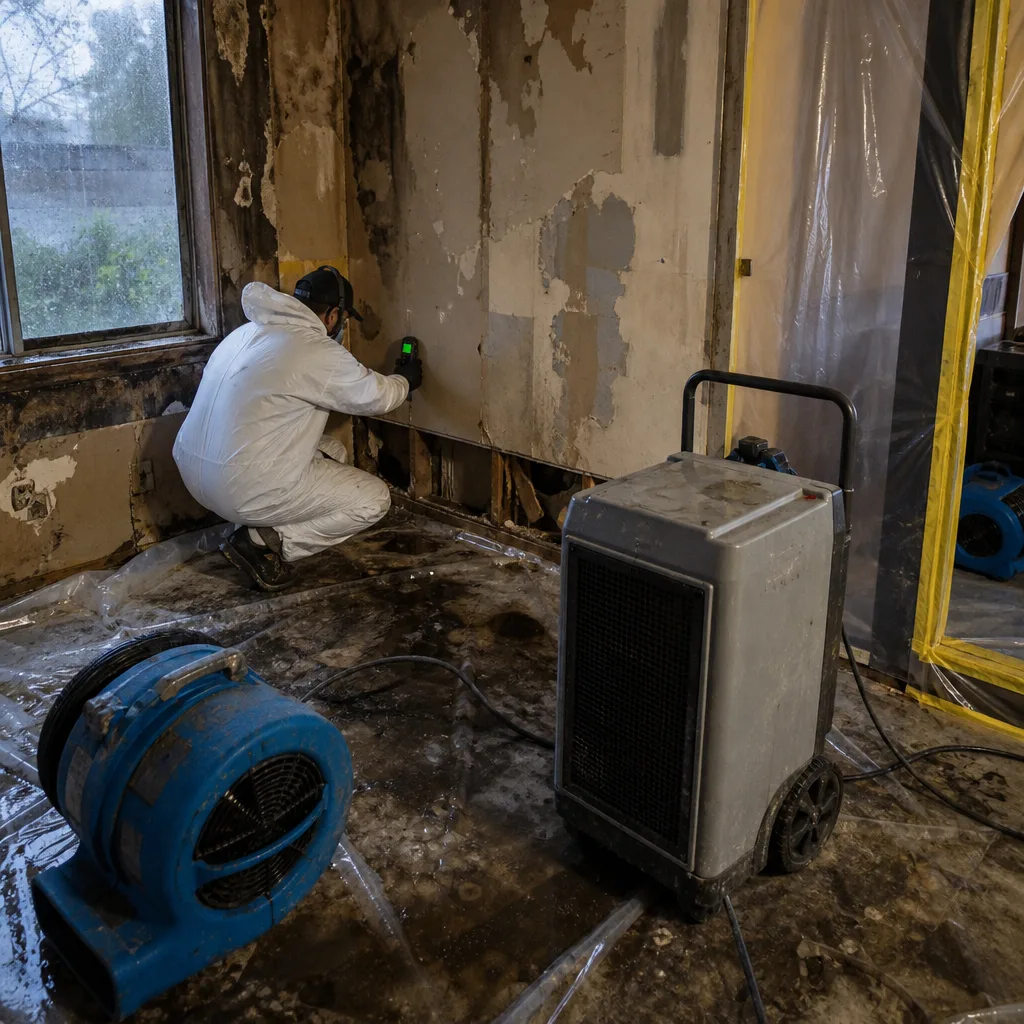 Before
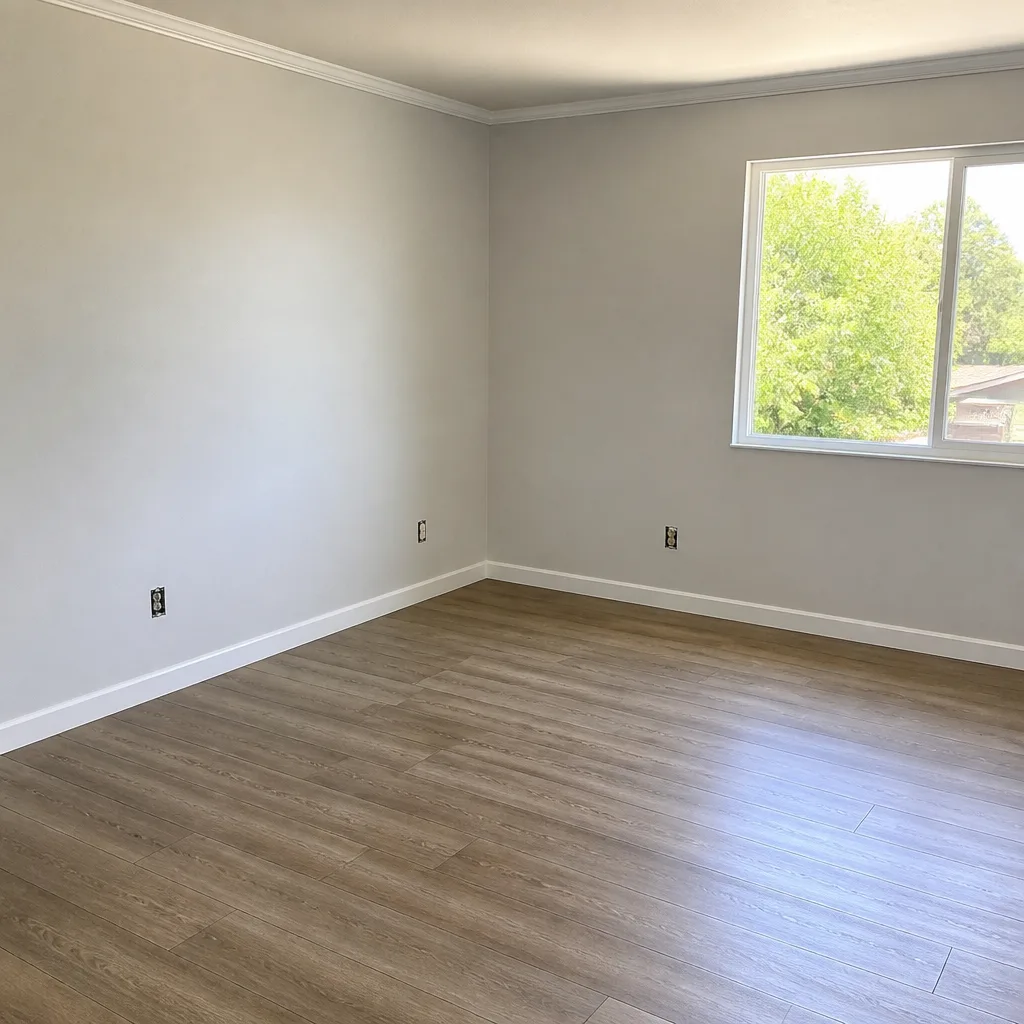 After
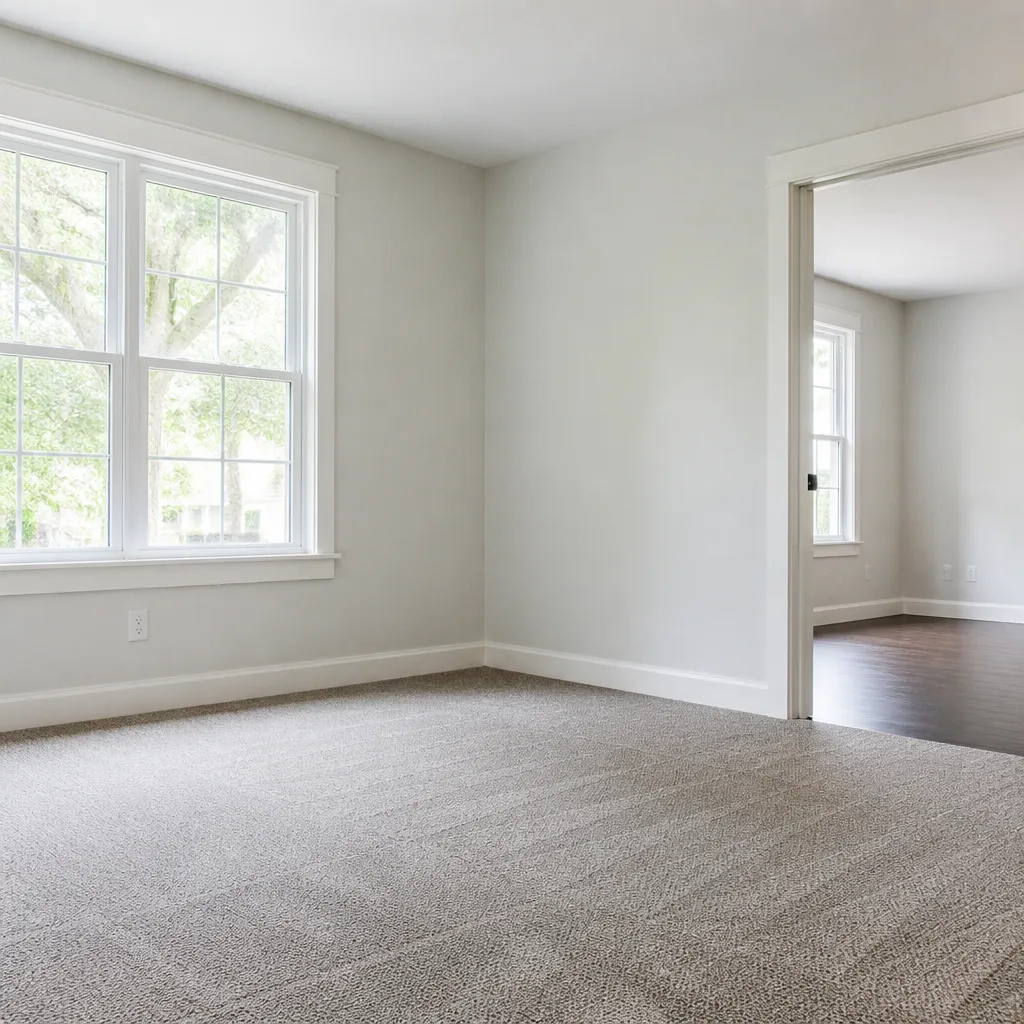
After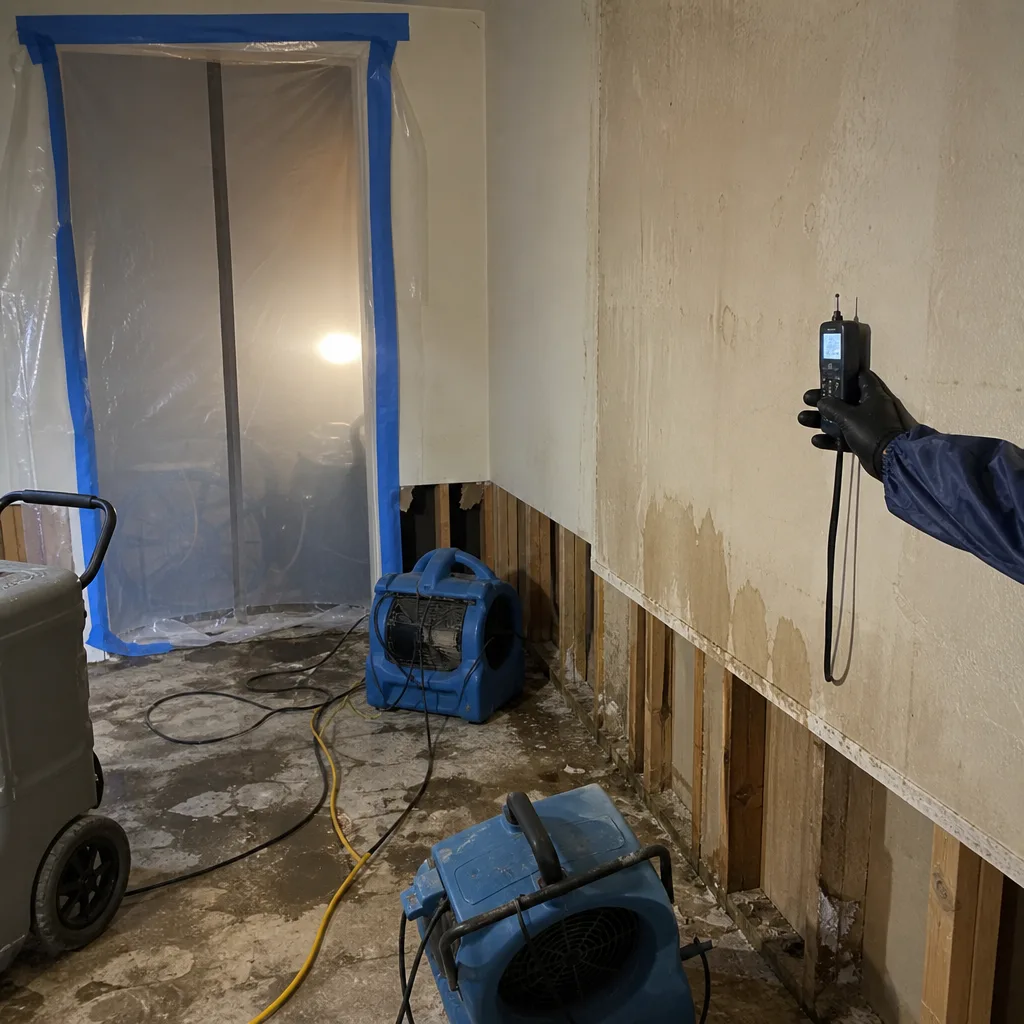 Before
 After
AfterFast, Reliable Water Damage Restoration Across Norwalk
Water damage restoration in Norwalk typically costs $2,800-$7,500 for a standard residential mitigation, with emergency water extraction starting at $1,200-$2,400 and structural drying running $1,600-$5,100 depending on affected square footage and material classification. Most homeowners in Norwalk see our crews within 60-90 minutes of calling (562) 373-6757, with live dispatch available 24 hours a day, 7 days a week - no voicemail trees, no next-business-day callbacks while water is still moving through your slab.
We know Norwalk’s housing stock intimately. The city is overwhelmingly built on post-WWII slab-on-grade tract homes from the 1950s and 1960s, and our Water Damage Restoration team has documented thousands of drying logs in these exact floor plans. Dispatch and scheduling are coordinated from our Los Angeles office, but crews serve Norwalk locally with equipment staged for rapid deployment to neighborhoods from Studebaker Road to Excelsior Drive and the areas near Coyote Creek.
Why DryMark Restoration Lakewood Is Norwalk’s Preferred Water Damage Restoration Company
Back to Dry Restoration, led by Alicia Brennan, has operated under The Haven Standard since 2011. That’s 12,000+ homes restored, every one with a written price before work started and a documented photo record when the crew left. In Norwalk specifically, our reputation rests on what we can show homeowners: daily moisture logs with psychrometric data (temperature, relative humidity, and vapor pressure differential - the measurable force that drives evaporation), room-by-room readings taken with calibrated thermohygrometers, and a signed 365-Day Done Right Promise stamped on every job.
Our Norwalk customers consistently reference three things in reviews: the written scope they received before anyone touched their home, the photo documentation that their adjuster accepted without dispute, and the fact that a live person answered their call at 2 AM. Response time to Norwalk averages under 90 minutes because we understand that in a slab-on-grade home, water doesn’t stay where it lands - it migrates through concrete capillaries and into wall cavities within hours.
Local knowledge matters here in ways it doesn’t in neighboring cities. Norwalk’s expansive LA Basin clay soils shrink dramatically during the long dry season and swell rapidly when atmospheric river events arrive. That soil movement, combined with decades of subtle ground displacement along the Norwalk Fault, continuously stresses the original galvanized and cast-iron supply and drain lines buried in these 1950s slabs. We’ve mapped enough of these failures to know that a “small wet spot” on carpet near Studebaker Road is rarely small, and rarely new.
Our Water Damage Restoration Services in Norwalk
Emergency Water Extraction
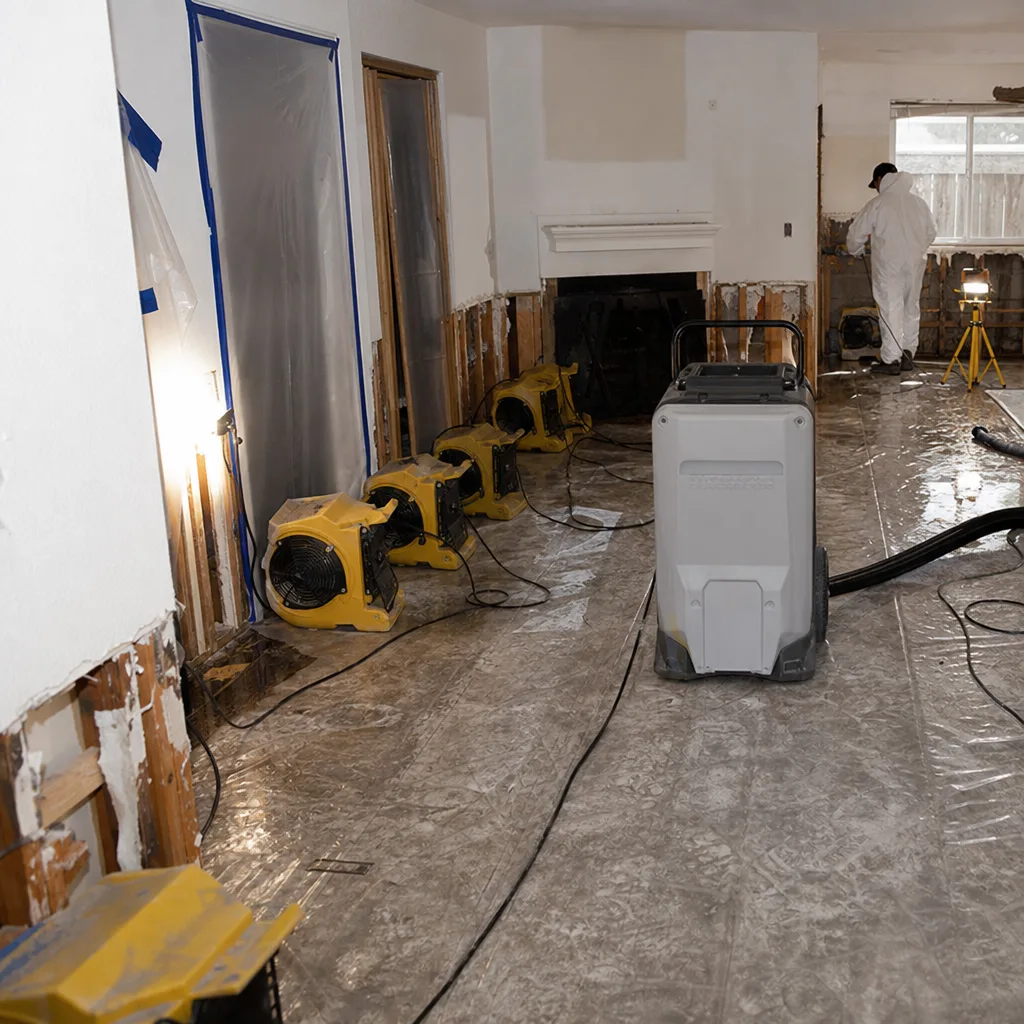
When water hits your slab-on-grade foundation, speed matters - but so does documentation. Our emergency water extraction in Norwalk deploys truck-mounted extraction units and portable flood pumper systems to remove standing water from carpet, tile, and concrete substrates. We document pre-extraction moisture readings with penetrating and non-penetrating meters, photograph every affected room, and deliver a written scope before extraction begins - Haven Standard, Clause 1. For homes near Coyote Creek in FEMA Special Flood Hazard Areas, we assess category contamination level (clean, gray, or black water) before any extraction starts, since stormwater intrusion carries different restoration protocols than a supply line leak.
Structural Drying & Dehumidification
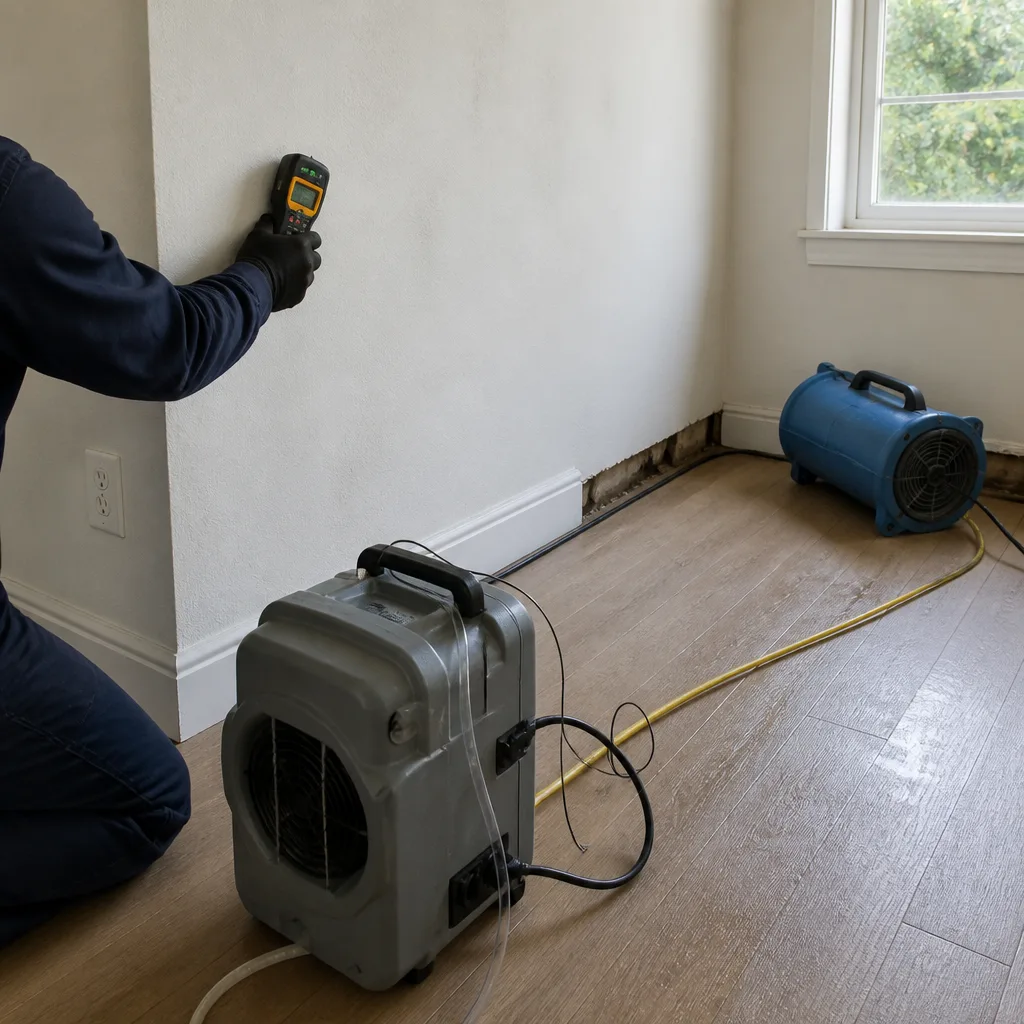
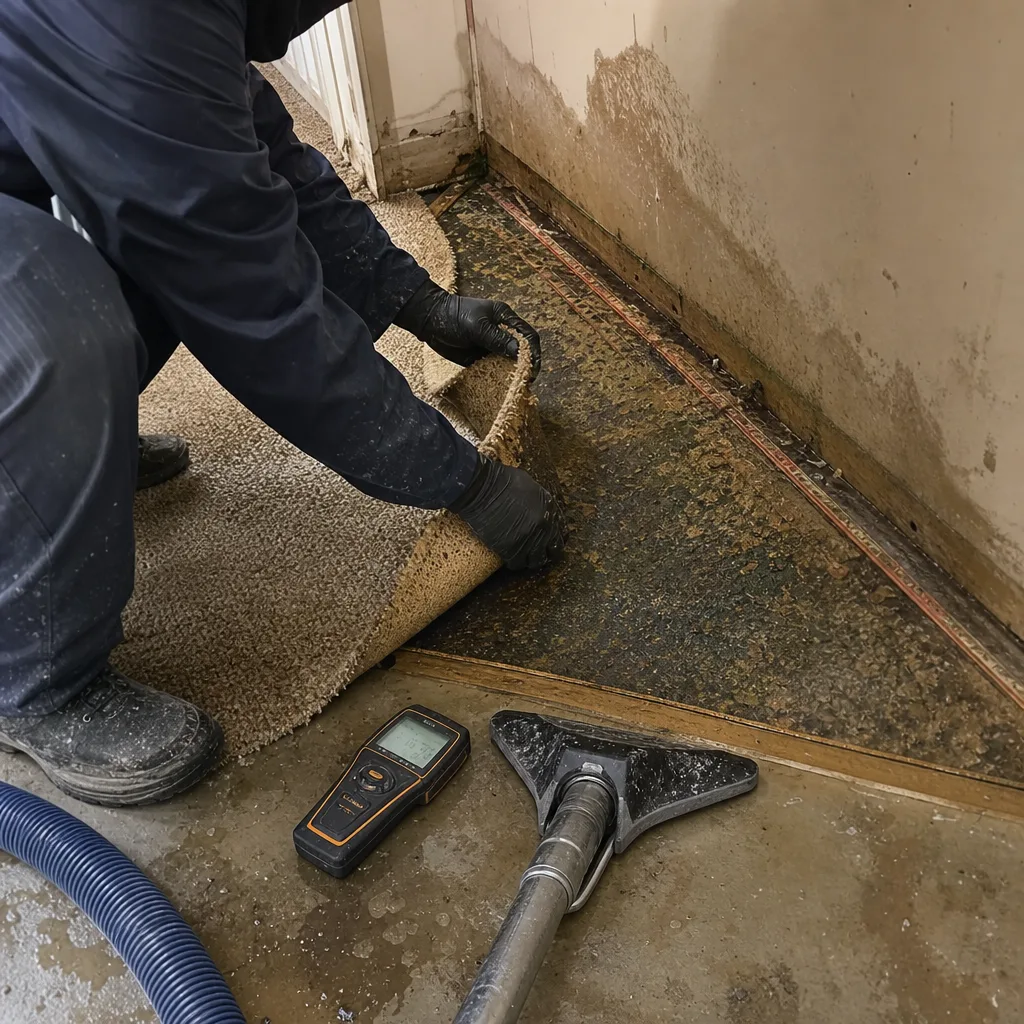
Structural drying in Norwalk’s 1950s tract homes requires equipment selection matched to the building’s specific vapor pressure dynamics. We deploy Phoenix dehumidifiers and Dri-Eaz air movers in calculated ratios based on cubic footage, surface area, and material permeance - the technical measure of how readily a material releases moisture. In slab-on-grade construction, we add Injectidry panel systems to force dry air through wall cavities where slab moisture has wicked upward into drywall. Daily drying logs track specific grains per pound (GPP) reduction, the psychrometric measurement that proves to your adjuster that materials returned to pre-loss moisture content. Tertiary drying, the final phase where bound water is removed from dense materials like wood framing, is documented with pin-meter readings taken at consistent intervals.
Flood Cleanup
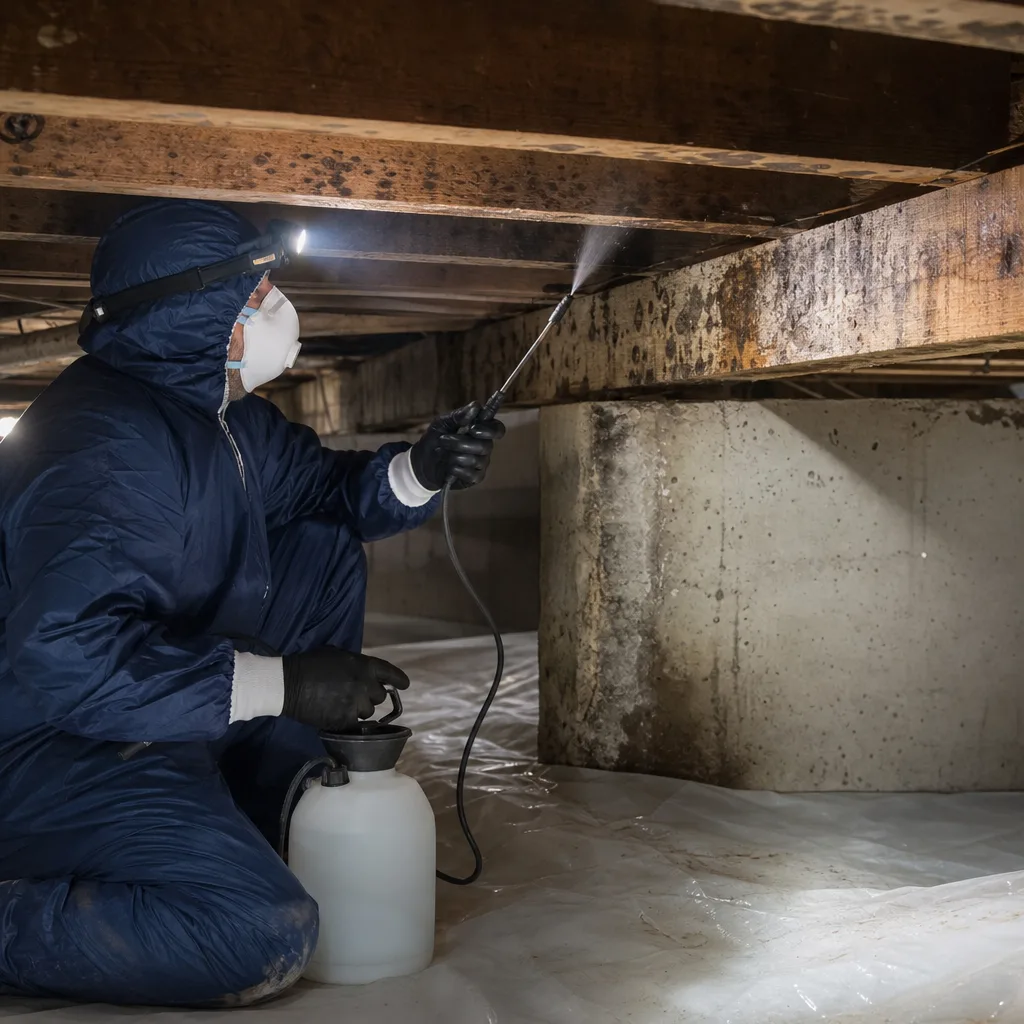
Norwalk’s position along Coyote Creek means flood cleanup is a recurring winter service during Southern California atmospheric river events. Lower-lying neighborhoods south of Alondra Boulevard see repeated stormwater intrusion where clay soils, saturated after months of drought, can no longer absorb sudden heavy rainfall. Our flood cleanup protocol includes category assessment, contaminated material classification, and mandatory documentation for FEMA or private flood insurance claims. We photograph standing water levels, silt deposits, and material saturation before any removal begins - the photo record that turns a restoration invoice into a payable claim.
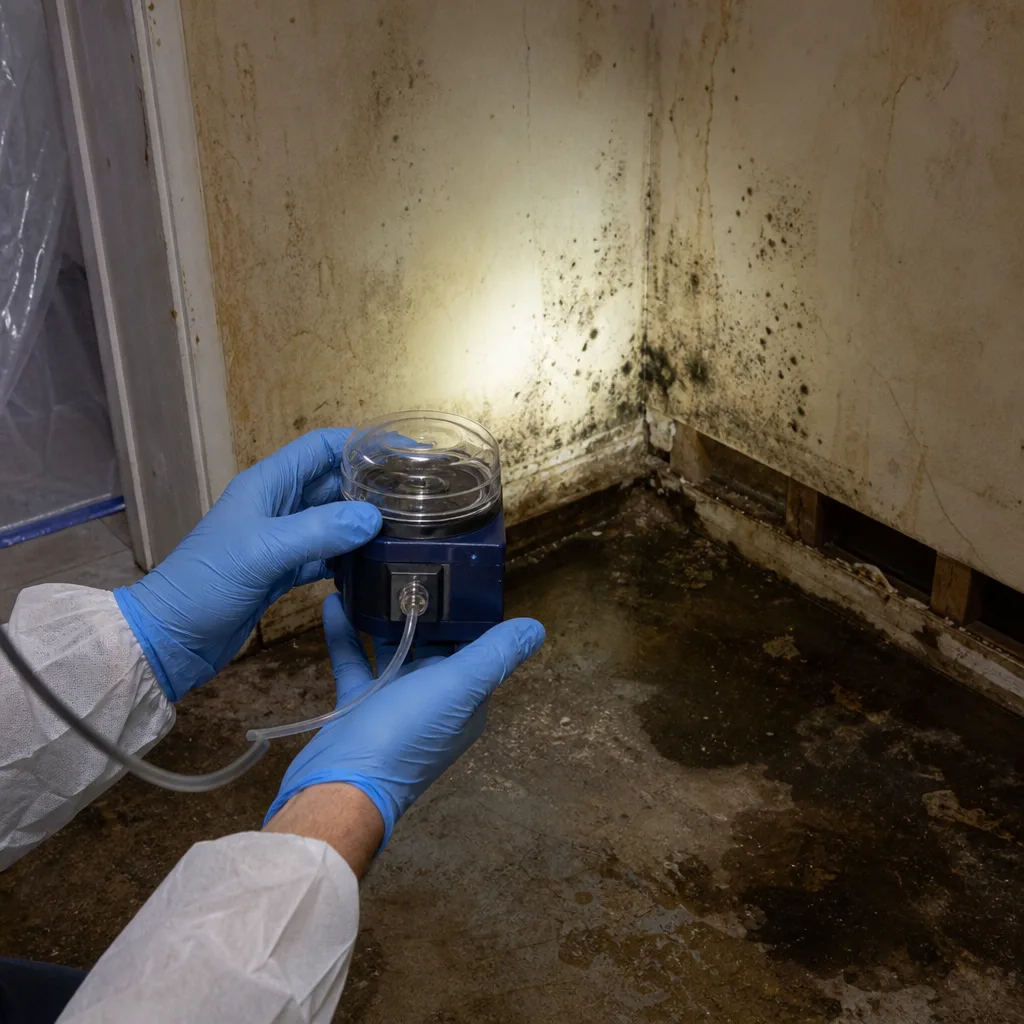
Burst Pipe Restoration
True burst pipe restoration is less common in Norwalk than silent slab leaks, but when supply lines do fail - often during cold snaps when homeowners leave for the holidays - the damage can be catastrophic. Our burst pipe restoration includes immediate water shutoff coordination, extraction, and full moisture mapping of migration pathways through slab and wall assemblies. We work with licensed plumbers for repair, but our scope stops at restoration: drying, antimicrobial treatment of affected framing, and documented return to pre-loss condition. A written price before work begins, every time, with no scope-creep additions once the crew is inside.
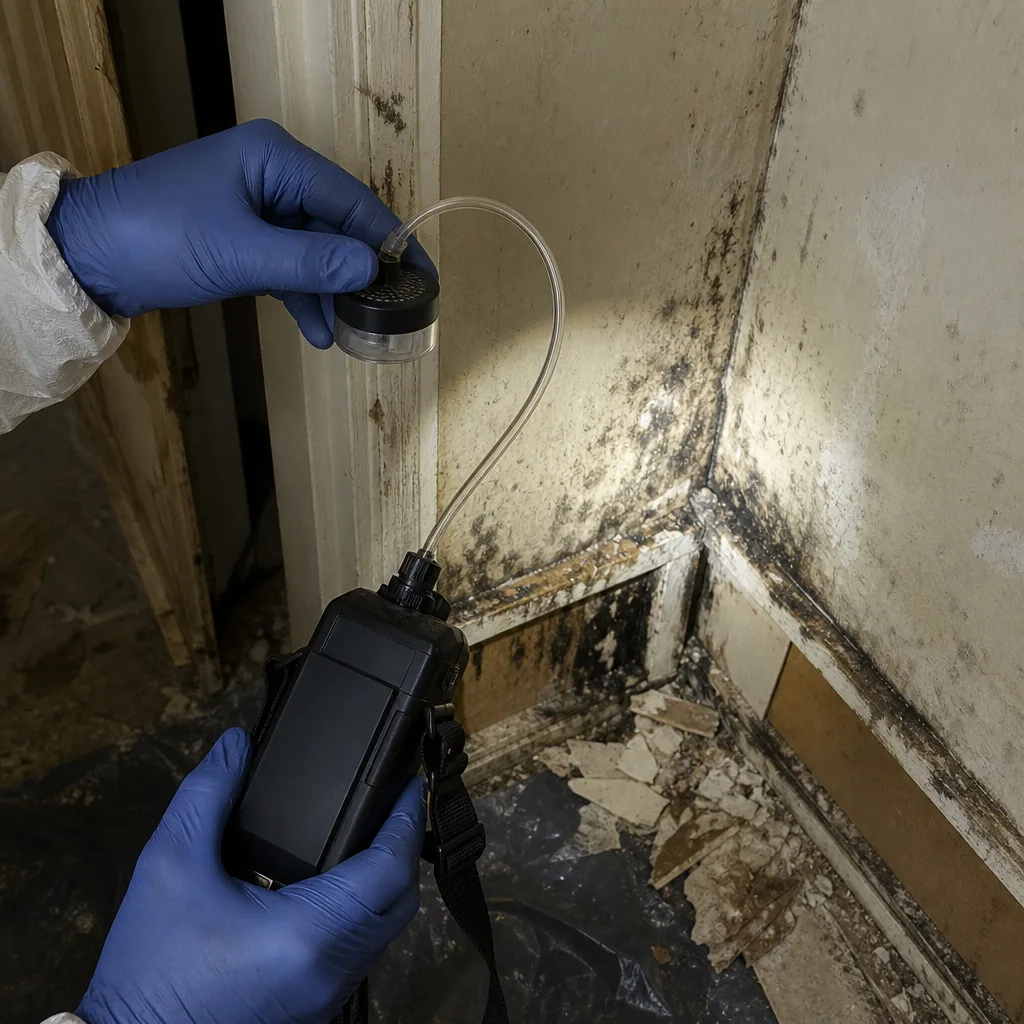
Basement Water Removal
Basements are uncommon in Norwalk’s slab-on-grade housing stock, but partial daylight basements and converted crawl spaces do exist in some 1960s builds near the county line. Basement water removal in these homes requires submersible pumps, vapor barrier assessment, and careful documentation of hydrostatic pressure damage - the force of groundwater pushing through foundation walls. We inspect for slab cracking accelerated by clay soil expansion and provide written recommendations for any necessary structural drying extensions.
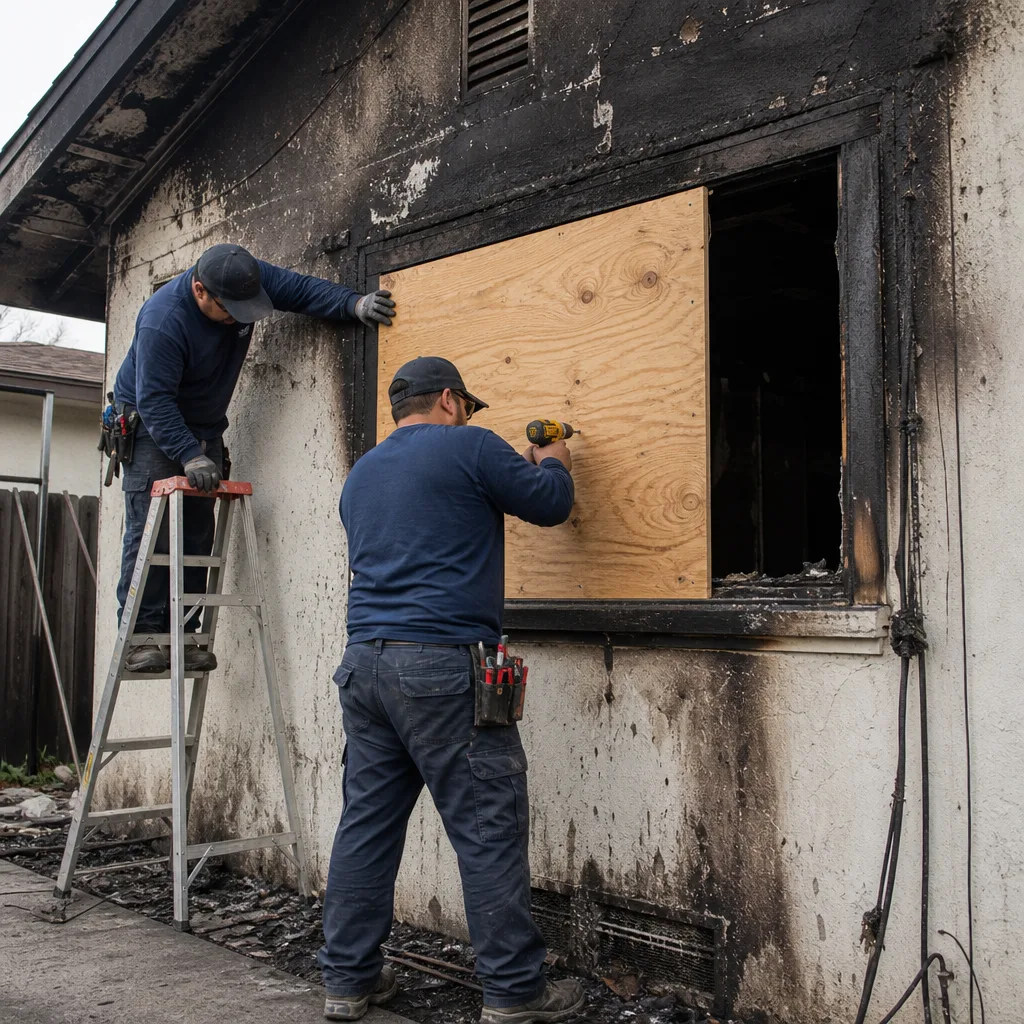
Ceiling & Roof Leak Water Damage
Ceiling and roof leak water damage in Norwalk often traces back to original construction: 1950s-era flat or low-slope roofs with inadequate drainage, original galvanized flashing corroded by decades of marine layer exposure, and attic spaces with asbestos-containing vermiculite insulation. We document the leak path from roof penetration to ceiling stain, test affected materials for asbestos before disturbance, and provide drying logs showing cavity moisture reduction. In homes with popcorn ceilings - nearly universal in pre-1970 Norwalk construction - hazmat testing is mandatory before any ceiling demolition.
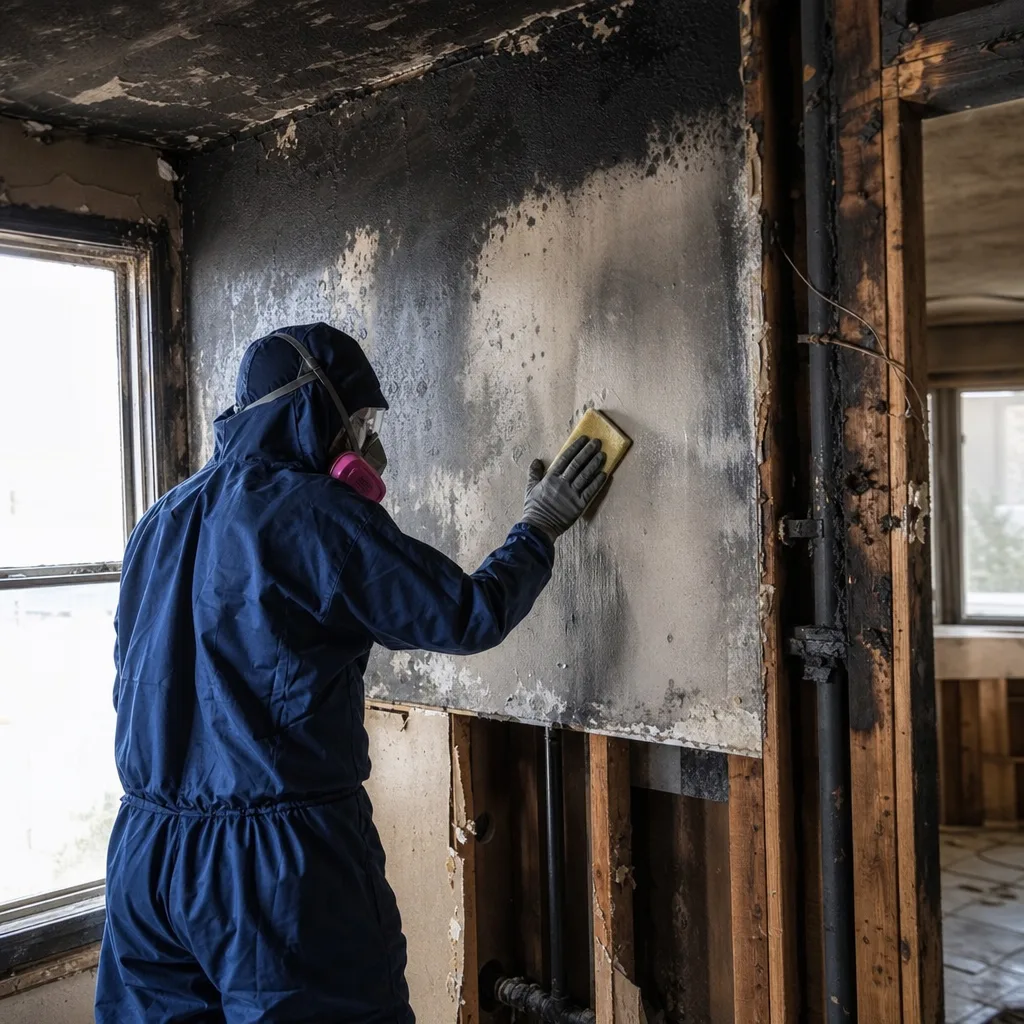
What happens when you call
- 1
A real person answersNo phone trees - you reach a local pro.
- 2
You get an upfront price rangeHonest numbers before anyone is dispatched.
- 3
A background-checked tech heads outLicensed & insured, dispatched right away.
- 4
You approve before work beginsNothing starts until you say go.
 Before
 After
AfterTrusted Brands We Service in Norwalk
Our equipment inventory includes professional-grade drying systems from Phoenix, Dri-Eaz, and XPOWER - brands selected for documented performance to IICRC, RIA, and IFA standards, not marketing claims. We maintain sufficient Phoenix dehumidifier and XPOWER air mover stock to deploy multiple Norwalk jobs simultaneously without equipment delays. Injectidry panel systems are pre-staged for slab-on-grade wall cavity drying, the specific challenge that dominates our Norwalk work. Every machine is calibrated quarterly, with certification records available on request. This matters because your adjuster will ask for equipment specifications, and we provide them as standard documentation - never an upsell.
Common Water Damage Restoration Problems We See in Norwalk Homes
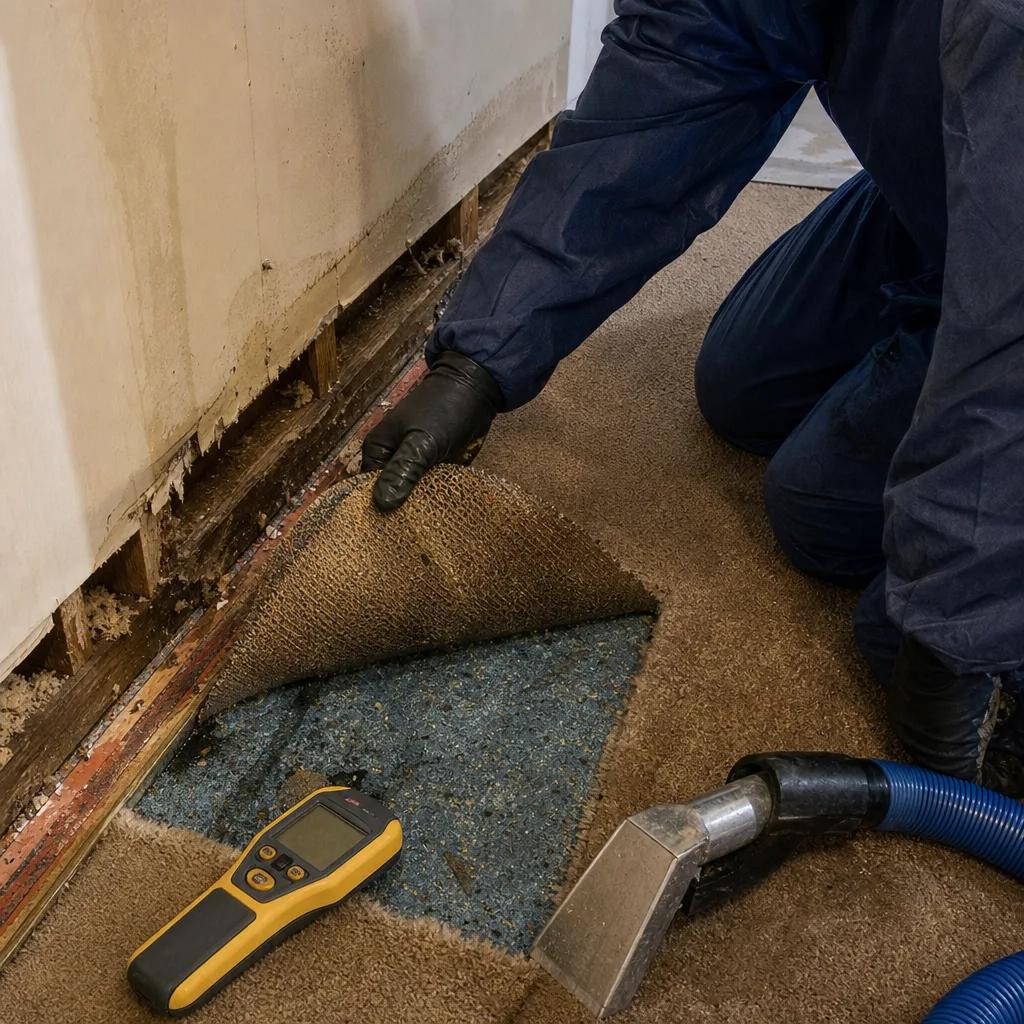
- The “small wet spot” that isn’t small. Homeowners call about a damp carpet patch near a wall and assume a spilled drink. Our thermal imaging regularly reveals months-old slab moisture from a corroded 1950s cast-iron drain line, with category 2 water already wicking into drywall cavities and mold colonies established past the 24-48 hour safe drying window.
- Asbestos work stoppages mid-mitigation. An estimated 60-70% of Norwalk’s residential stock was built before 1970 with original floor tiles, pipe insulation, and popcorn ceilings containing asbestos. Contractors who start water extraction without testing face mandatory hazmat abatement work stoppages that extend timelines and costs significantly. We test first, every time.
- Incomplete moisture mapping in slab-on-grade homes. Crews who check the carpet and call it dry miss the moisture trapped in wall cavities where slab water has wicked upward. Weeks later, mold reappears. Our protocol includes pin-meter readings at baseplate height and Injectidry cavity drying when readings exceed 16% wood moisture content.
- Clay soil expansion accelerating slab cracking. Norwalk’s expansive clay soils shrink during the long dry season and swell rapidly when heavy rain arrives. That seasonal cycle opens new water infiltration pathways through existing slab cracks, turning a minor leak into recurring damage until the pathway is sealed and the soil drainage addressed.
Pricing for Water Damage Restoration in Norwalk, CA
Water damage restoration pricing in Norwalk reflects the specific challenges of the city’s housing stock and the documentation standards required for insurance acceptance.
| Service | Typical Range in Norwalk |
|---|---|
| Emergency Water Extraction | $1,200 - $2,400 |
| Structural Drying & Dehumidification | $1,600 - $5,100 |
| Asbestos Testing (mandatory pre-1970 homes) | $400 - $800 |
| Hazmat Abatement (if required) | $1,500 - $4,200 |
| Mold Remediation (secondary to water damage) | $2,000 - $6,500 |
| Full Residential Mitigation (typical range) | $2,800 - $7,500 |
Several factors push Norwalk jobs toward the higher end of these ranges. Asbestos testing and potential abatement adds cost to most pre-1970 homes. Slab leaks require more extensive moisture mapping and longer drying cycles than surface spills. Homes near Coyote Creek in FEMA flood zones may need category 3 black water protocols, with more extensive material removal and antimicrobial treatment. Every job receives a written price before work begins - Haven Standard, Clause 1 - with no additions once the crew is inside. Bring a competitor’s written estimate and we’ll review it at no charge: our Free Second Opinion policy.
Call (562) 373-6757 for an exact quote. Estimates are free, and a live person answers every call.
We Also Serve Cities Near Norwalk
Our crews respond throughout the southeast Los Angeles County corridor. We provide Water Damage Restoration in Norwalk and neighboring Cerritos, Artesia, Bellflower, and Downey with the same documentation standards and written-price guarantee. Each city’s housing stock and soil conditions create distinct restoration challenges - clay soils and slab-on-grade construction in Cerritos, older commercial mixed-use in Artesia’s historic core, post-war tract density in Bellflower, and Downey’s aerospace-era residential builds - and our protocols adapt to each.
Serving Norwalk, CA - Our Local Coverage Area
We’re based in the Norwalk area and know this community well. Use the map below to see our service coverage - if you’re nearby, we can almost certainly help.
FAQs - Water Damage Restoration in Norwalk
You don’t - and assuming it’s small is the most expensive mistake we see. We got a call from a homeowner near Studebaker Road and Excelsior Drive about a “small wet spot” on the carpet in their 1958 ranch-style tract home. Our moisture mapping and thermal imaging showed the source was a months-old slab leak from a corroded cast-iron drain line, with category 2 water already wicking up into the drywall. We extracted standing water, set up containment and structural drying with Dri-Eaz air movers and a Phoenix dehumidifier, treated the affected framing with antimicrobial, and provided drying logs showing the slab and subfloor returned to pre-loss condition within five days. If you see any persistent dampness in a 1950s-1960s Norwalk home, call (562) 373-6757 for moisture mapping - not a shop vac.
California law mandates asbestos testing before disturbing building materials in structures built before 1981, and an estimated 60-70% of Norwalk’s housing stock predates 1970 with original asbestos-containing floor tiles, pipe insulation, and popcorn ceilings. Starting demolition without testing triggers a mandatory hazmat work stoppage that extends your timeline and cost. We test first, every time, and include the documentation in your standard deliverables. Call (562) 373-6757 and we’ll explain the specific testing protocol for your home’s construction era.
Within 24 hours, and ideally within 4-6 hours for slab-on-grade homes where water migrates rapidly through concrete capillaries. Mold colonization begins at 24-48 hours on organic materials, and in Norwalk’s climate - warm, humid during winter storm events, with poor ventilation in original 1950s construction - that window closes fast. Our emergency dispatch to Norwalk averages 60-90 minutes, with equipment staged for immediate deployment. Call (562) 373-6757 for emergency response; for non-urgent assessments, we schedule written-scope appointments within 24 hours.
Yes, directly. The Norwalk Fault runs beneath the area, and decades of subtle ground movement in expansive LA Basin clay soils continuously stress buried pipes and foundation slabs in ways that neighboring cities on different soil profiles or with newer housing stock do not experience at the same rate. That stress accelerates corrosion in original galvanized and cast-iron lines, opens slab cracks that become water infiltration pathways, and creates the conditions for the silent slab leaks that dominate our Norwalk calls. Our moisture mapping protocol is specifically designed to trace these hidden migration pathways. Call (562) 373-6757 to schedule mapping if you suspect foundation-related water intrusion.
Often, yes - especially if the water source was a slow slab leak or if stormwater intrusion from Coyote Creek flooding sat for more than 24 hours before extraction. In Norwalk’s 1950s slab-on-grade homes, water frequently wicks into wall cavities and remains hidden until mold colonies are well established. Our standard protocol includes antimicrobial treatment of affected framing during structural drying, with post-drying air quality testing to confirm clearance. If visible mold exceeds 10 square feet or hidden mold is suspected behind intact drywall, we transition to full mold remediation with containment and negative air pressure - documented to the same IICRC standards as our water damage work. Call (562) 373-6757 for assessment; we’ll tell you exactly what testing shows, not what we hope to sell.
Back to Dry Restoration is independently owned and operated under The Haven Standard. Every job is quoted in writing before work begins, documented with a photo record on every visit, and covered by our 365-Day Done Right Promise - if it’s not done right, we make it right. That’s not a marketing line; it’s a signed guarantee stamped on every job, backed by 12,000+ documented restorations since 2011.
Call (562) 373-6757 now for a free estimate. A live person answers every call, 24 hours a day, 7 days a week.
Written by Alicia Brennan, Owner at Back to Dry Restoration, serving Norwalk and surrounding communities since 2011.